Educational Toys: Science of Holistic Child Development
Educational toys are not merely playthings; they are scientifically designed tools that profoundly shape a child's brain development, offering a critical advantage in an increasingly competitive world, much like the 'seven-point IQ opportunity' highlighted for Indian children. Research consistently shows that engaging with these purposeful materials actively builds neural pathways essential for holistic growth, far beyond simple entertainment.
Educational toys are objects specifically crafted to stimulate learning and development through play. They empower children to explore concepts, solve problems, and express creativity, providing hands-on experiences that are foundational for their physical, cognitive, social, and emotional well-being. Indian parents can consider these tools vital for fostering independent thought and a love for discovery.
The Cognitive Blueprint: How Educational Toys Wire the Brain
The human brain undergoes its most rapid development during early childhood. Child development science confirms that appropriate stimulation from educational toys plays a direct role in this wiring process. Activities like building with blocks or solving puzzles engage the prefrontal cortex, the brain's command center for planning, problem-solving, and memory, directly enhancing cognitive development.
Consider 3-year-old Rohan in a Bangalore joint family, meticulously trying to fit a shape into its corresponding hole. This seemingly simple act is a complex neurological exercise, building spatial reasoning, logical thought, and persistence. Just as breastmilk provides foundational nutrition for a baby's gut and brain development, these early play experiences offer foundational stimulation, creating robust neural connections.
Nurturing Emotional Intelligence & Social Bonds through Play
Holistic development toys do more than just sharpen minds; they are crucial for a child's emotional and social growth. Through imaginative play, children explore different roles and scenarios, developing empathy and understanding diverse perspectives. A surprising US study revealed why laughter is a hidden superpower for a child's brain, suggesting that joyful, shared play reduces stress and creates an optimal state for learning and social bonding.
Picture siblings, Priya and Arjun, in their Delhi home, using dolls to enact a family festival scene. They negotiate roles, share accessories, and resolve minor 'disputes' over who gets to be the grandparent. This process fosters turn-taking, cooperation, and emotional regulation – invaluable skills for navigating relationships within a large Indian family and beyond.
Precision & Power: The Motor Skill Advantage
From the delicate pincer grip needed to pick up a small bead to the full-body coordination required to push a cart, benefits of educational toys extend significantly to motor skill development. These toys provide concrete opportunities for children to refine both their fine motor skills (small muscle movements) and gross motor skills (large muscle movements).
Manipulating Montessori practical life materials like pouring beans from one jug to another, or buttoning and zipping frames, strengthens hand-eye coordination and finger dexterity, crucial precursors for writing and self-care. Similarly, simple wooden push-pull toys encourage balance and spatial awareness, vital for a child's physical independence as they explore their environment.
Montessori's Legacy: Scientific Play for Independent Minds
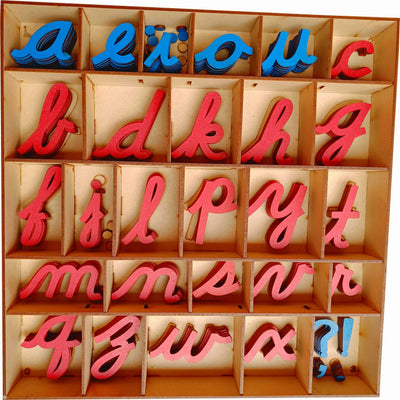
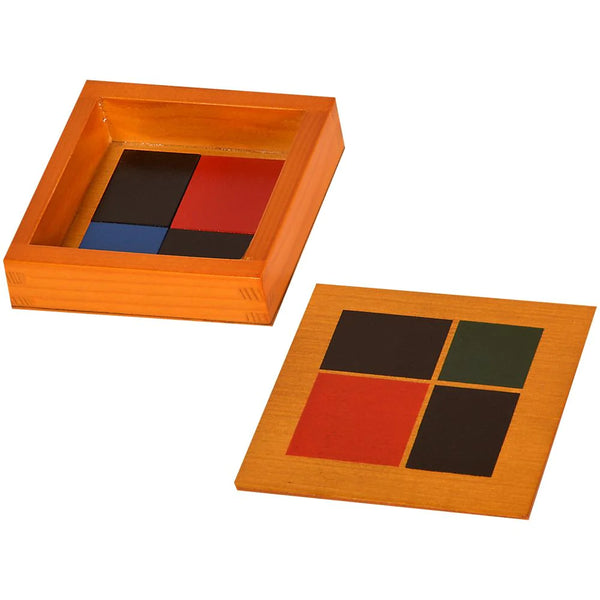
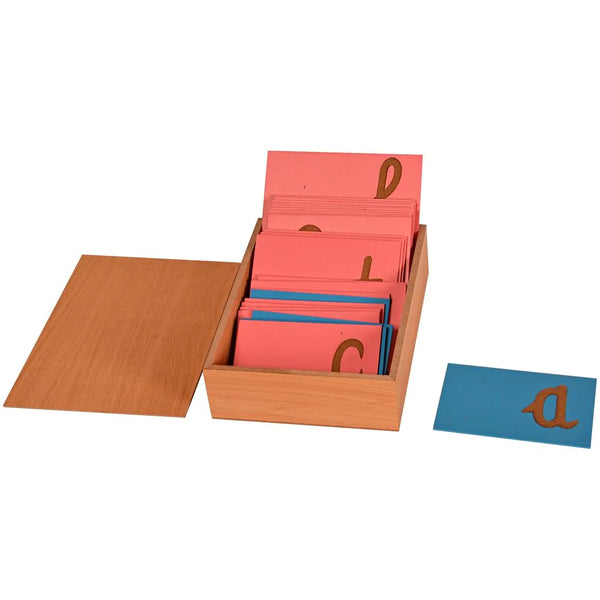
At the heart of many effective montessori educational toys lies the profound insight of Dr. Maria Montessori. Her scientific observations revealed that children possess an 'absorbent mind' and an innate drive for self-directed learning. Montessori materials are designed with this in mind, often being self-correcting, allowing children to learn from their mistakes without adult intervention, fostering independence and problem-solving.
For instance, a child working with the Pink Tower intrinsically understands concepts of size and order, building a strong foundation for mathematical thinking. This approach respects the child as an individual learner, encouraging concentration and a deep engagement with the task at hand – a philosophy that resonates deeply with Indian parents who value discipline and self-reliance.
The Unseen Power of 'Simple' Toys for Deeper Learning
It's a fascinating paradox in child development science: the most effective educational toys are often the 'simplest' ones. While flashy electronic gadgets might grab attention, toys like basic wooden blocks, stacking rings, or a plain shape sorter demand more from a child's brain. These open-ended materials force the child to imagine, experiment, and actively problem-solve, rather than passively react to predetermined functions.
This active engagement, where the child is the primary agent of discovery, builds deeper cognitive structures and fosters genuine creativity. It's the frustrated grunt when a tower tumbles, followed by the determined re-attempt, that cultivates resilience and complex thinking far more than a toy that tells you the 'right' answer. This subtle yet profound difference is key to truly impactful early childhood development.
Understanding the scientific foundation behind educational toys empowers Indian parents to make informed choices that genuinely benefit their child's future. Tonight, observe your child during their playtime. Instead of directing, try asking open-ended questions like, 'What are you discovering with that?' or 'What else could that block be?' This simple shift encourages their intrinsic curiosity and problem-solving, transforming every play session into a scientific exploration.