Homeschooling Curriculum India: Science-Backed Design
We often wonder, as a recent Times of India article highlighted, why we don't remember being babies. This phenomenon, known as infantile amnesia, offers a profound insight into the very nature of early learning and is crucial for understanding how to design an effective homeschooling curriculum India-based for optimal child development. The early years, before explicit memory forms, are a period of intense sensory and motor development, laying the groundwork for all future learning.
A developmentally optimal homeschooling curriculum is one designed with a deep understanding of how children's brains grow and learn, adapting educational experiences to match their unique developmental stages. This approach ensures learning is not just about accumulating facts, but about fostering genuine understanding, curiosity, and the essential cognitive tools needed for a lifetime. For Indian parents, this means moving beyond rote learning and embracing methods that nurture their child's innate potential.
Brain Architecture & Early Learning: Beyond Explicit Memory
Research clearly shows that a child's early environment profoundly shapes brain architecture. Even without conscious memory of their first few years, children are absorbing vast amounts of information through their senses and motor experiences. The 'seven-point IQ opportunity' for Indian children, as noted by The Hindu, emphasizes that these foundational years are critical windows for development, where rich, stimulating experiences build robust neural connections.
Child development experts agree that pushing academic concepts before a child's brain is ready can actually hinder long-term learning. Instead, focusing on hands-on exploration, sensory play, and gross motor activities during early childhood lays a stronger foundation. This is where a well-designed homeschooling curriculum for Indian children can truly shine, by respecting these biological timelines rather than external academic pressures.
The Montessori Approach: A Scientific Blueprint for Indian Homes
Maria Montessori's philosophy, developed over a century ago, is remarkably aligned with modern brain science. A Montessori homeschooling curriculum emphasizes a prepared environment where children are free to choose activities that match their developmental needs, from practical life skills to sensorial exploration. This child-led discovery directly supports homeschooling benefits child development by fostering intrinsic motivation and deep concentration.
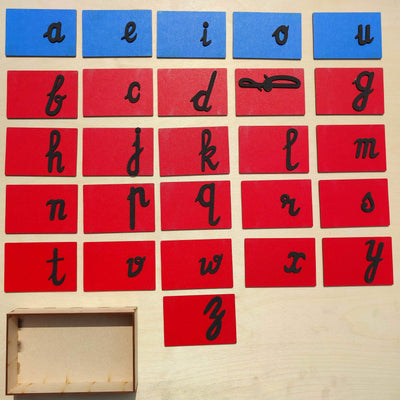
Consider a 4-year-old in a Bengaluru home, carefully stacking the Montessori Pink Tower. This isn't just play; it's a precise exercise in visual discrimination of dimension, developing order, concentration, and fine motor skills. Similarly, working with Sandpaper Letters offers a multi-sensory pathway to literacy, engaging touch, sight, and sound, a stark contrast to mere worksheet-based learning. These materials allow children to learn abstract concepts through concrete experiences, crucial for early cognitive development.
Fostering Cognitive & Emotional Growth: The Indian Homeschool Advantage
Effective early childhood education homeschooling India offers a unique advantage in fostering holistic development. Beyond academics, a well-structured home environment can prioritize executive functions like planning, problem-solving, and emotional regulation. Studies indicate that children who engage in self-directed play and real-world tasks develop stronger cognitive flexibility.
Imagine Aarav, a 6-year-old living in a joint family in Pune, learning mathematics not from a textbook, but by helping his Dadi count ingredients for a festive sweet, or managing his pocket money to buy a small toy. These real-life applications, steeped in cultural context, provide a richer learning experience than abstract problems. The social dynamics of a joint family also offer organic opportunities for developing empathy, negotiation, and cooperation – vital components of social-emotional learning that traditional schooling often struggles to replicate.
The flexibility of homeschooling allows parents to weave in local festivals, family traditions, and even daily chores as rich learning opportunities. This not only reinforces cultural identity but also provides hands-on learning that boosts homeschooling cognitive development. For example, a child helping prepare for Diwali learns about patterns, symmetry, and history in a deeply meaningful way that transcends textbook lessons.
By understanding the science of how children learn and embracing a flexible, child-centric approach, Indian parents can create a truly enriching homeschooling experience. This means observing your child closely, providing stimulating materials like Montessori educational toys, and integrating learning into the vibrant tapestry of Indian family life. Tonight, perhaps ask your child to describe their favourite festival memory using five new words, connecting emotional recall with language expansion.