Wooden Puzzles for Kids: Science of Cognitive Boost
Research definitively shows that wooden puzzles for kids are not just playthings; they are foundational tools scientifically proven to significantly boost a child's cognitive skills and problem-solving abilities. These simple, tactile toys engage multiple brain regions, fostering crucial developmental milestones for young Indian learners. They challenge children to analyze shapes, anticipate outcomes, and develop persistence, laying a strong foundation for critical thinking, an essential skill in today's world, especially with ongoing debates around screen time's impact on brain development.
For Indian parents navigating the balance between traditional play and modern learning, understanding the scientific 'why' behind educational toys like wooden puzzles is empowering. These timeless treasures offer a hands-on pathway to robust brain development, perfectly aligning with principles championed by pioneers like Maria Montessori.
What are educational wooden puzzles? These are specifically designed wooden toys, often featuring interlocking pieces or shape-matching tasks, crafted to stimulate specific cognitive functions. This matters because they provide hands-on, multi-sensory learning experiences vital for early brain development. Indian parents can easily integrate them into daily routines, offering a screen-free pathway to profound learning.
The Neurological Impact: How Cognitive Development Puzzles Sculpt the Brain
Studies consistently indicate that engaging with cognitive development puzzles actively stimulates neuroplasticity, the brain's ability to form and reorganize synaptic connections. When a child manipulates a puzzle piece, they are not just playing; they are firing neurons, creating new pathways, and strengthening existing ones, particularly in areas responsible for executive functions like planning and decision-making.
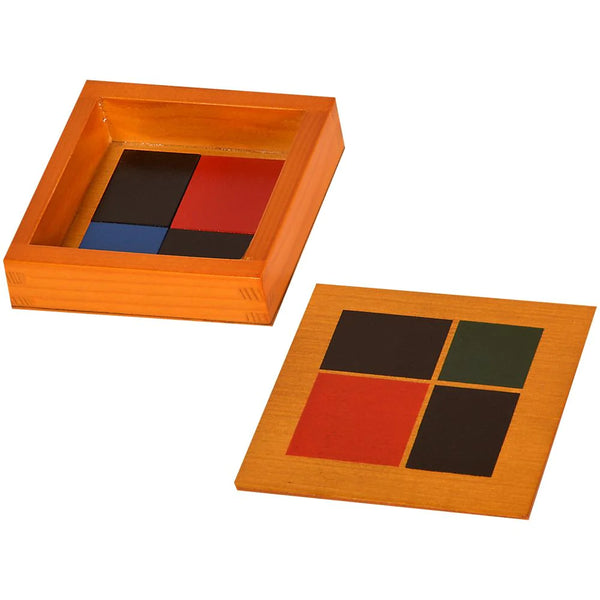
This hands-on engagement provides a powerful antidote to passive screen consumption, which a recent India Today debate highlighted as a concern for brain development. Unlike digital interfaces, wooden puzzles offer tangible feedback, requiring precise movements and spatial adjustments that directly contribute to the intricate wiring of the developing brain. This concrete learning is a cornerstone of Montessori philosophy, where materials like the geometric solids encourage deep understanding through physical interaction.
For a toddler in a joint family setting, sitting with a grandparent to solve a puzzle can also foster emotional intelligence and language development, as they communicate and collaborate. This rich, multi-faceted interaction is far more beneficial than isolated screen time, offering a holistic boost to a child's emerging intellect, perfectly complementing initiatives like India's Poshan Pakhwada targeting early nutrition for brain development.
Fine Motor Mastery and Hand-Eye Coordination through Puzzles for Kids
The act of grasping, orienting, and placing puzzle pieces is a powerful workout for a child's fine motor skills. Puzzles for kids, especially those with knobs or chunky pieces, encourage the development of the pincer grasp – the coordinated movement of the thumb and forefinger – which is fundamental for later tasks like holding a pencil, buttoning clothes, or eating independently. Research shows that strong fine motor skills in early childhood correlate with improved academic readiness.
Furthermore, the precise alignment required for puzzle assembly hones hand-eye coordination. A child must visually track the piece, estimate its position, and then guide their hand to execute the placement. This constant feedback loop refines their visual-motor integration, a skill crucial for everything from sports to handwriting. For parents preparing their little ones for school in Bengaluru, this foundational skill is invaluable.
Children as young as 18-24 months can begin with simple shape sorters or single-piece inset puzzles, gradually progressing to more complex designs. SkilloToys offers a curated selection of educational wooden puzzles for every developmental stage. These early successes build confidence and foster a love for challenge, essential for lifelong learning.
Spatial Reasoning and Logical Thinking: Building Future Problem-Solving Toys Experts
Engaging with problem-solving toys like wooden puzzles inherently cultivates spatial reasoning – the ability to understand and manipulate objects in space. Children learn about shapes, sizes, orientation, and how different components fit together to form a whole. This intuitive understanding of geometry and spatial relationships is a critical precursor to advanced mathematics and scientific thinking, a focus area highlighted by the emerging interest in science during early childhood.
Beyond spatial skills, puzzles demand logical thinking. A child must analyze the available pieces, hypothesize where they might fit, test their assumptions, and learn from trial and error. This systematic approach to problem-solving, involving observation, prediction, and self-correction, is a cornerstone of cognitive development. It teaches resilience and the understanding that persistence leads to solutions, a vital lesson for navigating life's challenges, from school projects to future careers.
These skills are not just theoretical; they are practical. Whether it's packing a school bag efficiently or understanding how a complicated toy works, the foundational logic gained from puzzles is constantly applied. Experts agree that providing opportunities for self-directed problem-solving is paramount for fostering independent thinkers.
Enhancing Memory and Concentration with Montessori Puzzles
The repetitive nature of solving Montessori puzzles significantly strengthens a child's working memory and sustained attention. Children learn to remember the shapes of pieces, their colours, and where they belong, constantly retrieving and updating this information as they work. This mental exercise builds memory capacity, a skill that directly impacts their ability to follow instructions, recall facts, and comprehend complex stories.
Moreover, puzzles demand focused concentration. In a world filled with distractions, from bustling Indian households to digital alerts, the quiet intensity required for puzzle-solving teaches children to block out external stimuli and immerse themselves in a task. This sustained attention span is a critical predictor of academic success and is often cultivated through engaging, hands-on activities rather than passive entertainment.
Maria Montessori herself emphasized "concentration on a chosen activity" as a key indicator of normalized development. Puzzles, especially those designed with a single challenge and clear objectives, provide the perfect environment for children to develop this vital skill. They learn to persevere, celebrate small victories, and experience the satisfaction of completing a complex task independently.
SkilloToys offers a wide range of Montessori learning materials, including various types of wooden puzzles, that are designed to support these crucial developmental stages. From knobbed puzzles for toddlers to more intricate geography or animal puzzles for older children, each piece is crafted to inspire discovery and learning.
Key Takeaways: The Enduring Benefits of Wooden Puzzles
- Wooden puzzles are scientifically proven to boost cognitive skills, fostering brain development from an early age.
- They enhance fine motor skills and hand-eye coordination, preparing children for writing and daily tasks.
- Engaging with puzzles builds crucial spatial reasoning and logical thinking abilities, vital for future academic success.
- Puzzles significantly improve working memory and concentration, helping children focus in a distraction-rich environment.
- Montessori principles highlight puzzles as essential tools for self-directed learning and the development of persistence.
- Integrating wooden puzzles offers a tangible, screen-free alternative for holistic child development in Indian homes.
Frequently Asked Questions about Wooden Puzzles for Kids
What age is best for introducing wooden puzzles?
Children can typically begin engaging with simple wooden puzzles as early as 12-18 months, starting with basic shape sorters or chunky knob puzzles. The key is to offer age-appropriate challenges that build confidence and introduce new skills gradually.
How do wooden puzzles help with problem-solving?
Wooden puzzles foster problem-solving by requiring children to analyze shapes, experiment with orientation, and use trial-and-error to fit pieces together. This process teaches logical thinking, prediction, and persistence, which are critical components of effective problem-solving.
Are Montessori puzzles different from regular wooden puzzles?
Montessori puzzles are specifically designed to isolate a single concept or skill, often with self-correcting features, to allow children to learn independently. While all wooden puzzles offer benefits, Montessori puzzles emphasize purposeful learning and intrinsic motivation.
Can wooden puzzles help reduce screen time for kids?
Absolutely. Offering engaging wooden puzzles provides a compelling, hands-on alternative to screen-based entertainment, drawing children into focused, tactile play. This can significantly contribute to reducing screen time and promoting healthier brain development.
What cognitive skills do wooden puzzles develop?
Wooden puzzles develop a wide range of cognitive skills, including spatial reasoning, logical thinking, memory, concentration, shape recognition, and sequencing. They also enhance critical thinking as children strategize how to complete the puzzle.
Why choose wooden puzzles over plastic ones?
Wooden puzzles are generally more durable, sustainable, and offer a natural, tactile feel that enhances sensory experience. They are also often aligned with Montessori principles, promoting a connection to natural materials and offering a classic aesthetic.