Montessori Concentration Activities for Kids (0-8)
In a world brimming with digital distractions and academic pressures, Indian parents are increasingly searching for effective ways to help their children develop sustained focus. With the new school year around the corner for many and summer holidays offering opportunities for home-based learning, cultivating a strong attention span is more crucial than ever. Montessori concentration activities offer a time-tested, gentle yet powerful approach to nurturing this vital skill from a young age.
What is concentration in the Montessori context? It's not just about sitting still; it's the ability to sustain attention on a task, blocking out distractions, and engaging deeply with an activity. This profound engagement leads to a state Dr. Maria Montessori called "normalization," where children exhibit calm, self-discipline, and a love for learning. Montessori activities achieve this by offering purposeful, hands-on tasks that align with a child's natural developmental needs, encouraging deep focus and intrinsic motivation.
Cognitive Development Activities for Toddlers (0-3 Years)
For our youngest learners, concentration is built through sensory exploration and repeated engagement with simple, purposeful tasks. These activities lay the groundwork for a robust attention span.
1. Object Permanence Box
Age: 9-18 months
How to do it: Offer your toddler a wooden object permanence box and a small ball. Demonstrate placing the ball into the hole, watching it disappear, and then reappear from the tray. Encourage your child to repeat the action.
Why it works: This activity reinforces object permanence, a key cognitive milestone, while also developing fine motor skills and hand-eye coordination. The repetitive, predictable nature of the task encourages sustained attention as the child anticipates the ball's reappearance.
2. Stacking Rings or Blocks
Age: 12-24 months
How to do it: Present a set of graduated stacking rings or large, colourful blocks. Demonstrate how to place them one on top of the other, either in size order or randomly. Invite your child to try.
Why it works: Stacking requires visual discrimination, spatial awareness, and fine motor control. Children learn to focus on the alignment and balance of objects, often repeating the activity multiple times, which builds endurance for concentration.
3. Sensory Bins with Grains or Dal
Age: 18-36 months
How to do it: Create a simple sensory bin using a shallow tray filled with dry rice, lentils (dal), or chickpeas readily available in Indian homes. Add small scoops, cups, and child-safe toy animals or figures. Let your child explore freely, scooping, pouring, and burying objects.
Why it works: Sensory bins engage multiple senses, providing a rich, immersive experience that naturally draws in a child's attention. The open-ended nature allows for creativity while repetitive actions like scooping develop focus and fine motor skills. Supervision is essential to ensure materials are not ingested.
Engaging Attention Span Activities for Preschoolers (3-6 Years)
As children grow, their capacity for sustained attention expands. Activities for this age group introduce more complexity and purpose, often involving practical life skills and early academic concepts.
4. Spooning and Transferring Work
Age: 2.5-5 years
How to do it: Set up a tray with two small, identical bowls and a child-sized spoon. Fill one bowl with dry ingredients like rajma beans, chickpeas, or small beads. Show your child how to carefully spoon the contents from one bowl to the other without spilling.
Why it works: This classic Montessori practical life activity refines fine motor control, hand-eye coordination, and develops patience. The precision required for the task naturally encourages deep concentration and a sense of accomplishment upon completion.
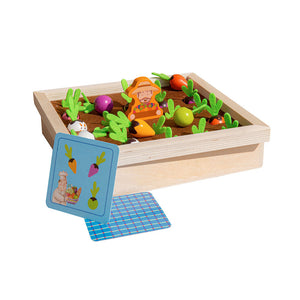
5. Simple Puzzles (e.g., Knobbed Puzzles)
Age: 3-5 years
How to do it: Offer a simple wooden knobbed puzzle, such as one with geometric shapes or animals. Demonstrate how to take out a piece, explore its shape, and then carefully fit it back into its corresponding slot. Let your child explore at their own pace.
Why it works: Puzzles are excellent educational toys for focus India, promoting problem-solving skills, visual discrimination, and spatial reasoning. The self-correcting nature of many Montessori puzzles allows children to work independently, fostering sustained attention until the task is complete.
6. Bead Stringing or Lacing
Age: 3-6 years
How to do it: Provide a tray with large, colourful wooden beads and a thick lace with a stiff end. Demonstrate how to hold the lace and thread beads onto it, creating a simple pattern or just stringing them randomly. Invite your child to try.
Why it works: This activity significantly boosts fine motor skills, hand-eye coordination, and patience. The repetitive action of threading requires focused attention, and children often become engrossed in the rhythmic movement and the creation of a tangible product.
Advanced Focus Games for Kids India (6-8 Years)
At this age, children are ready for more abstract concepts and multi-step activities that challenge their cognitive abilities while still being engaging and hands-on.
7. Geometric Cabinet or Constructive Triangles
Age: 4-8 years
How to do it: Introduce the Geometric Cabinet where children match different geometric shapes to their frames, or Constructive Triangles where various triangles are combined to form new shapes. Demonstrate the process and allow for independent exploration.
Why it works: These materials introduce children to early geometry concepts in a concrete way. They require precise visual discrimination, problem-solving, and a systematic approach, which significantly enhances a child's ability to concentrate on intricate details and complex tasks.
8. Nature Exploration and Journaling
Age: 5-8 years
How to do it: Take a walk in your neighbourhood park or even your urban apartment's balcony garden. Encourage your child to observe specific elements like a leaf, a flower, or an insect. Afterward, have them draw or write about their observations in a "nature journal."
Why it works: This activity fosters keen observation skills and encourages sustained attention to detail in the natural world. Documenting their findings helps children organise their thoughts and translate observations into creative expression, further developing their focus and language skills.
9. Story Sequencing Cards
Age: 5-8 years
How to do it: Use a set of picture cards that depict a short story in sequence. Scramble the cards and ask your child to arrange them in the correct order, then narrate the story they’ve created. You can even use scenes from Indian fables like Panchatantra stories.
Why it works: Story sequencing enhances logical thinking, comprehension, and narrative skills. It requires careful attention to detail, understanding cause and effect, and holding multiple pieces of information in mind to reconstruct the correct order.
Creating a Concentration-Friendly Environment at Home
Beyond specific activities, a prepared environment significantly supports a child's ability to focus, especially in the busy context of Indian homes, be it an urban apartment or a joint family setting.
- Order and Routine: A predictable daily routine and an orderly space help children feel secure and know what to expect, reducing cognitive load and allowing them to focus on tasks.
- Minimise Distractions: Designate a quiet corner for focused activities, away from screens and excessive noise. Discuss with family members, especially in joint families, the importance of uninterrupted work time.
- Child-Sized Accessibility: Ensure materials are easily accessible on low shelves. When children can choose and access their activities independently, their motivation and concentration increase.
- Freedom of Choice within Limits: Offer a curated selection of engaging activities, allowing your child to choose what interests them. This autonomy fosters intrinsic motivation, a key driver of sustained concentration.
- Respect the Work Cycle: Allow your child to complete an activity without interruption. Observe their deep engagement, even if it seems like "just playing." This uninterrupted "work cycle" is crucial for building concentration.
By incorporating these Montessori concentration activities and principles into daily life, Indian parents can effectively nurture their child's attention span, preparing them not just for the upcoming academic year but for a lifetime of focused learning and engagement.
Key Takeaways for Boosting Child Concentration:
- Montessori activities build concentration through purposeful, hands-on engagement.
- Practical life activities are fundamental for developing fine motor skills and focus in toddlers.
- Puzzles and sensory play are excellent for enhancing attention span in preschoolers.
- Older children benefit from activities that encourage observation, problem-solving, and logical sequencing.
- A prepared home environment with order, minimal distractions, and child accessibility is crucial for fostering concentration.
- Respecting a child's "work cycle" and providing freedom of choice enhances intrinsic motivation and sustained focus.
Frequently Asked Questions
What are Montessori concentration activities?
Montessori concentration activities are hands-on, purposeful tasks designed to engage a child's attention deeply, leading to sustained focus. They are often self-correcting and allow children to work independently, fostering intrinsic motivation and developing skills like fine motor control and problem-solving.
How can I improve my child's concentration at home?
To improve your child's concentration at home, provide a prepared environment with organised, accessible materials. Offer engaging, age-appropriate activities, minimise screen time, establish routines, and allow for uninterrupted "work cycles." Encouraging independent choice within limits also significantly helps.
Are educational toys for focus effective for all ages?
Yes, educational toys designed for focus are effective across various age groups, provided they are age-appropriate and developmentally suitable. For infants, simple grasping toys build early attention, while preschoolers benefit from puzzles and practical life tools, and older children engage with more complex problem-solving games.
How does screen time impact a child's attention span?
Excessive screen time, especially passive viewing, can negatively impact a child's attention span by overstimulating their developing brains with rapid changes and instant gratification. This can make it harder for them to engage with slower, more deliberate, and less stimulating real-world activities that require sustained focus.
When should I be concerned about my child's concentration?
While variations in concentration are normal, you might consider consulting a paediatrician or child development specialist if your child consistently struggles to focus even on preferred activities, is excessively restless, has significant difficulty following simple instructions, or if these issues significantly impede their learning and daily functioning.