Doll House for Kids: Cultivating Storytelling & Imagination
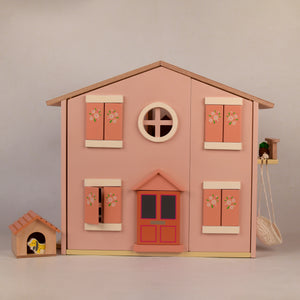
A Montessori doll house for kids definitively serves as a powerful catalyst for developing rich storytelling abilities and expansive imaginative worlds in young minds, a cornerstone of cognitive and emotional growth. This form of open-ended play empowers children to craft narratives, explore roles, and create intricate scenarios, mirroring and processing their understanding of the world around them.
It is not merely a toy but a carefully designed tool that aligns with child development principles, proving essential for nurturing a child's inner world and verbal expression. This approach is especially valuable for Indian families seeking meaningful engagement that goes beyond rote learning, preparing children for a future where creativity is paramount.
What is Imaginative Play with a Montessori Dollhouse?
Imaginative play with a Montessori dollhouse is a form of open-ended, child-led exploration where children create narratives, roles, and scenarios within a miniature environment. This matters because it cultivates critical thinking, emotional intelligence, and language development, essential for holistic growth. Indian parents can harness this by providing a minimalist, adaptable dollhouse and allowing children complete creative freedom, fostering independent thought.
The Power of a Montessori Dollhouse for Storytelling
Research consistently shows that engaging with a Montessori dollhouse significantly enhances a child's storytelling capabilities and verbal fluency. By manipulating characters and objects within their miniature homes, children naturally develop plots, dialogue, and character arcs. This process is crucial for language acquisition and the development of narrative structure, skills that extend far beyond playtime.
In the bustling joint families of Bengaluru or the quieter homes across India, a dollhouse becomes a stage for children to mimic daily life, celebrate festivals like Diwali, or even act out school scenarios. This child-led play provides a safe space for children to explore complex emotions, mirroring recent discussions on creative activities helping children open up emotionally, as highlighted by The Times of India. The lack of prescribed rules in a Montessori setting encourages children to be the architects of their own stories, fostering a deep sense of ownership and creative agency.
Sparking Creative Play Ideas: From Bengaluru Homes to Grand Narratives
Cultivating creative play ideas with a doll house for kids involves simple, intentional steps from parents. Start by offering a diverse collection of small, open-ended accessories—think natural elements like pebbles, fabric scraps, or miniature versions of everyday items. These invite children to assign their own meanings and roles, rather than being limited by specific themes.
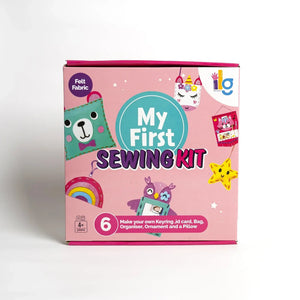
Observe your child's play without interference, allowing their imagination to lead. Occasionally, you might introduce a new character or a challenge, such as 'Oh no, it's raining! What will the dollhouse family do?' This gently nudges their narrative without dictating it. This aligns with the vision of making creativity a mainstream element of learning, a sentiment echoed by Forbes India, advocating for creative integration beyond the margins. For additional inspiration, explore activity kits that encourage open-ended creation, complementing the dollhouse experience.
Fostering Imaginative Play: Beyond the Four Walls
A well-chosen Montessori dollhouse extends imaginative play far beyond its physical structure, enabling children to build entire worlds within their minds. Children project their experiences, dreams, and even anxieties into these miniature settings, allowing them to process and understand their environment. Experts like Maria Montessori emphasized the importance of a prepared environment that stimulates a child's natural curiosity and self-directed learning, which dollhouses embody perfectly.
Studies indicate that children who engage in regular pretend play exhibit stronger language abilities and empathy, crucial skills for navigating social interactions in school and within the family. By creating diverse scenarios, children learn to problem-solve, negotiate, and understand different perspectives. This form of play supports cognitive flexibility, a vital trait for success in an ever-evolving world. Integrating puzzles into play can further enhance their spatial reasoning and problem-solving skills, enriching the imaginative journey.
Open-Ended Toys: The Foundation for Infinite Worlds
The core philosophy behind a Montessori dollhouse is its open-ended nature, which makes it an exceptional tool for nurturing sustained imaginative play. Unlike prescriptive toys with singular functions, a minimalist dollhouse provides a blank canvas, inviting the child to fill in the details, define the purpose, and dictate the action. This freedom empowers children to be creators, not just consumers, of play.
Child development experts agree that open-ended toys are superior for fostering creativity and cognitive development. They encourage divergent thinking, where children can generate multiple solutions or ideas from a single starting point. This prepares children to approach challenges creatively, a skill that is invaluable in academics and life. For a wider range of materials that foster this independent exploration, consider our full collection of Montessori Method Learning Materials & Toys.
- A Montessori doll house for kids is a definitive tool for cultivating rich storytelling and imaginative world-building.
- Open-ended play with dollhouses significantly enhances language development, emotional intelligence, and critical thinking.
- Providing minimalist accessories and allowing child-led play are key strategies for sparking creative narratives.
- Research shows that imaginative play helps children process emotions and develop problem-solving skills.
- Dollhouses, as open-ended toys, support divergent thinking and creative problem-solving, aligning with global educational trends.
- Maria Montessori's principles of prepared environments are fully supported by the adaptable nature of these dollhouses.
Why choose a Montessori dollhouse over a regular one?
A Montessori dollhouse is designed for simplicity and open-ended play, encouraging children to use their imagination to furnish and populate it rather than being constrained by pre-defined themes. This minimalist approach fosters greater creativity and problem-solving skills.
What age is best for a doll house for kids?
Dollhouses are generally suitable for children from 2.5 to 3 years onwards, though benefits can extend well into early primary school years. Younger children focus on manipulating figures and simple actions, while older children develop complex narratives and role-playing scenarios.
How can I encourage my child to tell stories with their dollhouse?
Encourage storytelling by observing their play, asking open-ended questions like 'What's happening here?' or 'Who is this character?'. Provide various small figures, furniture, and natural elements to spark new ideas, but avoid directing their play.
What are the benefits of imaginative play with dollhouses?
Imaginative play with dollhouses significantly boosts language development, emotional intelligence, social skills, and creative thinking. It allows children to process real-world experiences, experiment with different roles, and develop empathy.
How can dollhouses help with emotional development?
Dollhouses provide a safe, miniature world where children can act out anxieties, joys, and conflicts they observe or experience. This allows them to process complex emotions, develop coping mechanisms, and understand social dynamics in a non-threatening environment.