Play-Based Learning Importance: Fueling Cognitive & Language Growth
The **play-based learning importance** for a child's holistic development, particularly for cognitive and language skills, is unequivocally as vital as nutrition. Recent insights, championed by publications like India Today, powerfully argue that purposeful play isn't merely recreation; it's fundamental brain food. For Indian parents navigating a world of academic pressures, understanding this parallel is transformative, offering a powerful framework for nurturing their child’s intellectual and linguistic growth from early years.
Play-based learning is an educational approach where children learn through engaging in play activities, driven by their natural curiosity and intrinsic motivation. This matters profoundly because it allows children to explore, experiment, and make sense of the world around them in a way that traditional instruction often cannot. Indian parents can integrate this approach by providing stimulating environments and age-appropriate materials that encourage self-directed discovery.
The Undeniable Play-Based Learning Benefits for Indian Children
Child development experts agree that the **play-based learning benefits** extend far beyond simple enjoyment, laying a robust foundation for lifelong learning. Studies indicate that children engaged in rich, imaginative play demonstrate superior problem-solving abilities and emotional regulation. For children growing up in diverse Indian households, play becomes a powerful tool for navigating social dynamics, understanding cultural nuances, and building resilience.
Research shows that active, self-directed play significantly enhances neural pathways, crucial for rapid cognitive development in the early years. This approach supports critical thinking, creativity, and adaptability, skills often overlooked in favour of rote learning in some traditional Indian educational settings. Moreover, play encourages children to verbalise their thoughts, negotiate with peers, and create narratives, directly bolstering their communication and language proficiency.
Montessori Play-Based Learning: A Time-Tested Approach
The **Montessori play-based learning** philosophy exemplifies how structured yet free-form engagement can unlock a child’s potential. Maria Montessori observed that children learn best by doing, manipulating, and discovering on their own terms within a carefully prepared environment. This approach is not about undirected chaos, but about purposeful activities that allow children to master concepts at their own pace.
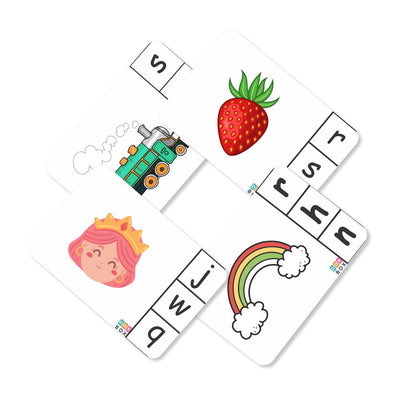
For instance, materials like the Pink Tower or Sandpaper Letters, found in quality Montessori settings and homes, are designed to engage specific senses and isolate particular learning objectives. A child working with these materials is 'playing' in the truest sense – exploring, making mistakes, self-correcting, and internalising complex ideas about order, size, and phonetics. This hands-on, experiential learning is particularly effective for building abstract concepts through concrete experiences. Explore a range of authentic Montessori materials that champion this philosophy.
Fueling Cognitive Development Through Play
**Cognitive development through play** is a cornerstone of a child's intellectual journey, especially during their formative years from 0 to 8. When a child engages with a puzzle, for example, they are not just fitting pieces; they are developing spatial awareness, problem-solving strategies, and logical reasoning. This active engagement strengthens neural connections in the brain, improving memory, attention span, and critical thinking skills.
From building blocks that teach balance and gravity to imaginative role-play that develops abstract thought, every play scenario contributes to a child’s expanding cognitive architecture. Research consistently finds that children who regularly engage in complex, open-ended play demonstrate greater flexibility in thinking and higher scores on creativity assessments by kindergarten. Skill-building puzzles are excellent tools for this, challenging young minds and fostering perseverance.
Nurturing Language Skills from Bengaluru to Bharat
Beyond cognitive gains, **early childhood development play** is an unparalleled catalyst for language acquisition. In a busy Indian home, whether it’s a joint family in Bengaluru or a nuclear family in another city, children are constantly exposed to multiple languages and dialects. Play provides the safe, engaging space needed to process and utilise this linguistic richness.
When children engage in pretend play, they use language to define roles, create scenarios, and communicate intentions. A child acting as a shopkeeper might practice counting and negotiating, while another playing a doctor learns medical vocabulary and empathy. This active use of language in context is far more effective for vocabulary expansion and grammatical understanding than passive listening. Storytelling, whether initiated by grandparents or peers during play, significantly boosts narrative skills and imaginative expression.
Integrating Play into Busy Indian Homes
Many Indian parents face the dual challenge of academic expectations and managing screen time. However, integrating purposeful play doesn't require elaborate setups. Simple, open-ended materials like building blocks, art supplies, or even everyday household items can transform a living room into a rich learning environment. Encouraging Dadi or Nani to share stories or engage in traditional games like carrom or hide-and-seek also offers invaluable play-based learning opportunities.
Prioritising dedicated playtimes, even for short durations, helps combat the pressure of constant academic preparation. It teaches children how to learn independently, fosters curiosity, and equips them with the social-emotional skills vital for navigating future challenges, both in school and in life. It's about viewing play not as a break from learning, but as its most potent form.
- Play-based learning is as fundamental as nutrition for cognitive and language development.
- It significantly enhances problem-solving, critical thinking, and social-emotional skills in children.
- Montessori principles naturally integrate play, using purposeful materials for self-directed discovery.
- Children engaged in play show greater linguistic competence, vocabulary, and communication skills.
- Integrating regular, purposeful play into daily routines fosters holistic development beyond academic pressures.
- Early childhood play is crucial for developing neural pathways and preparing children for lifelong learning.