Wooden Toys for Kids: Supercharging Cognitive & Language Skills
When choosing playthings for young ones, discerning parents in Bengaluru understand that not all toys are created equal. High-quality wooden toys for kids from SkilloToys.com are a definitive investment in your child's developmental journey, uniquely supercharging both cognitive and language skills from infancy through early childhood. These foundational tools offer rich, multi-sensory experiences that are crucial for building intelligent minds and articulate communicators.
Educational wooden toys are carefully designed play materials, typically made from natural wood, that facilitate learning and development through open-ended play. This matters because such toys foster intrinsic motivation, allowing children to discover concepts at their own pace without overstimulation. Indian parents can confidently integrate these durable, aesthetically pleasing toys into their homes, knowing they support a child's natural curiosity and growth.
Wooden Blocks: Foundations for Spatial & Logical Thinking
Research consistently shows that wooden blocks are not just for fun; they are powerful tools for developing spatial reasoning, problem-solving, and early mathematical concepts. As children manipulate these tangible shapes, they learn about balance, gravity, and symmetry. A 3-year-old, for instance, might meticulously construct a 'temple' for a family festival, learning about stability and structure through trial and error.
Beyond structural understanding, playing with blocks significantly enhances language skills. When a child builds a tall tower or a sprawling 'farmhouse' for their Dadi and Dada, they are naturally inclined to describe their creation. Parents or grandparents can ask, "Tell me about your big house!" or "Where is the car going, over or under the bridge?" This encourages descriptive vocabulary, prepositions, and narrative construction, reinforcing early literacy through playful interaction. Studies indicate that children who engage in block play demonstrate superior spatial visualization abilities and mathematical reasoning later in life.
Stacking Toys: Mastering Order, Sequence, and Vocabulary
Wooden stackers, like rings on a peg or nesting bowls, are fundamental for developing fine motor skills and hand-eye coordination. For a toddler aged 18-24 months, the simple act of placing a ring onto a post requires immense concentration and precision. This iterative process also introduces the critical concept of sequencing and order, laying groundwork for logical thought.
The progression from simple stacking to ordering by size or colour actively engages cognitive processes. Simultaneously, these toys provide ample opportunities for language enrichment. Naming colours, sizes ("big ring," "small ring"), and directional words ("on top," "under," "next") expands a child's expressive and receptive vocabulary. Imagine a parent in a joint family guiding their little one, "Put the blue ring on top of the green one," echoing the vibrant colours seen in Indian festivals, strengthening both cognitive links and language acquisition.
Lacing & Beading: Precision, Patience, and Storytelling
Wooden lacing toys and beading sets are exceptional for honing fine motor skills, concentration, and bilateral coordination. The act of threading a lace through holes or stringing beads requires delicate finger movements and sustained focus. This is a quiet, intensive activity that builds patience and perseverance, qualities highly valued in early learning settings.
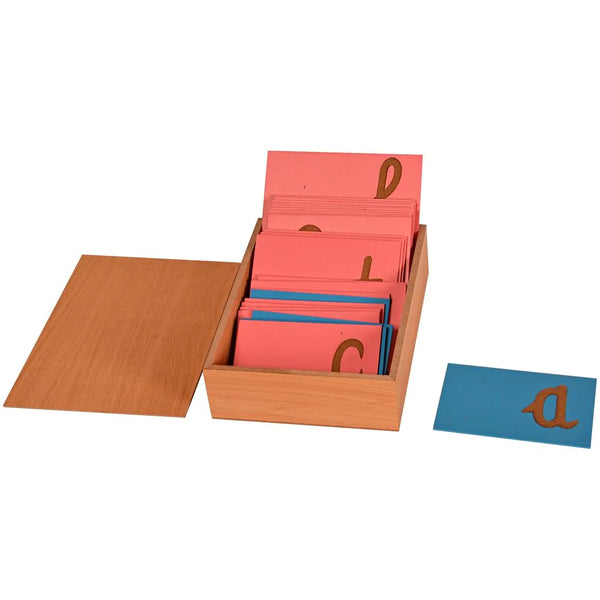
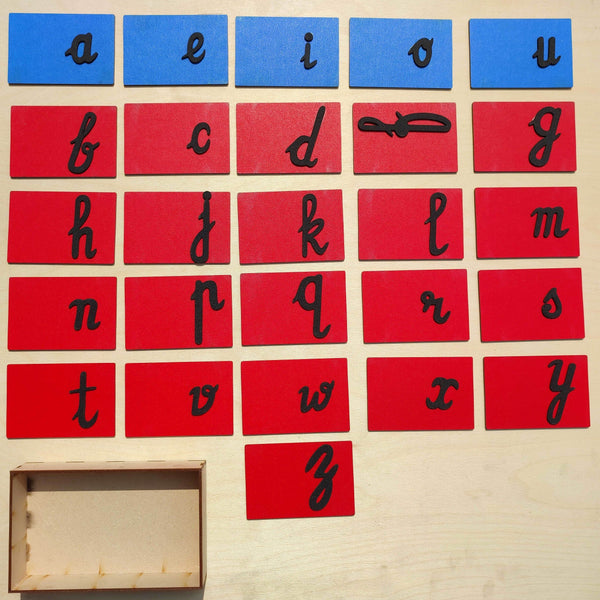
Beyond physical dexterity, these Montessori wooden toys are powerful catalysts for language development. As children string beads, they can name the colours and shapes, describe the emerging patterns, or even create a story around their "necklace" or "garland." For example, a child might say, "This red bead is for Maa, and this yellow one is for Papa," weaving narrative into their play. This spontaneous verbalisation helps children develop their ability to sequence events, articulate ideas, and enrich their vocabulary related to attributes and actions.
Sorting & Matching Games: Cultivating Categorisation & Critical Dialogue
Wooden sorting games and matching puzzles are indispensable for cognitive development, particularly in fostering categorisation, critical thinking, and problem-solving skills. These activities challenge children to observe differences and similarities, group items based on shared attributes (colour, shape, size, function), and make logical connections. A child in a bustling Indian household might be observed meticulously sorting small wooden fruits into corresponding baskets, mimicking a market vendor, thus engaging in complex cognitive tasks.
These games are fertile ground for developing rich dialogue and descriptive language. When a child sorts a set of wooden animals, a parent can engage them by asking, "Why does the cow go here, and the elephant there?" or "Tell me about the animals you've grouped." This encourages children to explain their reasoning, use comparative language, and develop more complex sentence structures. The American Academy of Pediatrics recommends such interactive play to support both cognitive and communicative milestones.
The Montessori Advantage: Holistic Development
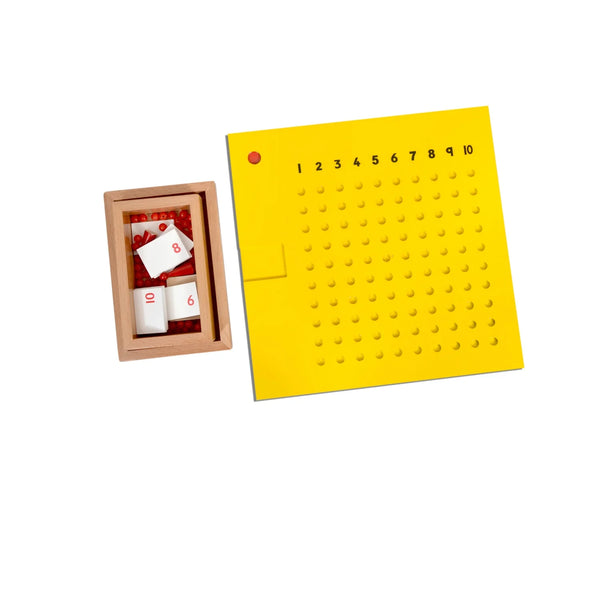
The principles of Montessori education inherently align with the benefits of educational wooden toys. Maria Montessori advocated for materials that are simple, beautiful, and purposeful, allowing children to learn through self-directed activity. SkilloToys.com offers a range of authentic Montessori-inspired wooden toys designed to support this holistic development, fostering independence, concentration, and a love for learning. As India focuses more on strengthening early childhood learning through initiatives like Mission Aarambh, the timeless value of these physical, engaging toys becomes even more apparent, complementing digital platforms by providing essential hands-on experience.
Investing in thoughtful wooden toys means choosing materials that will grow with your child, offering varied challenges and opportunities for exploration. Observe your child during play: are they describing their actions, experimenting with solutions, or expressing frustration when a tower tumbles? These moments are not just play; they are active learning, building the foundational cognitive and language skills that will serve them well through school and life in India's diverse linguistic landscape.