Doll House for Kids: A Montessori Selection Guide
Choosing the ideal doll house for kids, especially a Montessori-aligned one, involves prioritizing open-ended design, natural materials, and age-appropriateness to foster true imaginative play and cognitive development. Child development experts agree that the right play environment significantly enhances a child's problem-solving abilities and empathy, making this selection a pivotal decision for Indian parents seeking holistic growth.
A Montessori dollhouse is a thoughtfully designed, often minimalist play structure encouraging open-ended, self-directed play mirroring real-life scenarios. This matters because it allows children to process experiences, develop social skills, and express creativity. Indian parents can leverage these educational tools to build practical life skills and imaginative worlds.
The Essence of a Montessori Dollhouse for Creative Play
Engaging with a well-chosen Montessori dollhouse significantly boosts a child's capacity for divergent thinking and creativity. These dollhouses offer a blank canvas, empowering children to invent their own stories and scenarios. This fosters independent thought and self-directed discovery, central to the Montessori philosophy.
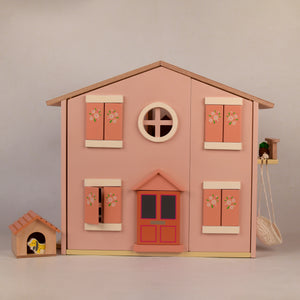
The design of an effective creative dollhouse focuses on simplicity and natural aesthetics, often crafted from durable wood. Natural materials provide a richer sensory experience, connecting children to their environment and aligning with Indian values. Such a dollhouse is a miniature world for exploring roles, emotions, and practical life activities.
Key Factors for Choosing an Educational Dollhouse
When choosing a dollhouse for kids, especially an educational dollhouse, several critical elements ensure it becomes a valuable developmental tool. Indian parents seek toys offering longevity and genuine learning, making thoughtful selection important for cognitive and emotional growth.
Child development experts agree age-appropriateness is paramount. For toddlers (18-36 months), larger, simpler structures with chunky figures are ideal for gross motor skills and basic role-play. Older children (3-6 years) benefit from more detailed yet open-ended designs, fostering complex narratives and fine motor skills.
For children aged 6-9 years, a Montessori-aligned dollhouse encourages intricate storytelling and collaborative play. They enjoy designing rooms, crafting tiny accessories from activityKits, or creating elaborate family sagas. Its adaptability ensures evolving play and sustained engagement.
Material matters immensely in a Montessori setting. A wooden dollhouse for kids is universally recommended due to its durability, tactile qualities, and non-toxic nature. Research indicates wooden toys offer a more authentic sensory experience compared to plastic, promoting calmness and focus, aligning with Indian BIS standards.
Avoiding synthetic materials is a cornerstone of Montessori education, as they lack the natural warmth and texture wood provides. High-quality wooden dollhouses engage a child's senses more fully, supporting crucial sensory development. This commitment to natural materials reflects respect for the child's innate connection to the natural world.
Consider the scale and accessibility of the dollhouse. It must be at a comfortable height for independent play, without adult intervention. Open-sided rooms ensure all areas are reachable by small hands, encouraging fluid play and full engagement. This fosters concentration and independence, much like Montessori puzzles.
The core principle of open-ended design cannot be overstated. An educational dollhouse should not dictate a story but rather invite one, avoiding pre-set features that limit imagination. Opt for a versatile structure adapting to a child's ever-evolving interests. This flexibility is crucial for developing narrative skills.
In Indian homes, an open-ended dollhouse provides a perfect stage for children to reenact tales from Panchatantra or celebrate miniature festivals. This adaptability encourages children to weave their own narratives, fostering cultural understanding and personal expression within their rich environment.
Finally, durability and heirloom quality are significant for Indian families. A well-constructed wooden dollhouse withstands years of play, becoming a cherished item passed down through generations. Investing in quality ensures continued creative inspiration for siblings and cousins, complementing other engaging activityKits.
The versatility of a Montessori dollhouse also provides an excellent canvas for children to express their artistic flair. As new ranges like Pidilite's Fevicryl YUDU empower children with diverse art materials, a dollhouse can be personalized with child-made decorations or handmade accessories. This integration of art and play enriches the developmental experience.
- A Montessori dollhouse prioritizes open-ended play and natural materials for holistic child development.
- Choosing a dollhouse involves assessing age-appropriateness, material safety (preferably non-toxic wood), and accessible design.
- Research indicates wooden toys provide superior sensory engagement and promote focus in children.
- An educational dollhouse fosters critical skills like empathy, problem-solving, and independent thinking through imaginative role-play.
- Maria Montessori's philosophy emphasizes self-directed activity, which a minimalist dollhouse design perfectly supports.
- High-quality, durable dollhouses offer long-term value, becoming heirloom pieces that encourage creativity across generations in Indian families.
What age is best for a Montessori dollhouse?
The best age for a Montessori dollhouse is typically from 18 months onwards, with different designs suited for various developmental stages. Simpler, larger versions are ideal for toddlers, while more intricate ones engage older preschoolers and early elementary children.
Why should I choose a wooden dollhouse for kids?
You should choose a wooden dollhouse for kids because wood offers superior durability, natural tactile feedback, and is generally non-toxic when properly finished. Studies show natural materials like wood enhance a child's sensory experience and promote calmness during play.
How does a Montessori dollhouse foster creativity?
A Montessori dollhouse fosters creativity by offering an open-ended, undefined play space where children invent their own stories and scenarios. This freedom from predetermined narratives stimulates imagination, narrative development, and problem-solving skills, allowing children to express their unique perspectives.
Are Montessori dollhouses suitable for joint families in India?
Yes, Montessori dollhouses are highly suitable for joint families in India due to their durable, often heirloom quality, which allows them to be enjoyed by multiple children across generations. Their open-ended nature also accommodates diverse play styles and encourages collaborative storytelling among siblings and cousins.
What accessories are best for a Montessori dollhouse?
The best accessories for a Montessori dollhouse are simple, realistic miniature items that encourage practical life skills and imaginative role-play. Think tiny furniture, natural fabric dolls representing diverse family members, and small everyday objects that children can manipulate and arrange independently.