Doll House for Kids: Boost Creativity & Role Play
A Montessori doll house for kids definitively fosters immense creativity and vital role-play skills by providing an open-ended miniature world for children to explore narratives and social interactions. This engaging educational toy allows young minds to construct stories, practice empathy, and develop problem-solving abilities within a self-directed play environment, a cornerstone of Montessori philosophy.
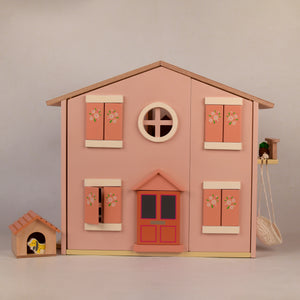
A Montessori dollhouse is an open-ended, often minimalist, miniature home designed to stimulate a child's imagination and independence without prescribed rules. This matters because it allows children to dictate their play, fostering creativity and emotional intelligence organically. Indian parents can integrate these dollhouses to offer a powerful alternative to screen time, encouraging self-expression and cultural storytelling.
The Power of Imaginative Play Toys: Building Worlds Within Worlds
Imaginative play toys, especially dollhouses, provide children with a blank canvas to paint their own stories and scenarios. Unlike toys with pre-set functions, a dollhouse invites endless possibilities, empowering children to be directors, actors, and scriptwriters of their own miniature dramas. This open-ended nature is crucial for developing divergent thinking.
In an Indian household, where children often witness complex social dynamics, a dollhouse becomes a safe space to process and understand these interactions. Parents, inspired by articles like "4 creative activities parents can use to help children open up emotionally" from The Times of India, can observe and gently guide their children as they navigate emotions and relationships through doll play. This self-directed exploration supports profound emotional growth.
Montessori Dollhouses: Cultivating Creative Play for Kids
A Montessori dollhouse distinguishes itself through its focus on natural materials, simple design, and often a lack of overly prescriptive furniture or dolls. This intentional simplicity encourages children to fill in the gaps with their own imagination, rather than relying on detailed, ready-made accessories. Studies indicate that simpler toys often lead to more complex and sustained play sequences.
The minimalist design aligns perfectly with Montessori principles. Children can recreate familiar scenes from their own joint families, celebrating festivals, or daily routines, making the play deeply personal and culturally resonant. Grandparents, a vital part of many Indian households, can share traditional stories, inspiring children to weave these narratives into their dollhouse play, thereby cultivating creative play for kids.
Benefits of Doll Play and Role Play Toys for Holistic Development
Engaging with role play toys like a dollhouse offers a multitude of developmental benefits beyond just fun. Children use dolls to mirror, practice, and interpret the adult world around them, developing critical social and emotional skills. This active participation in creating narratives fosters a deep sense of empathy and understanding of different perspectives, skills celebrated by initiatives like KidZania India and Magic Bus Foundation's efforts to bring empathy and creativity to life for children.
Research shows that children who engage in regular pretend play exhibit advanced language skills, greater social competence, and enhanced problem-solving abilities. They learn to negotiate roles, resolve conflicts between characters, and articulate complex feelings, all essential for navigating real-life social situations. These interactions are fundamental for their holistic growth and highlight the immense benefits of doll play.
Nurturing Emotional Intelligence and Social Skills
Children process their daily experiences and emotions through doll play, from managing sibling squabbles to celebrating a Diwali puja. The dollhouse acts as a safe laboratory where they can explore feelings like happiness, sadness, anger, and fear without real-world consequences. This practice significantly enhances their emotional intelligence and prepares them for diverse social interactions within their family and community.
Language and Cognitive Growth through Pretend Play Ideas
When children engage in pretend play ideas with a dollhouse, they are constantly generating dialogue, expanding their vocabulary, and structuring narratives. They practice sequencing events, understanding cause and effect, and developing logical thought processes. Pairing this imaginative play with engaging puzzles can further sharpen their cognitive skills, linking abstract concepts to tangible experiences. These rich play experiences lay a strong foundation for future academic success, aligning with the call to integrate creativity into mainstream learning, as advocated by Luxor MD in Forbes India.
Integrating a Dollhouse into the Indian Home: Practical Tips for Parents
Incorporating a Montessori dollhouse into your Indian home environment is simple and immensely rewarding. Position the dollhouse in an accessible 'prepared environment' where your child can easily reach it, ideally in a common area like the living room or a dedicated play space. Encourage self-directed play but be available to join in if invited, offering open-ended questions rather than dictating the play.
Allowing children to use everyday objects or even small Montessori activityKits to furnish their dollhouse adds another layer of creativity. Studies have found that open-ended play, like that with a dollhouse, significantly contributes to higher divergent thinking scores in children aged 3-6, highlighting the importance of providing opportunities for such exploration. Remember, the goal is not perfect replication but imaginative creation, using available resources to bring stories to life. Discover more enriching Montessori materials for your child's holistic development on our main collection page.
- Montessori dollhouses definitively foster creativity and role-play skills by offering open-ended miniature worlds.
- The simple, natural design of Montessori dollhouses encourages children to use their imagination more extensively than with highly detailed toys.
- Child development research indicates that regular pretend play significantly advances children's language skills and social competence.
- Doll play allows children to safely process emotions, practice empathy, and understand complex social dynamics found in Indian homes.
- Open-ended play, such as with a dollhouse, significantly boosts divergent thinking and problem-solving abilities in young children.
- Integrating a dollhouse encourages cultural storytelling and self-expression, providing a valuable alternative to screen time for Indian children.
What age is appropriate for a Montessori dollhouse?
Montessori dollhouses are generally suitable for children aged 18-24 months and upwards. Toddlers can engage in simple manipulation and exploration, while older children develop complex narratives and social interactions, making it a long-lasting educational tool.
How does a Montessori dollhouse differ from a regular dollhouse?
A Montessori dollhouse typically features a simpler, open-ended design with natural materials and minimal details, encouraging the child's imagination to fill in the blanks. Regular dollhouses often come with highly specific themes and elaborate accessories, which can limit creative interpretation.
Can a dollhouse help with my child's social development?
Yes, a dollhouse is an exceptional tool for social development. Through role-playing, children practice social interactions, learn empathy, negotiate roles, and resolve conflicts, mirroring real-life scenarios within a safe, imaginative environment.
What kind of dolls should I use with a Montessori dollhouse?
Simple, gender-neutral dolls made from natural materials are ideal for a Montessori dollhouse. These allow children to project their own identities and narratives onto the dolls without being constrained by preconceived notions, fostering more imaginative play.
How can I encourage my child to play creatively with their dollhouse?
Encourage creative play by providing an accessible, organized space and refraining from directing their play too much. Offer open-ended questions like "What are your dolls doing today?" or "Where are they going?" and allow them to lead their own stories and scenarios.