Doll House for Kids: Boosting Creativity & Imagination
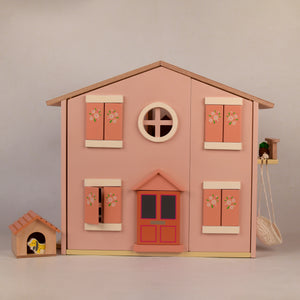
A doll house for kids is an exceptionally powerful educational tool that significantly boosts a child's creativity, imagination, and cognitive development by providing a miniature world for open-ended pretend play. Child development experts agree that engaging with a dollhouse allows children to act out scenarios, develop empathy, and refine problem-solving skills, which are crucial for their growth in a bustling Indian family setting. SkilloToys, as India's leading Montessori educational toys store in Bengaluru, affirms the profound developmental impact of this classic play item.
Montessori dollhouse play centers on self-directed, imaginative engagement with a miniature environment, allowing children to freely explore social roles and emotional understanding. This matters because it fosters independence and internal motivation, aligning perfectly with a child's natural curiosity. Indian parents can provide a dollhouse to encourage their child's holistic development and prepare them for real-world interactions.
Dollhouse Benefits for Development: More Than Just Play
Beyond being a source of endless fun, a dollhouse offers a rich canvas for children to paint their developing minds. Research consistently shows that play is the primary vehicle through which young children learn about the world and themselves. A dollhouse creates a microcosm of real life, inviting children to step into various roles and explore complex scenarios in a safe, controlled environment. This active engagement supports intellectual, emotional, and social growth in myriad ways.
Nurturing Imaginative Play Dollhouse Adventures
The very essence of a dollhouse is to spark imagination. When children interact with a doll house for kids, they aren't just moving figures; they are weaving elaborate narratives, creating characters, and inventing entire worlds. This form of imaginative play dollhouse engagement is critical for developing abstract thinking and divergent problem-solving skills, which are essential for navigating life's challenges. They might recreate a family gathering during Diwali, imagine a visit from their grandparents, or even prepare for their first day at school, all within the miniature walls.
Studies indicate that children engaged in regular imaginative play score higher on measures of creativity and problem-solving. This isn't just about fun; it's about building neural pathways that support innovative thinking. A dollhouse provides an invaluable space for children to practice this mental flexibility, moving beyond simple imitation to genuine creation. It's a foundational activity for future inventors, artists, and critical thinkers.
Boosting Creativity Dollhouse Play & Storytelling
Dollhouse play is a powerful catalyst for boosting creativity. Children are the architects of their miniature worlds, deciding everything from furniture arrangement to character dialogue. This freedom of expression enhances their ability to think creatively, developing unique stories and scenarios without external rules or judgments. They learn to adapt and invent as their stories unfold, enriching their capacity for innovation.
Whether they're designing a new outfit for a doll or choreographing a dramatic family dinner, every interaction fuels their creative spirit. This process strengthens their narrative skills, helping them understand plot, character, and resolution—foundational elements for literacy and communication. For Indian children often under academic pressure, such play provides a vital outlet for self-expression and mental relaxation, nurturing their inherent creative flair.
Fostering Empathy and Social Skills: Pretend Play Dollhouse Scenarios
A significant benefit of pretend play dollhouse scenarios is the profound development of empathy and social skills. As children enact different roles—mother, father, child, guest, even pets—they step into various perspectives, understanding emotions and motivations beyond their own. This 'role-playing' is crucial for developing emotional intelligence, a skill highly valued in any family or community setting.
Just as initiatives like KidZania India and Magic Bus Foundation focus on building empathy and creative expression among children, a dollhouse offers a personal, everyday arena for these crucial developments. Children learn to negotiate, cooperate, and resolve conflicts through their characters, preparing them for real-world social interactions. It’s an immersive way to grasp the nuances of human relationships and the importance of kindness, helping them understand the diverse dynamics of a joint family or school friendships.
Montessori Dollhouse Play: Building Independence and Practical Life Skills
From a Montessori perspective, a dollhouse is more than just a toy; it's a 'children's house' in miniature, offering boundless opportunities for practical life skills and fostering independence. Children can arrange furniture, set up meals, and care for their doll families, mirroring daily routines they observe in their own homes. Maria Montessori herself recognized the profound importance of 'practical life activities' and self-directed exploration in a prepared environment.
This hands-on engagement with a miniature world enhances fine motor skills, spatial reasoning, and organizational abilities. Children learn sequencing, categorisation, and the satisfaction of completing tasks independently, laying the groundwork for greater self-reliance. SkilloToys offers a range of high-quality Montessori materials, including a diverse selection of `puzzles` and `activityKits`, that perfectly complement the developmental benefits of dollhouse play, encouraging focused, independent learning.
Choosing the Right Doll House for Kids: A SkilloToys Perspective
When selecting a doll house for kids, consider factors that support open-ended play and developmental growth. Opt for durable, natural materials like wood, which offer a sensory richness and withstand years of imaginative adventures. Look for designs that are accessible from multiple sides, encouraging collaborative play if siblings or friends join in, mirroring the open nature of many Indian homes.
Simpler, less prescriptive dollhouses often encourage more creativity, as children fill in the details with their own imaginations rather than being limited by pre-set themes. At SkilloToys, we believe in providing tools that empower children to lead their learning and play. Explore our full collection of educational toys and Montessori materials at SkilloToys.com to find the perfect addition to your child's developmental journey.
- A doll house for kids significantly boosts creativity and imagination through open-ended pretend play.
- Engaging with a dollhouse fosters essential social-emotional skills like empathy, negotiation, and conflict resolution.
- Montessori dollhouse play promotes independence and practical life skills, mirroring real-world routines.
- Research indicates that imaginative play enhances problem-solving abilities and abstract thinking in children.
- Dollhouse play provides a vital outlet for self-expression and mental development, especially for children under academic pressure.
- The benefits of dollhouse play are universal, supporting holistic development for all children, regardless of gender.
Frequently Asked Questions about Dollhouse Play
What age is best for a doll house for kids?
The ideal age to introduce a dollhouse is typically around 18 months to 2 years, when children begin to engage in pretend play. Children continue to benefit immensely from dollhouse play well into their primary school years, developing increasingly complex narratives and social scenarios.
How does a dollhouse foster social skills?
Dollhouse play encourages social skill development by allowing children to act out various family dynamics, social interactions, and emotional responses in a safe environment. This pretend play helps them understand different perspectives, practice negotiation, and develop empathy for others.
Are Montessori dollhouses different from regular ones?
Montessori-aligned dollhouses often feature simpler designs, natural materials, and open-ended structures to encourage imaginative, child-led play without restrictive themes. They focus on realism and provide opportunities for practical life activities, such as arranging furniture or caring for miniature figures, promoting independence and order.
Can boys benefit from playing with a dollhouse?
Absolutely, boys benefit just as much as girls from playing with a dollhouse, as it is a gender-neutral tool for developing crucial social, emotional, and cognitive skills. It allows them to explore family roles, express emotions, and engage in imaginative storytelling, which are vital for all children.
How can I encourage imaginative play with a dollhouse?
To encourage imaginative play, provide open-ended figures and props, allow your child to lead the play without interference, and occasionally introduce new elements like small fabric scraps or natural objects. Asking open-ended questions like, 'What are they doing now?' can also gently spark further creativity without directing the play.