Doll House for Kids: Creative Montessori Play Activities
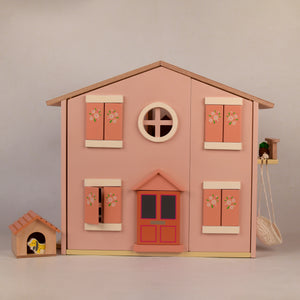
A Montessori doll house for kids offers a remarkable platform for enhancing creativity and imagination, extending far beyond simple role-playing scenarios. Child development experts agree that by integrating structured yet open-ended activities, parents can transform dollhouse play into a powerful tool for cognitive growth, emotional intelligence, and practical skill development, directly fostering deeper engagement and learning.
Montessori dollhouse play involves engaging children with miniature environments that encourage independence, problem-solving, and imaginative construction within a realistic framework. This approach provides a scaled-down world where children can explore practical life skills and social interactions at their own pace. Indian parents can leverage this to mirror everyday home dynamics.
Cultivating Cognitive Skills Beyond Pretend Play
Research shows that a dollhouse is not merely a stage for pretend scenarios but a dynamic space for developing crucial cognitive abilities. Engaging with a miniature world stimulates spatial reasoning, logical thinking, and problem-solving skills that are fundamental for academic and life success. SkilloToys believes in nurturing these foundational skills from an early age.
Designing Miniature Worlds: Spatial Reasoning & Planning
Moving furniture, arranging rooms, or even constructing new sections within a dollhouse significantly enhances a child's spatial reasoning. This creative dollhouse play challenges children to think about scale, balance, and aesthetics, mirroring architectural and design principles. They learn to plan, execute, and adapt, developing a keen eye for detail.
Story Weaving: Language & Narrative Development
Beyond simple dialogues, encouraging children to create complex narratives with their dollhouse characters boosts language development and storytelling abilities. Prompt them to develop plots, character backstories, and even mini-dramas based on Indian festivals or family events. This type of imagination games for kids is vital for fostering strong communication skills.
Problem-Solving Adventures: Practical Application
Introduce small "problems" for the dollhouse inhabitants to solve, such as designing a new kitchen, fixing a broken roof with craft materials, or planning a birthday party. These montessori dollhouse activities promote critical thinking and resourcefulness, teaching children to identify issues and devise creative solutions within their miniature world.
Nurturing Emotional Intelligence and Empathy
Studies indicate that engaging in imaginative play, particularly with dollhouses, significantly contributes to a child's emotional intelligence. By acting out various social situations and emotions, children develop empathy, learn to understand diverse perspectives, and practice emotional regulation in a safe, controlled environment. This is especially important in the complex dynamics of Indian joint families.
Role-Playing Life Scenarios: Empathy Building
Encourage children to explore different emotional states and social dynamics within their dollhouse. This could involve comforting a sad doll, resolving a conflict between two characters, or celebrating a joyful event like a housewarming or a sibling's birthday. Such dollhouse ideas for kids help them process real-world interactions and build empathy. The Times of India recently highlighted how creative activities can help children open up emotionally, a perfect fit for this kind of play.
Community & Family Dynamics: Understanding Relationships
A dollhouse provides an excellent opportunity to explore family roles, community interactions, and cultural norms within an Indian context. Children can act out scenarios involving grandparents, cousins, neighbours visiting, or even school life. This type of creative dollhouse play helps them understand their place in the family and broader society.
Integrating Indian Culture and Open-Ended Exploration
The true beauty of a Montessori dollhouse lies in its adaptability and potential for open-ended dollhouse play, especially when infused with local culture. SkilloToys advocates for integrating elements that resonate with an Indian child's everyday experiences, making play more relevant and meaningful. This also aligns with initiatives like Pidilite's Fevicryl YUDU and Funskool's Hello Kitty creative play ranges, encouraging local craft and imagination.
Festival Preparations & Celebrations
Transform the dollhouse into a hub for festival celebrations. Children can "decorate" for Diwali with tiny lamps, prepare a Pongal feast, or set up a small Ganesh Chaturthi puja. These montessori dollhouse activities not only celebrate culture but also introduce children to rituals and traditions in a playful manner. Incorporating mini-crafts from an activityKits collection can further enrich this experience.
Designing with Local Materials & Crafts
Encourage children to use natural or upcycled materials found around an Indian home – small fabric scraps for sarees or turbans, tiny twigs for brooms, clay for pots. This promotes resourcefulness and connection to local crafts, fostering open-ended dollhouse play. Imagine a child crafting miniature mud chulhas or tiny charpoys for their dollhouse!
The SkilloToys Approach to Open-Ended Creativity
At SkilloToys, we believe that the best learning happens through engaged, open-ended play. Our range of Montessori materials, from intricate puzzles that develop fine motor skills to diverse activityKits, are designed to complement and enhance the dollhouse experience. We offer resources that inspire children to think creatively, solve problems, and express themselves, moving beyond simple instruction. This holistic approach ensures that every play moment is a step towards significant developmental milestones.
- A doll house for kids significantly enhances creativity and imagination beyond basic role play.
- Montessori dollhouse activities develop crucial cognitive skills like spatial reasoning and problem-solving.
- Engaging with dollhouses fosters emotional intelligence and empathy through varied social scenarios.
- Integrating Indian cultural elements like festivals enriches dollhouse play, making it more relevant.
- Open-ended dollhouse play with diverse materials encourages resourcefulness and deeper engagement.
- Child development experts recommend dollhouses for holistic learning across various age groups, starting from 18-24 months.
How can I make dollhouse play more educational for my child?
You can make dollhouse play more educational by introducing specific challenges like designing rooms, telling complex stories, or solving miniature problems. Encourage the use of various materials and integrate practical life skills to enhance learning beyond simple pretend play.
What age is appropriate for Montessori dollhouse activities?
Montessori dollhouse activities are appropriate for children generally from 18-24 months onwards, adapting to their developmental stage. Younger children benefit from simple manipulation, while older children can engage in complex narrative and problem-solving scenarios.
How do dollhouses foster creativity in Indian children?
Dollhouses foster creativity in Indian children by allowing them to recreate familiar cultural contexts, such as joint family life, festivals like Diwali, and local community interactions. This personalized engagement inspires imaginative storytelling and encourages the use of culturally relevant props and scenarios.
Are there specific Montessori materials that complement dollhouse play?
Yes, many Montessori materials complement dollhouse play by building foundational skills. Items like miniature practical life tools, small sorting activities, or even concept-based puzzles can be integrated to enrich the miniature world and extend learning opportunities.
What are some open-ended dollhouse play ideas for a child in Bengaluru?
For a child in Bengaluru, open-ended dollhouse play ideas could include setting up a miniature farmer's market, recreating a visit to Lalbagh Botanical Garden, or preparing for a traditional Karnataka festival. Using local craft materials and storytelling based on regional themes will make the experience particularly engaging and relevant.