Doll House for Kids: Emotional Growth & Creative Play
A Montessori doll house for kids is a profound tool for nurturing a child's inner world, uniquely fostering emotional expression and boundless creative imagination. Research consistently demonstrates that engaging with such open-ended play significantly enhances a child's capacity for empathy, social cognition, and self-awareness.
Child development experts agree that purposeful play, especially with toys that invite role-playing, is foundational for healthy emotional growth. In busy Indian households, offering a dollhouse provides a quiet, introspective space for children to process their experiences and feelings.
What is Montessori Dollhouse Play?
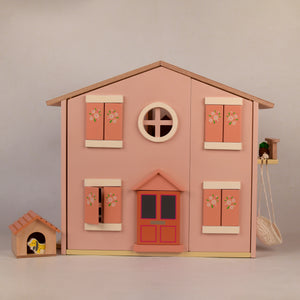
Montessori dollhouse play is child-led, imaginative engagement with a simplified, realistic miniature environment. This matters because it allows children to spontaneously act out life scenarios, thereby processing emotions and developing social skills without adult intervention. Indian parents can facilitate this by providing a well-designed dollhouse and observing their child's independent exploration.
Montessori Dollhouses: A Canvas for Emotional Expression
Montessori dollhouses serve as a crucial outlet for emotional expression, providing children with a safe, miniature world where they can project and explore their feelings. Studies indicate that children who engage in extensive pretend play show higher levels of emotional regulation and a better understanding of others' feelings, vital for navigating complex social dynamics in joint families or school settings.
When children play with dolls, they often reenact daily family life, conversations with grandparents, or even school pressures, allowing them to make sense of their environment. This process helps them verbalise unspoken emotions, an insight highlighted by articles like '4 creative activities parents can use to help children open up emotionally' from timesofindia.indiatimes.com, underscoring the power of creative outlets for emotional release.
By mimicking situations – a family celebration, a visit to the doctor, or even a simple mealtime – children can experiment with different emotional responses. This empowers them to understand cause and effect in social interactions, building their emotional vocabulary and confidence. Explore a range of authentic Montessori learning materials that encourage this crucial development.
Igniting Creative Imagination through Open-Ended Play
The essence of a Montessori dollhouse lies in its open-ended nature, which is paramount for sparking genuine creative imagination. Unlike highly prescriptive toys, these dollhouses offer minimal predetermined features, encouraging children to invent stories, design spaces, and solve problems using their innate ingenuity.
While new themed toys, such as Funskool's Hello Kitty range, offer specific narrative fun, Montessori dollhouses provide a broader canvas for a child's mind to roam free. This fosters divergent thinking, where a single item can be many things, enhancing their ability to generate unique ideas and solutions – a skill invaluable beyond the playroom.
Research consistently shows that imaginative play enhances cognitive flexibility and narrative competence. Children develop complex storylines, assign roles, and navigate challenges within their created world, building a strong foundation for future learning and innovation. This freedom to create is where true imagination takes flight.
Building Children's Emotional Intelligence with Thoughtful Toys
Dollhouse play is a powerful catalyst for building children's emotional intelligence, offering a direct pathway to understanding empathy, social skills, and even conflict resolution. When children engage in role-playing, they step into the shoes of different characters, experiencing situations from varied perspectives and developing a deeper sense of compassion.
Child development experts emphasize that constructive pretend play, such as that offered by children's emotional intelligence toys like dollhouses, helps in processing complex social cues. They learn to negotiate, cooperate, and manage disagreements within their play narratives, translating these vital skills into real-life interactions.
The importance of integrating such creative outlets into a child's learning journey is increasingly recognised, with industry leaders like Luxor MD stating that 'Creativity must move from the margins to the mainstream of learning.' This perspective underscores how purposeful play, supported by resources like our activity kits, is not merely entertainment but a fundamental aspect of holistic development in India's competitive educational landscape.
Practical Tips for Indian Parents: Maximising Dollhouse Play
To fully leverage the benefits of a Montessori dollhouse for your child, creating a supportive and engaging environment is key. Firstly, ensure the dollhouse is easily accessible and kept tidy, inviting spontaneous play. Place it in a quiet corner of the home, perhaps near their favourite puzzles, encouraging focused engagement.
Secondly, observe your child's play without intrusion. Notice the stories they tell and the emotions they express. You can gently encourage further exploration by offering open-ended questions like, 'What are the little people doing today?' rather than directing their play.
Finally, incorporate elements of Indian culture into their dollhouse world. Miniature furniture reflecting traditional homes, tiny sari-clad figures, or scenarios involving festivals can enrich their play, making it deeply relatable and meaningful. This integration helps children connect their imaginative world with their cultural identity, fostering a sense of belonging and self-expression.
- Montessori dollhouses are definitive tools for fostering children's emotional expression and creative imagination.
- Research shows that open-ended dollhouse play significantly enhances emotional regulation and empathy in children.
- These dollhouses provide a safe space for children to process real-life scenarios, including family dynamics and school experiences.
- Child development experts confirm that imaginative play is crucial for developing cognitive flexibility and social skills.
- Incorporating cultural elements into dollhouse play can deepen a child's connection to their identity and surroundings.
- Montessori dollhouses, through their simplicity, encourage child-led narrative creation and problem-solving, moving creativity into the mainstream of learning.
What age is appropriate for a Montessori dollhouse?
Montessori dollhouses are generally suitable for children from 2.5-3 years old, extending through early primary years. The open-ended nature allows for evolving play, adapting to a child's developmental stage and growing imagination.
How does dollhouse play help with emotional development?
Dollhouse play provides a safe space for children to act out feelings, scenarios, and social interactions, helping them process emotions like joy, frustration, or sadness. It fosters empathy as they take on different roles and understand varying perspectives.
Are Montessori dollhouses different from regular dollhouses?
Yes, Montessori dollhouses are typically simpler, often open-fronted, and made from natural materials, encouraging imaginative play without prescribed narratives. They focus on realism, proportionality, and child-led exploration, unlike many highly themed or branded dollhouses.
How can I encourage my child to use their dollhouse for creative play?
Provide simple, open-ended accessories and resist the urge to direct their play. Observe their stories, ask open-ended questions like 'What's happening here?' and allow them to explore narratives at their own pace. This nurtures their innate creative spirit.
What role do parents play in dollhouse emotional expression?
Parents act as facilitators and observers. Creating a non-judgmental space, listening to their child's stories, and acknowledging the emotions expressed during play are crucial. This supports children in feeling safe to explore and understand their inner world.