Doll House for Kids: Montessori vs. Traditional Creativity
Every Indian parent dreams of raising creative, imaginative thinkers, and choosing the right doll house for kids is a significant step in this journey. Montessori dollhouses, by design, foster deeper creativity and imagination through their open-ended, child-led approach, unlike traditional dollhouses that often come with pre-defined narratives and accessories. This fundamental difference shapes how children interact with their play environments and develop vital cognitive skills.
In a world where children are increasingly exposed to structured learning, providing opportunities for free, imaginative play is paramount. Recent insights, like those from The Times of India, highlight creative activities as crucial for emotional expression. Similarly, Forbes India emphasizes that creativity must move to the mainstream of learning, echoing Maria Montessori's foundational philosophy. Let's delve into how different dollhouses contribute to this essential development.
What is a Montessori Dollhouse?
A Montessori dollhouse is a minimalist, realistic miniature environment designed to encourage open-ended play and independent exploration. This matters because it aligns with a child's natural drive to learn through doing, fostering concentration and problem-solving. Indian parents can choose a Montessori dollhouse to provide a stimulating, child-centric space for imaginative role-play.
Traditional Dollhouses: Pre-defined Worlds, Limited Scope
Traditional dollhouses often feature elaborate themes, specific characters, and a multitude of fixed accessories, creating a pre-set narrative. Think of popular ranges like the new Funskool Hello Kitty line in India; these toys, while engaging, offer a 'complete' story, leaving less room for the child to invent. The rooms come fully furnished, the characters have established roles, and the play trajectory is often predetermined.
While this offers immediate engagement, child development experts agree that too much structure can inadvertently limit a child's imaginative output. When every detail is provided, the child's mind has fewer gaps to fill, fewer problems to solve, and less need to conjure their own stories. This can lead to shorter play cycles and less depth in narrative development, compared to more open-ended options.
Montessori Dollhouses: The Canvas for Infinite Stories
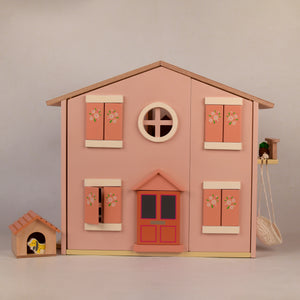
In stark contrast, a Montessori dollhouse is typically simple, often made of natural wood, with realistic, scaled-down furniture. It presents a 'prepared environment' that is uncluttered and aesthetically pleasing, mirroring the principles Maria Montessori advocated for learning. This minimalist design is intentional: it encourages the child to supply the missing details, create the characters, and invent the entire narrative from scratch.
Research shows that open-ended toys, like Montessori dollhouses, stimulate divergent thinking and problem-solving skills. Children become the architects of their own stories, deciding who lives in the house, what they do, and how they interact. This process is deeply engaging, requiring the child to draw upon their experiences, observations, and creativity, much like how children engage with activity kits or puzzles that demand active participation.
Fostering Creativity: Montessori's Definitive Edge
The core advantage of a Montessori dollhouse lies in its ability to truly foster creativity. Instead of playing out a pre-written script, children are encouraged to build, imagine, and express. They develop complex narratives, explore social roles, and even process emotions in a safe, imaginative space.
This type of creative dollhouse play directly supports cognitive development. Studies indicate that children who engage in extensive imaginative play exhibit stronger language skills, better problem-solving abilities, and a greater capacity for empathy. The dollhouse becomes a stage for endless scenarios, from managing a joint family household to preparing for a festival, all crafted entirely by the child's burgeoning imagination.
Imagination in Action: Why Less is More
The 'less is more' philosophy inherent in Montessori materials is powerfully evident in their dollhouses. A simple wooden dollhouse with basic furniture invites the child's 'absorbent mind' to fill in the blanks. Children must imagine the colours of the walls, the textures of the curtains, and the personalities of the inhabitants. This active mental engagement is crucial for robust imaginative development.
For instance, an 18-24 month old child might simply arrange the furniture, exploring spatial relationships. A 4-year-old might create intricate stories about family life, mirroring their own observations of Indian homes and social dynamics. This progression in play complexity confirms that Montessori dollhouses are not just toys, but powerful tools for imaginative growth across various developmental stages.
Choosing the Right Doll House for Your Indian Home
When selecting a doll house for kids in a bustling Indian home, consider several factors. Look for durable, high-quality natural materials that can withstand enthusiastic play and potentially be passed down. SkilloToys offers a range of Montessori-aligned options designed for longevity and developmental impact, perfect for any Bengaluru family or joint household. The key is to choose a dollhouse that serves as a versatile backdrop for imagination, not a rigid plaything.
Ultimately, a Montessori dollhouse empowers children to be the directors, writers, and actors of their own play. It provides a foundation for endless creative exploration, aligning with the educational philosophy that champions the child's inherent potential. Investing in a Montessori dollhouse means investing in a child's boundless imagination and their journey towards becoming an innovative, expressive individual. Explore our full range of developmental toys for your child's holistic growth at SkilloToys.com.
- Montessori dollhouses inherently foster deeper creativity and imagination compared to traditional options.
- Traditional dollhouses often provide pre-defined narratives, which can limit a child's independent story creation.
- The minimalist design of Montessori dollhouses compels children to invent their own details, stimulating imaginative thinking.
- Research indicates that open-ended play with toys like Montessori dollhouses enhances cognitive and problem-solving skills.
- Maria Montessori's philosophy of a 'prepared environment' translates into dollhouses that respect and ignite a child's inner guide.
- Choosing a durable, natural material dollhouse ensures longevity and aligns with developmental principles for Indian children.
Are Montessori dollhouses better for imaginative play?
Yes, Montessori dollhouses are demonstrably better for imaginative play. Their open-ended design and lack of specific characters or storylines compel children to invent their own narratives and scenarios, fostering deeper creativity.
What age is best for a Montessori dollhouse?
Montessori dollhouses are typically suitable for children from 2.5 to 3 years onwards, extending into early primary years. This age range benefits most from open-ended exploration and developing independent play skills.
How do Montessori dollhouses encourage creativity?
Montessori dollhouses encourage creativity by providing a minimalist, realistic framework that requires children to supply the details, characters, and stories. This 'less is more' approach stimulates the child's internal imagination and problem-solving abilities.
Are traditional dollhouses bad for creativity?
Traditional dollhouses are not inherently 'bad,' but they often offer a more pre-defined play experience, which can limit spontaneous creativity. While fun, their specific themes and accessories may guide rather than ignite a child's imagination.
What materials are best for a creative dollhouse?
The best materials for a creative dollhouse are natural, durable, and tactile, such as wood, cotton, and felt. These materials offer sensory richness and a realistic feel, aligning with Montessori principles and enhancing the quality of imaginative play.