Doll House for Kids: Sparking Imagination & Storytelling
A doll house for kids serves as a powerful catalyst for developing creativity, imagination, and crucial social-emotional skills, fundamentally supporting holistic child development. Research consistently demonstrates that engaging with a doll house allows children to safely explore complex social scenarios and emotional expressions through imaginative play.
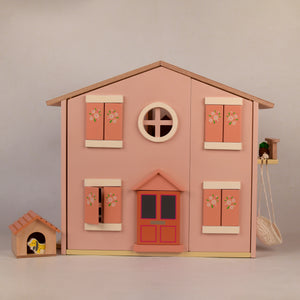
A doll house is a miniature representation of a home, providing an open-ended environment for children to engage in pretend play. This matters because it fosters creativity, language development, and social skills in a safe, controlled setting. Indian parents can leverage doll houses to encourage independent play and cultivate empathy in their children.
Sparking Imaginative Play for Kids: A Miniature World of Wonders
Doll houses are unparalleled in their ability to ignite imaginative play for kids, transforming a child's bedroom into a boundless universe. In a traditional Indian household, children often observe bustling family life, joint family dynamics, and preparations for festivals. A doll house provides a safe, scaled-down version where they can mimic these observations, creating their own narratives – from celebrating Diwali with miniature diyas to hosting a pretend cousin's wedding.
Child development experts agree that this form of free, imaginative play is essential for developing cognitive flexibility and problem-solving abilities. Children freely experiment with roles, emotions, and solutions, without external constraints. This unscripted play is a vital contrast to the structured demands of school and often screen-based entertainment, allowing their minds to truly wander and innovate.
Benefits of Dollhouses: Nurturing Essential Life Skills
The benefits of dollhouses extend far beyond mere entertainment; they are powerful tools for holistic development. Playing with a doll house helps children process their daily experiences, understand social cues, and develop empathy by stepping into different roles. They might play the role of a doting grandparent, a busy parent, or a curious child, exploring various perspectives within the family structure.
Studies indicate that children engaged in regular pretend play exhibit enhanced emotional intelligence and improved social understanding. Furthermore, manipulating small dollhouse furniture and figures refines fine motor skills, which are crucial for tasks like writing and self-care. This intricate interaction improves hand-eye coordination and spatial awareness, laying groundwork for future academic success.
Creative Storytelling Toys: Weaving Tales and Building Vocabulary
As creative storytelling toys, doll houses are unmatched in their capacity to foster language development and narrative skills. When children interact with their doll house, they constantly narrate events, assign dialogues, and describe scenes. This process naturally expands their vocabulary, improves sentence structure, and enhances their ability to construct coherent stories.
Whether they are planning an imaginary picnic on the terrace or resolving a minor squabble between doll siblings, children are actively practicing verbal communication and narrative sequencing. This rich linguistic environment, often nurtured by grandparents who encourage 'kahani-sunao' (tell me a story) sessions, strengthens their expressive and receptive language skills, preparing them for more complex social interactions and academic challenges.
Montessori Dollhouse Benefits: Fostering Independence and Order
The principles of Montessori education, championed by Maria Montessori, are beautifully mirrored in the Montessori dollhouse benefits. Montessori philosophy emphasizes practical life skills, independence, and a sense of order. A doll house, particularly one with simple, realistic details, encourages children to arrange, organize, and care for their miniature home, mirroring real-world responsibilities.
Children learn concentration and precision as they meticulously place furniture, set up scenes, and manage their doll family's daily routines. This self-directed activity aligns perfectly with the Montessori approach, fostering intrinsic motivation and a deep sense of accomplishment. Explore our range of Montessori learning materials that encourage similar self-guided exploration.
Balancing Screens with Pretend Play Toys: The Indian Parent's Dilemma
In today's digital age, Indian parents face the challenge of balancing screen time with essential hands-on experiences. News reports, like those highlighting Crayola's expansion in India to encourage creativity, underscore the growing recognition of traditional play's value. Doll houses, as classic pretend play toys, offer a powerful antidote to excessive screen exposure, providing a rich, tangible world for engagement.
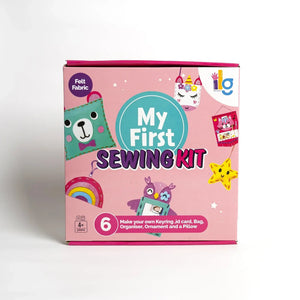
Child development experts emphasize that unstructured, physical play is crucial for healthy brain development and emotional regulation. While digital games offer instant gratification, a doll house demands sustained attention, problem-solving, and interaction, fostering skills that screens simply cannot replicate. Encourage a balanced approach by integrating engaging activity kits and puzzles into your child's routine, alongside their beloved doll house.
What is the ideal age for a child to start playing with a doll house?
Children can begin engaging with a doll house as early as 18-24 months with simple, chunky figures and minimal accessories. As they grow older, particularly from ages 3 to 8, doll houses become powerful tools for complex imaginative play and social role-playing.
How do doll houses help with emotional development?
Doll houses provide a safe space for children to act out feelings, fears, and real-life situations they observe or experience. This allows them to process emotions, practice empathy, and develop coping mechanisms in a controlled, imaginative environment.
Are Montessori dollhouses different from regular dollhouses?
Montessori-inspired dollhouses often feature simpler designs, realistic details, and focus on practical life activities rather than fantasy. They encourage a sense of order, independence, and direct engagement with materials, aligning with Montessori principles of self-directed learning.
Can boys also benefit from playing with doll houses?
Absolutely, boys benefit immensely from playing with doll houses, just as much as girls. Doll house play transcends gender, fostering crucial skills like imagination, empathy, social interaction, and storytelling that are essential for all children.
How can parents encourage more imaginative play with a doll house?
Parents can encourage imaginative play by providing open-ended prompts, asking questions about the dolls' lives, and occasionally joining in without directing the play. Offer various small props like fabric scraps for blankets or pebbles for food to inspire new scenarios.
- A doll house for kids fundamentally supports holistic child development by fostering creativity and imagination.
- Research demonstrates that dollhouse play enhances cognitive flexibility and problem-solving abilities in children.
- Dollhouses are critical for children's emotional intelligence and social understanding, promoting empathy and communication.
- Child development experts confirm dollhouses are essential for language acquisition, expanding vocabulary, and narrative skills.
- Montessori principles of independence and order are inherently supported by the self-directed play a dollhouse offers.
- Pretend play with dollhouses provides a vital, hands-on alternative to excessive screen time for balanced child development.