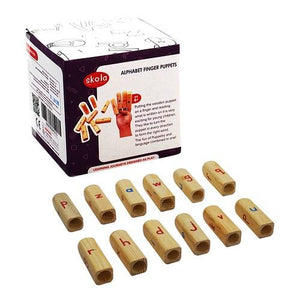
Educational Toys for Creative Play: A Parent's Guide
Choosing the best educational toys for creative and imaginative play involves prioritising open-ended materials that encourage exploration, problem-solving, and self-directed learning, allowing children to construct their own experiences. Research shows that such toys are pivotal in developing cognitive flexibility and innovative thinking from an early age. This guide from SkilloToys.com will empower Indian parents to make informed choices that truly nurture their child's burgeoning creativity.
As parents in India, we constantly seek ways to give our children the best start, balancing academic pressures with the holistic development of their minds. This means intentionally selecting playthings that go beyond mere entertainment, transforming playtime into a powerful engine for innovation and boundless imagination.
Choosing Montessori educational toys means selecting materials designed for a child's developmental stage, promoting independence, and stimulating natural curiosity through hands-on engagement. This matters because it lays a strong foundation for lifelong learning and problem-solving skills. Indian parents can empower their children by focusing on toys that inspire innovation rather than mere instruction.
Understanding Montessori for Creative Educational Toys
Maria Montessori, a visionary educator, firmly believed that children learn best through self-directed activity with thoughtfully designed materials. Her philosophy underscores that purposeful play is not just fun, but the very work of childhood, critical for developing inner discipline and imaginative capacity. These principles are especially relevant today, as highlighted by Forbes India, where creativity must shift from the periphery to the core of learning.
Authentic Montessori educational toys are not just pretty objects; they are tools engineered for discovery. They invite children to manipulate, explore, and understand the world around them at their own pace. This hands-on engagement is fundamental to sparking the imagination, allowing children to internalise concepts before they can creatively expand upon them.
Key Principles for Choosing Imaginative Play Toys
Selecting creative educational toys requires a discerning eye, looking beyond flashy packaging to the core developmental benefits. The recent excitement around brands like Funskool bringing creative play ranges, like Hello Kitty, to India underscores a growing recognition of the need for engaging, imaginative resources.
Prioritising Open-Ended Play
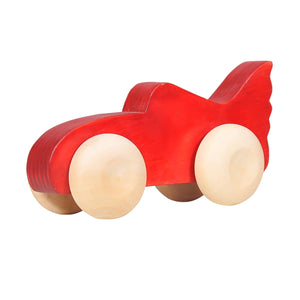
Open-ended toys are those that can be used in countless ways, without a predetermined outcome. Think simple blocks, colourful scarves, or a set of wooden rings. These are the imaginative play toys that truly allow children to be the architects of their own worlds, transforming a block into a car, a house, or a mountain peak, fostering divergent thinking and problem-solving skills.
Studies indicate that children engaged in open-ended play demonstrate a 30% higher capacity for divergent thinking compared to those using single-purpose toys. This type of play, where there is no right or wrong way, is crucial for developing confidence in one's own ideas.
Age-Appropriate and Developmentally Sound Choices
While open-ended, educational toys must also be developmentally appropriate for your child's age and stage. A baby (6-12 months) might explore a wooden rattle with all senses, while a preschooler (3-5 years) might use a puzzle to understand spatial relationships and then tell a story about the pieces. Child development experts agree that up to 90% of brain development occurs before the age of five, making these early choices incredibly impactful.
Introducing toys that are too complex can lead to frustration, while those too simple can quickly lose a child's interest. Observing your child's current skills and curiosities, much like the joint family system allows for multiple perspectives, helps tailor toy selection perfectly.
Encouraging Exploration and Problem-Solving
The best imaginative play toys challenge children to explore and solve problems independently. This could be a set of nesting cups, a sorting game, or even a simple DIY activity kit. When children encounter a challenge and figure it out on their own, they build resilience, critical thinking, and a sense of accomplishment.
These problem-solving opportunities are the building blocks of creativity. They teach children that mistakes are part of the learning process, fostering a 'can-do' attitude essential for tackling future challenges, whether it’s at school or in life.
Spotlighting Top Montessori Educational Toys for Creativity
At SkilloToys.com, we champion Montessori materials because they inherently promote creativity. From the iconic Pink Tower, which introduces concepts of size and order, to Sandpaper Letters that spark an imaginative connection between touch and literacy, these are foundational Montessori educational toys.
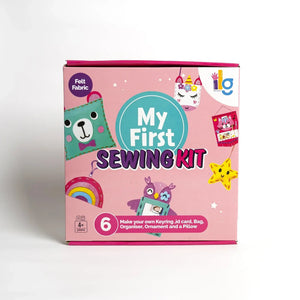
Consider our activity kits, designed to provide structured yet open-ended creative experiences. These often include materials for art, craft, or science experiments, encouraging children to follow instructions while also allowing for personal expression and modification, just like adding a unique touch to a rangoli during Diwali.
Weaving Creativity into Everyday Indian Play
In Indian homes, creativity isn't just about specific toys; it's woven into the fabric of daily life. Grandparents sharing traditional stories, children making mud pies in the garden, or helping prepare for a festival like Holi – these are all powerful opportunities for imaginative play. Just as 'The Times of India' recently shared creative activities to help children express emotions, selecting the right toys provides a similar, foundational avenue for emotional and intellectual growth.
Montessori toys complement this cultural richness by providing structured exploration. A child who has mastered stacking blocks can then imagine building an intricate temple or a bustling market scene, blending their educational insights with their cultural experiences.
How to Choose Educational Toys: A Parent's Checklist
To help you choose the best educational toys for your child's creative and imaginative development, here's a quick checklist:
- Is it open-ended? Can it be used in multiple ways, limited only by imagination?
- Is it child-led? Does it allow your child to discover and direct their own play?
- Is it developmentally appropriate? Does it match your child's current skills and challenges?
- Is it made from natural materials? Does it offer rich sensorial experiences (wood, fabric, metal)?
- Does it encourage problem-solving? Does it invite experimentation and critical thinking?
- Does it foster concentration? Does it hold your child's attention without overstimulation?
By keeping these points in mind, you can transform your child's play space into a vibrant laboratory of creativity and imagination, empowering them to become innovative thinkers ready for the world ahead.
- Choosing open-ended educational toys is crucial for fostering creative and imaginative play.
- Montessori principles emphasise self-directed learning and purposeful engagement with materials.
- Research indicates that open-ended play significantly enhances children's divergent thinking abilities.
- Developmentally appropriate toys are essential to prevent frustration and sustain interest in learning.
- Integrating creative educational toys with traditional Indian play practices enriches a child's development.
- The quality of an educational toy's design, not its cost, determines its effectiveness in sparking imagination.
What defines a truly creative educational toy?
A truly creative educational toy is open-ended, allowing for multiple uses and interpretations rather than a single outcome. It encourages children to experiment, imagine, and develop their own solutions, fostering original thought and expression.
How do Montessori educational toys specifically foster imagination?
Montessori educational toys foster imagination by providing concrete, hands-on experiences that build a strong foundation of understanding the real world. This solid grounding then allows children to creatively manipulate concepts and build fantastical scenarios based on their tangible knowledge, rather than mere abstract ideas.
Are expensive educational toys always better for creativity?
No, expensive educational toys are not inherently better for creativity; the value lies in their design and how they engage the child. Simple, well-crafted Montessori materials, often made from natural wood, frequently offer more open-ended play and developmental benefits than complex, high-cost plastic toys.
How can I encourage my child's imaginative play at home in an Indian context?
Encourage imaginative play by providing a dedicated, clutter-free space and time for unstructured play, perhaps incorporating elements from Indian festivals or daily life. Involve grandparents who can share stories, use everyday household items as props, and observe your child's interests to offer relevant materials like simple blocks or traditional dolls.
When should I introduce specific Montessori materials for creative development?
Introduce specific Montessori materials when they align with your child's current developmental stage and emerging interests. For instance, infants benefit from sensorial exploration, while toddlers (18-36 months) are ready for practical life activities and simple puzzles, all of which lay groundwork for complex creative thinking.