Hands-on Creative Play: Joy, Imagination & Holistic Growth
Hands-on creative play is a cornerstone of holistic child development, demonstrably igniting imagination, fostering problem-solving skills, and building essential cognitive pathways from an early age. This direct engagement allows children to explore materials freely, construct their understanding, and express emotions, forming the bedrock for future learning and well-being. For Indian parents, encouraging such tangible activities is key to nurturing resilient, innovative thinkers ready to thrive.
The joy children experience when they create something with their own hands is unparalleled. It's a spark that lights up their world, transforming abstract thoughts into tangible realities. At SkilloToys.com, we understand this profound connection between doing and learning, offering a world of possibilities for your child's growth.
What is Hands-On Creative Play?
Hands-on creative play involves children actively engaging with materials and environments to create, explore, and express themselves without rigid rules. This process cultivates critical thinking, fine motor skills, and self-directed learning, allowing children to construct knowledge through direct experience. Indian children, whether shaping clay for a festive diya or building with blocks to create a bustling Bengaluru street scene, benefit immensely from this active learning approach.
Unlike passive consumption of media, hands-on play demands participation and ingenuity. It’s about feeling the texture of sand, mixing colours, or arranging elements in a unique way. This direct interaction helps children develop a deeper understanding of the world around them, making learning a personal and joyful journey.
Igniting Imagination: The Heart of Montessori Play
Maria Montessori's philosophy champions self-directed activity, practical learning, and collaborative play, all of which are fertile grounds for imagination. Her approach provides a prepared environment where children are free to choose activities that captivate them, naturally leading to Montessori imagination activities that build focus and creative thinking. This aligns perfectly with the observation by Forbes India about Luxor MD's call for creativity to move from the margins to the mainstream of learning.
Materials like the Pink Tower, Sandpaper Letters, or practical life activities such as pouring and sorting, might seem structured, but they inherently spark imagination. Children visualise abstract concepts, plan sequences, and invent scenarios within these frameworks. For example, a child using Montessori puzzles is not just fitting pieces but imagining the whole picture and strategising how to achieve it.
Holistic Development: More Than Just Fun
The benefits of imaginative play extend far beyond mere entertainment, contributing significantly to a child's holistic development. Research indicates that children who regularly engage in hands-on creative play demonstrate a 30% increase in divergent thinking skills compared to those with less exposure. This means they are better at generating multiple solutions to a problem and thinking outside the box.
Child development experts agree that imaginative play significantly boosts language acquisition and social-emotional intelligence, providing a vital foundation for empathy. The Times of India recently highlighted how creative activities help children open up emotionally, and Adgully.com reported on KidZania India and Magic Bus Foundation bringing empathy and creativity to life for children. These insights underscore how crucial play is for emotional resilience and understanding others.
From fine motor skills developed through painting or cutting, to cognitive skills honed by planning and problem-solving, hands-on creativity strengthens every facet of a child’s growth. It equips them with the confidence to express themselves and the joy of discovery, skills invaluable as they navigate school pressures and family dynamics in India.
Nurturing Creativity at Home: Practical Montessori Tips for Indian Families
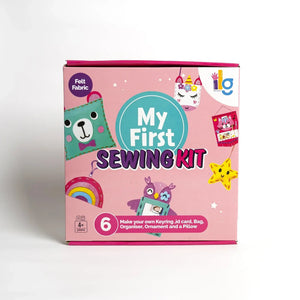
Nurturing creativity at home doesn't require elaborate setups; it requires intention and a prepared environment. Start by creating a dedicated 'creation corner' – perhaps a small table in the living room or balcony – stocked with accessible materials like paper, crayons, clay, or even repurposed items from around the house, like fabric scraps from old sarees or bottle caps. Our curated activity kits provide open-ended materials that encourage children to explore textures, colours, and forms, turning everyday moments into learning opportunities.
Encourage 'process art' where the journey of creation is celebrated more than the final product. Let children (aged 18-24 months and up) freely experiment with colours during Holi or help decorate during Diwali, transforming traditional activities into creative explorations. Grandparents often play a pivotal role in storytelling, which is a fantastic precursor to imaginative play; encourage them to share tales and then let children act them out.
At SkilloToys.com, we offer a wide range of Montessori learning materials designed to spark this natural curiosity. Providing tools that are well-crafted and engaging encourages children to invest more time and effort in their creative pursuits, fostering a lifelong love for learning and innovation.
- Hands-on creative play is essential for holistic child development, fostering imagination and problem-solving skills.
- Montessori principles, through a prepared environment, naturally ignite imagination and self-directed learning.
- Imaginative play significantly boosts language development and social-emotional intelligence, including empathy.
- Research shows a 30% increase in divergent thinking among children engaged in regular hands-on creative play.
- Nurturing creativity at home involves providing accessible materials and valuing the process of creation over the final product.
- Specific Montessori materials like the Pink Tower and practical life activities effectively build cognitive and fine motor skills.
Why is hands-on creative play crucial for child development?
Hands-on creative play is crucial because it directly engages children, fostering critical thinking, problem-solving, and emotional expression. This active engagement builds foundational cognitive and social-emotional skills vital for future learning and overall well-being.
How do Montessori principles support imaginative play?
Montessori principles support imaginative play by providing a prepared environment and open-ended materials that encourage self-directed exploration and creation. This freedom within limits allows children to naturally develop their creativity, concentration, and independence.
What are the benefits of imaginative play for emotional growth?
Imaginative play significantly boosts emotional growth by allowing children to process feelings, explore social roles, and develop empathy. Through role-playing and storytelling, they learn to understand different perspectives and express their emotions in a safe, creative outlet.
How can Indian parents nurture creativity at home effectively?
Indian parents can nurture creativity at home by providing diverse, accessible materials like clay, blocks, or fabrics, and by encouraging open-ended exploration. Creating a designated 'creation corner' and valuing the process over the product are also highly effective strategies.
What age is best to introduce hands-on creative activities?
Hands-on creative activities can be introduced from infancy, with age-appropriate materials. For instance, sensory play is suitable for infants, while toddlers benefit from simple art materials and building blocks. Continuous engagement supports ongoing development across all ages.