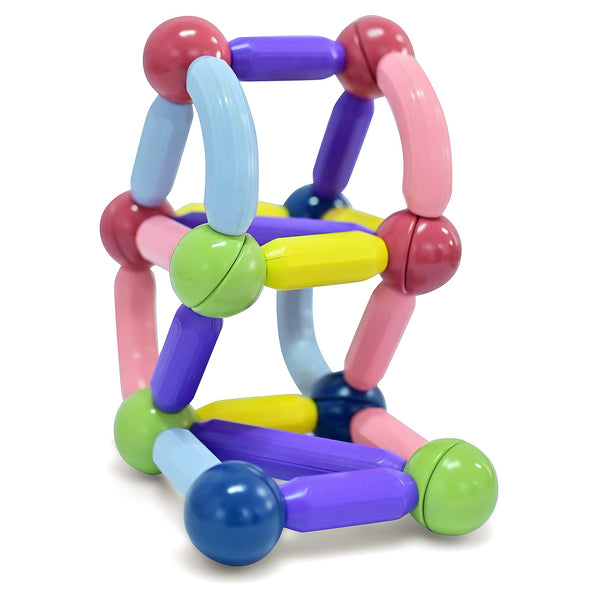
Educational Toys: Smart Investment for Indian Children
When considering purchases for your child, a key question for many Indian parents is whether educational toys are a wise investment or just another item on the ever-growing list. Research shows that high-quality, thoughtfully selected educational toys are indeed a strategic investment in a child's future, fostering critical cognitive, social, and emotional skills that extend far beyond the playroom. They are designed to engage, enlighten, and equip children with tools for lifelong learning and adaptability.
Educational toys are materials specifically crafted to stimulate a child's development across various domains, including problem-solving, creativity, fine motor skills, and social interaction. This matters immensely because purposeful play is the primary vehicle through which young minds learn and grow. Indian parents can leverage these toys to provide a stimulating home environment that supports their child's natural curiosity and prepares them for future academic and life challenges.
The Transformative Power of Montessori Educational Toys in India
In homes across Bengaluru, Mumbai, and Chennai, parents are increasingly seeking ways to balance traditional upbringing with modern educational approaches. Maria Montessori's philosophy, focusing on self-directed activity, hands-on learning, and collaborative play, offers a powerful framework. Montessori educational toys, unlike many conventional playthings, are designed to isolate a single skill or concept, allowing children to focus and achieve mastery independently.
Consider the child in a bustling joint family. While grandparents cherish traditional games, a Montessori Montessori learning material like the Pink Tower or Brown Stair provides a quiet, focused activity amidst the chaos. These materials build concentration, visual discrimination, and an understanding of dimensions without direct instruction. Studies consistently indicate that children engaged with such self-correcting materials develop stronger problem-solving abilities and a deeper sense of accomplishment, critical traits for navigating competitive academic environments in India.
Beyond Playtime: The Core Benefits for Child Development
The benefits of educational toys extend across multiple facets of a child's development. Child development experts agree that early exposure to stimulating materials significantly impacts brain architecture and cognitive function. For instance, a simple set of wooden toys, rather than a flashing electronic gadget, compels a child to use their imagination to create stories and structures, enhancing creativity and abstract thinking.
These toys are fundamental for fostering fine motor skills, essential for writing later on. Practical life activities, a cornerstone of Montessori education, involve tasks like pouring, spooning, and buttoning, which refine hand-eye coordination and independence. Language development is boosted through activities with nomenclature cards or sandpaper letters, allowing children to connect sounds with symbols, a crucial step before formal schooling. Furthermore, engaging with others over a construction set or a board game nurtures socio-emotional skills like sharing, negotiation, and turn-taking, invaluable in both family and school settings.
Choosing Educational Toys for Your Indian Child: A Practical Guide
Selecting the right educational toys requires thoughtful consideration, especially with the myriad options available today. The primary focus should always be on age-appropriateness and developmental readiness. For a toddler in a metro apartment, open-ended toys that allow for varied play, rather than single-function items, are ideal to maximise learning in smaller spaces. Look for toys that encourage active participation, sparking curiosity and independent exploration.
Prioritise safety and quality materials. Natural materials like wood, fabric, and metal are durable, tactilely rich, and often non-toxic. When preparing for festivals like Diwali or Dussehra, consider gifting an educational toy that offers enduring developmental value over fleeting entertainment. Observe your child's current interests and challenges. If they're struggling with numbers, introduce counting beads; if fine motor skills are a focus, choose puzzles or lacing activities. The goal is to provide tools that meet them where they are and gently guide them forward.
The Investment Mindset: Beyond a One-Time Purchase
Viewing educational toys as an investment shifts the perspective from a mere expense to a strategic contribution to your child's growth. High-quality Montessori materials, while perhaps initially pricier than mass-produced plastic toys, are designed to last for years, often passed down through siblings or even generations in an Indian family. Their educational value doesn't diminish; instead, children return to them at different developmental stages, discovering new ways to engage and learn.
This long-term value contrasts sharply with the short-lived appeal of many trendy, electronic toys that offer passive entertainment. By investing in toys that foster concentration, critical thinking, and independence, parents are essentially building a strong foundation for their child's future academic achievements and problem-solving capabilities. It's an investment in their capacity to learn, adapt, and thrive in an increasingly complex world, preparing them not just for school, but for life itself.
Ultimately, choosing educational toys is about empowering your child's innate potential. By providing materials that encourage exploration, foster independence, and celebrate the joy of discovery, you're not just buying a toy; you're nurturing a curious mind and securing a brighter future. Start by observing your child's play today, and see how purposeful toys can transform their learning journey, one thoughtful moment at a time.