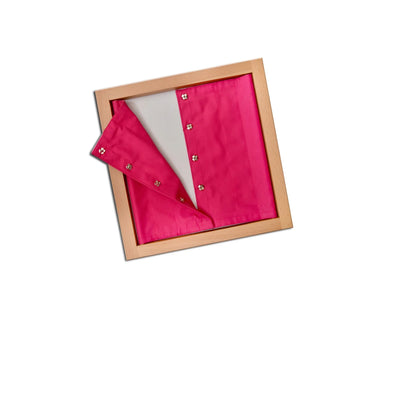
DIY Montessori Button Frame for Dressing Practice
Remember those early mornings, trying to get your little one ready for school or a family gathering? The struggle with buttons can be real! But what if we told you there's a simple, engaging way to help your child master this skill themselves? Today, we’re diving into how to create a DIY Montessori button frame right at home, a wonderful tool for fostering independence and fine motor development.
A Montessori button frame is a practical life material designed to help children develop dexterity and independence in buttoning and unbuttoning clothes. This activity works because it isolates the skill, allowing children to focus on the specific movement without the pressure of getting dressed. Parents can easily introduce this at home as part of their child's daily learning routine, offering a hands-on approach to self-care.
Why a Button Frame is Perfect for Indian Homes
In the bustling environment of an Indian home, where space might be a premium or multiple generations share a household, practical life activities like using a button frame are invaluable. They offer a quiet, focused activity that respects a child’s concentration. This hands-on learning also resonates deeply with our cultural emphasis on self-reliance and contributing to the family unit from a young age.
These activities are a cornerstone of Montessori practical life materials, helping children connect with their environment and build essential skills for daily living. They are particularly well-suited for Montessori at home India setups, blending seamlessly with the rhythms of family life.
The Montessori Philosophy Behind Dressing Practice
Maria Montessori observed that children have an innate drive towards independence. The button frame, like many Montessori method learning materials, empowers children to develop real-world skills at their own pace. By offering tools for self-dressing, we nurture their self-esteem and build confidence, crucial elements for holistic child development India and globally.
This approach allows children aged 2.5 to 6 years to practice self-care skills, preparing them for greater independence. It's not just about buttoning; it's about mastering a task, building focus, and experiencing the satisfaction of achievement.
Gathering Your Supplies for a DIY Button Frame
Creating your own button frame doesn't require a trip to a specialty store; many items can be found locally or repurposed. You'll need two sturdy pieces of fabric (like old denim, thick cotton from an unused saree, or felt), measuring about 12x12 inches each. Buttons of varying sizes are key – think about those spare buttons from clothes or a trip to a local tailor's shop.
You'll also need a pair of sharp scissors, a needle, strong thread, and optionally, a small wooden frame or sturdy cardboard to keep it rigid. Embrace the spirit of 'jugaad' – finding clever, low-cost solutions – to make this project both economical and engaging for your little one.
Step-by-Step Guide to Making Your Button Frame
Follow these simple steps to craft a beautiful and functional button frame for your child:
- Prepare Your Fabric: Take your two fabric pieces. On one piece, mark and cut out five to seven vertical buttonholes, spaced about 2 inches apart, along one edge. Ensure these buttonholes are slightly larger than your chosen buttons.
- Attach Buttons: On the second fabric piece, align the buttons with the buttonholes on the first piece. Securely sew each button onto this fabric piece. Varying the size of buttons can introduce different challenges, aiding fine motor skills.
- Join the Fabrics: Place the fabric with buttonholes over the fabric with buttons. Stitch the remaining three edges together, leaving the buttoning edge open. This creates a 'frame' where the child can practice.
- Optional Frame: If you want it more rigid, you can sew the fabric onto a simple wooden frame or sturdy cardboard backing. This is especially useful for younger children and helps keep the material taut.
Introducing the Button Frame to Your Child
Present the button frame to your child aged 2.5 to 6 years in a calm, focused manner. Show them slowly, step-by-step, how to unbutton and then button, without talking too much. Let them observe and then invite them to try. Remember, the goal is independence, not perfection. This practical life activity is a core part of Montessori at home India, fostering concentration and self-confidence.
For younger toddlers around 18 months to 2 years, you might start with larger buttons and simpler fasteners before moving to smaller buttons. Observe your child's interest and ability, and never force the activity. This patient approach is vital for promoting positive child development in India, allowing each child to explore at their unique pace.
Key Takeaways for Your DIY Button Frame
- The Montessori button frame develops practical life skills and fine motor coordination.
- It fosters independence, concentration, and self-esteem in children aged 2.5-6 years.
- DIY frames are cost-effective and can be made with local, repurposed materials common in Indian homes.
- Introducing the frame requires a calm, step-by-step demonstration without excessive talking.
- This activity supports holistic child development, aligning with core Montessori principles for young learners.
What age is best for introducing a Montessori button frame?
Generally, children around 2.5 to 3 years old are ready to start with button frames, showing an interest in dressing themselves. Observe your child for signs of developing fine motor skills and a desire for independence, as readiness varies for each individual.
How does a button frame help with child development in India?
Beyond dressing skills, it enhances concentration, problem-solving, and hand-eye coordination. It cultivates independence and self-confidence, vital traits valued in Indian families and for a child's overall growth within our cultural context.
Can I use different fasteners on my DIY frame?
Absolutely! Once your child masters buttons, you can create frames for zippers, snaps, buckles, or even hooks and eyes. This offers progressive challenges and keeps the activity engaging for growing children as their fine motor skills develop further.
Where can I find more Montessori learning activities for home?
SkilloToys.com offers a wide range of educational toys for toddlers and resources for Montessori at home India. Explore our collections for practical life materials and other engaging activities that support your child's natural learning journey.
Empowering your child through simple, hands-on activities like the DIY button frame is a joy. For more inspiring Montessori learning activities and high-quality educational toys that support your child's journey, explore SkilloToys.com – your partner in fostering independent, joyful learning right here in India.