Fine Motor Skills & Intelligence: A Surprising Link for Kids
We often marvel at our children's endless energy and curiosity, especially during those busy early years. From picking up a tiny piece of food during mealtime to stacking their favourite blocks, every little movement is a step in their development. But what if we told you there's a truly surprising link between these seemingly simple fine motor skills and a child's overall intelligence? It's a connection that Montessori educators have understood for over a century, and it’s incredibly relevant for parents nurturing young minds in India today.
So, what exactly are fine motor skills? Fine motor skills are the coordination of small muscles, usually in the hands and fingers, in synchronisation with the eyes. This includes everything from grasping a crayon to buttoning a shirt or meticulously arranging small beads for a festive rangoli design. This ability works because it requires complex communication between the brain and muscles. Parents can support this development by providing opportunities for children to engage their hands in purposeful, repetitive activities.
The Montessori Connection: Nurturing Tiny Hands, Big Minds
Dr. Maria Montessori observed that a child’s hands are the instruments of their intelligence. She understood that through concrete manipulation and sensory exploration, children build neural pathways in their brains. This isn't just about dexterity; it's about connecting physical action with cognitive understanding, problem-solving, and concentration.
Think about a toddler in an Indian home trying to peel a small banana or carefully place carrom coins. These actions are not just about feeding themselves or playing; they are rich learning experiences. Each successful attempt strengthens their pincer grasp, improves hand-eye coordination, and boosts their self-confidence, laying the groundwork for more complex learning later on.
Everyday Discoveries in Indian Homes
You don't need elaborate setups to foster this crucial link. Many activities we already do in our Indian households are perfect for developing fine motor skills toys. Simple tasks like helping sort pulses (dal) for cooking, threading large beads for a homemade garland, or even carefully arranging small pieces of roti for birds outside, are fantastic opportunities.
For children aged 0-6, especially toddlers, engaging in practical life activities like pouring water from a small jug, scooping rice, or even helping wash small utensils in a joint family kitchen can be incredibly beneficial. These activities, often overlooked, demand precision, focus, and coordination, all of which are critical for cognitive growth. Providing Montessori materials designed for such tasks further refines these skills with purpose.
From Practical Life to Cognitive Leaps
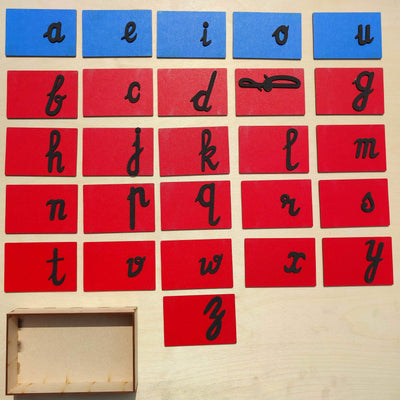
In a Montessori environment, materials are meticulously designed to engage a child's fine motor skills, which in turn stimulates their intellectual development. For instance, working with the Pink Tower involves careful stacking and visual discrimination, strengthening spatial reasoning. Similarly, using Sandpaper Letters helps children feel the shape of letters, connecting a tactile experience with literacy, a profound link for child development India.
When a child masters dressing frames, they are not just learning to button or zip; they are developing problem-solving skills, concentration, and independence. These repeated, purposeful movements build a strong foundation for abstract thinking, mathematical concepts, and even executive functions like planning and organisation. It's truly a holistic approach to educational toys for toddlers.
Why Early Years Matter for Brain Development
The first six years of a child's life are a period of rapid brain development. Synapses (connections between brain cells) are formed at an incredible rate. Activities that engage fine motor skills directly contribute to this neural development. The more a child uses their hands in a focused, intentional way, the more connections are forged in the brain's motor cortex, prefrontal cortex (responsible for planning and problem-solving), and even areas associated with language and memory.
Research consistently shows that strong fine motor skills in early childhood correlate with better academic performance in areas like reading and mathematics. This isn't because tiny hands directly do maths, but because the underlying cognitive abilities – concentration, sequencing, visual perception, and problem-solving – are strengthened through fine motor activities. This makes Montessori learning activities incredibly powerful for a child's future.
Key Takeaways
- **Fine motor skills** involve small muscle coordination, crucial for tasks like writing and self-care.
- There is a **strong correlation between fine motor proficiency and cognitive intelligence** in children.
- **Montessori education** emphasizes hands-on activities to develop both physical dexterity and intellectual capacity.
- **Everyday activities** in Indian homes, like sorting pulses or helping in the kitchen, are excellent for fine motor development.
- **Early childhood (0-6 years)** is a critical period for developing these skills, which impact future academic success.
- Providing purposeful fine motor skills toys and activities enhances concentration, problem-solving, and independence.
Frequently Asked Questions
How do fine motor skills impact school readiness?
Strong fine motor skills are essential for school readiness. They enable children to hold pencils correctly, use scissors, turn pages, and manage classroom materials, reducing frustration and allowing them to focus on learning concepts rather than struggling with physical tasks.
What are simple fine motor activities for toddlers at home?
For toddlers at home, simple activities include sorting small objects like buttons or chickpeas, transferring water with a sponge, threading large beads or pasta, tearing paper, or playing with clay. These engage their pincer grasp and hand-eye coordination effectively.
Can Montessori materials really boost my child's intelligence?
Yes, Montessori materials are specifically designed to foster intelligence by engaging children's senses and fine motor skills in purposeful ways. They promote concentration, problem-solving, logical thinking, and independence, all of which contribute significantly to a child's overall cognitive development.
How much screen time impacts fine motor development?
Excessive screen time can negatively impact fine motor development by replacing opportunities for hands-on exploration and manipulation. Children need physical interaction with their environment to strengthen their hand muscles and coordination, which screens generally do not provide.
At SkilloToys.com, we understand this profound connection. We curate a range of high-quality Montessori-inspired educational toys and materials designed to naturally foster these vital skills, supporting your child’s holistic growth right here in India. Empower your child’s learning journey with purposeful play!