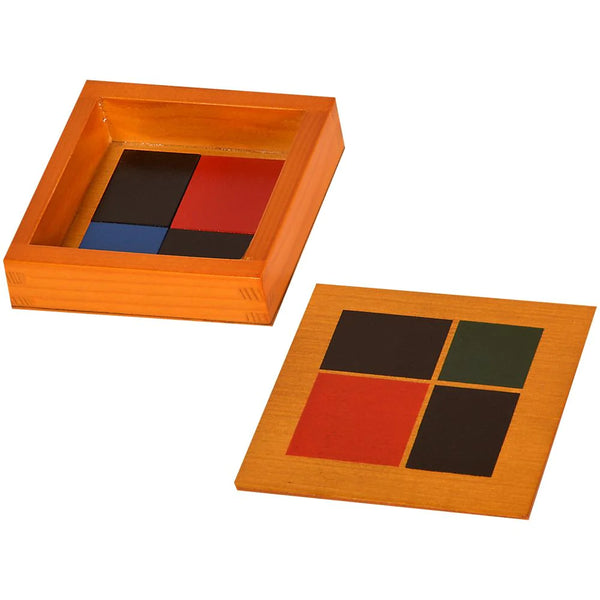
Montessori Colour Box Activities for Toddlers at Home
Remember those vibrant sarees and colourful rangolis we grew up with? Colours are deeply woven into the fabric of Indian life, and introducing them to our little ones can be an incredibly joyful journey. If you're an Indian parent exploring Montessori colour box activities for toddlers at home, you've stumbled upon a wonderfully effective way to engage your child's visual sense and cognitive development. It's more than just learning names; it's about refining their perception of the world around them.
So, what exactly are Montessori Colour Boxes? These beautiful Montessori sensorial materials are a series of wooden boxes containing colour tablets designed to help children develop a refined sense of colour discrimination. The progression moves from primary colours (Box 1) to secondary and tertiary colours (Box 2), and finally to gradients of the same colour (Box 3).
Montessori colour education is unique. It focuses on isolating the sense of colour. This works because by removing distractions like shape or texture, the child can fully concentrate on the visual attribute of colour. Parents can present these activities individually, allowing the child to discover and internalise the concept at their own pace, fostering independence and deep understanding.
Starting with Colour Box 1: Primary Hues
Colour Box 1 introduces pairs of tablets in red, blue, and yellow. The idea is simple: match the pairs. You can start by showing your toddler one red tablet and asking them to find its twin. It's a wonderful entry point for colour recognition for toddlers.
Matching Colours in Your Indian Home
You don't always need the official boxes to start! Look around your home. Can you find a red dupatta to match a red building block? Or perhaps a yellow lemon from the kitchen to match a yellow toy car? This simple act of matching everyday items, whether it's a green bottle gourd or a blue teacup, extends the learning beyond the specific material and shows your child how colours exist all around them.
"Fetch Me The..." Game
Once your child has a grasp of matching, introduce the colour names. Point to a red tablet and say, "This is red." Do this a few times, then place the red and blue tablets on a mat and ask, "Can you give me the red one?" This simple three-period lesson (naming, associating, recalling) is foundational to Montessori learning. In an Indian joint family setting, grandparents or older siblings can easily join in, making it a fun group activity. It's excellent for language development alongside visual discrimination.
Moving to Colour Box 2: Secondary & Tertiary Colours
After mastering primary colours, Colour Box 2 introduces 11 pairs of different colours like green, orange, purple, pink, brown, grey, black, white, gold, and silver. This expands their colour vocabulary and refines their visual sense even further.
Sorting Coloured Objects
Now that your child knows more colours, you can create a sorting activity. Gather a basket of colourful items – perhaps some wooden toys, fabric scraps, or even different coloured bangles. Lay out a few Colour Box 2 tablets (e.g., green, orange, purple) and ask your child to sort the objects into their corresponding colour groups. This is a fantastic exercise in concentration and categorisation, a key part of Montessori learning activities.
Colour Walk in Your Gali or Garden
Take the learning outdoors! Go for a "colour walk" in your building complex, local park, or even just your balcony. "Can you find something green?" you might ask. "Look, a green leaf!" "And what colour is that flower?" This connects abstract colour concepts to the vibrant reality of the world, making sensory play in India incredibly engaging, even for those living in smaller apartments.
Preparing Your Montessori Colour Corner at Home
Creating a designated space, however small, for your child's Montessori materials is crucial for a "prepared environment." Even in a bustling Indian home with many family members, a low shelf or a corner on a mat can be set aside. Keep the Colour Boxes (or your DIY versions) easily accessible and neatly arranged. This invites the child to engage independently, fostering their innate curiosity and sense of order, key aspects of child development in India.
Remember, the goal isn't just to teach colours, but to nurture a deeper visual appreciation and build a foundation for logical thinking. Through these engaging Montessori method learning materials and activities, your child will not only learn their colours but also develop concentration, independence, and a keen eye for detail.
At SkilloToys.com, we believe in empowering Indian parents with resources and high-quality educational toys that support their child's natural development. Explore our collection to find materials that spark joy and learning in your home.