Montessori Kids & Executive Function: Higher Scores
Every parent in India dreams of giving their child the best start, a foundation that goes beyond rote learning and helps them thrive in a complex world. We often hear about the benefits of Montessori education, but have you ever wondered about the tangible skills it builds? It's fascinating to learn that Montessori children score higher in executive function studies, showcasing remarkable abilities in areas like focus, self-control, and problem-solving. This isn't just anecdotal; research consistently highlights the robust development of these critical life skills in children educated through the Montessori method.
So, what exactly is 'executive function'? Simply put, executive function refers to the set of mental skills that help us get things done. This includes abilities like working memory (holding information in mind), flexible thinking (adapting to new situations), and inhibitory control (managing impulses and distractions). This works because these skills are the brain's 'command centre,' guiding our behaviour and enabling us to plan, focus, remember instructions, and juggle multiple tasks successfully. Parents can actively nurture these skills by providing an environment that encourages independence and thoughtful decision-making, even with simple educational toys for toddlers at home.
The Montessori Advantage for Developing Executive Function
The Montessori approach, developed by Dr. Maria Montessori, isn't just about unique materials; it’s a holistic philosophy centred on nurturing the child's natural development. It respects the child as an individual capable of self-direction, providing a 'prepared environment' where they can learn at their own pace. This framework inherently strengthens executive functions by offering freedom within limits, encouraging concentration, and fostering a deep sense of internal discipline.
Cultivating Focus and Concentration
In a bustling Indian household, finding quiet focus can sometimes be a challenge. However, Montessori activities are designed precisely to build this crucial skill. From pouring lentils in Practical Life to precisely placing cylinders in the Sensorial area, each task has a clear beginning, middle, and end, encouraging sustained attention. When a child works with Montessori sensorial materials like the Pink Tower or Brown Stair, they learn to isolate qualities, notice patterns, and correct their own errors, all of which demand intense concentration. This repeated practice helps children develop longer attention spans, a cornerstone of strong executive function, making them less prone to distractions later on.
Building Self-Control and Discipline
Self-control, or inhibitory control, is about managing impulses – waiting your turn, not interrupting, or resisting a tempting treat. Montessori classrooms, and homes adopting the method, are built on the principle of 'freedom within limits.' Children choose their work, but they also learn respect for materials, for others, and for the rhythm of the environment. Imagine a child learning to patiently wait for a specific puzzle to become free, or carefully rolling up a mat after completing an activity. These seemingly small actions build significant internal discipline and respect for boundaries. Such experiences are particularly valuable in joint families where sharing resources and respecting space are everyday lessons, making Montessori learning activities highly relevant.
Nurturing Working Memory and Problem-Solving
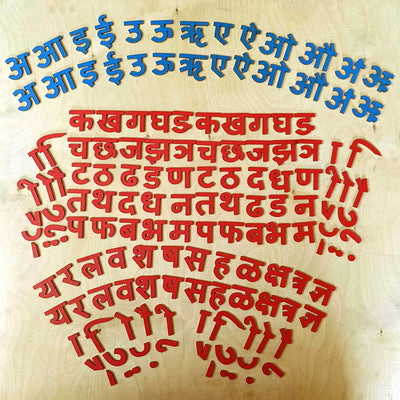
Working memory allows us to hold and manipulate information in our minds, like remembering a sequence of instructions or the steps to solve a problem. Montessori materials often involve sequencing, matching, and categorisation. Consider the Movable Alphabet, where children recall letter sounds to form words, or puzzles where they must remember the shape of missing pieces. These activities directly engage and strengthen working memory. Furthermore, the emphasis on self-correction means children aren't just given answers; they discover solutions through trial and error, fostering resilient problem-solving skills – a vital component of advanced executive function.
The Role of a Prepared Environment at Home
Bringing Montessori principles into an Indian home, whether it's a spacious house or a cosy apartment in Bengaluru, is about creating a 'prepared environment.' This means organising spaces with the child's independence in mind – low shelves with accessible Montessori method learning materials, a dedicated spot for art, or a small pitcher for pouring water. This structured yet accessible environment empowers children to make choices, take responsibility for their belongings, and initiate their own learning. When children have agency over their surroundings and their learning, they practice decision-making, planning, and self-management, all of which are critical for robust child development in India and beyond.
Key Takeaways
- Montessori education demonstrably enhances executive function skills like focus, self-control, and working memory.
- The prepared environment and self-directed learning are key Montessori principles contributing to this development.
- Practical life and sensorial activities specifically cultivate concentration and fine motor control.
- "Freedom within limits" fosters internal discipline and respectful behaviour.
- Sequencing and self-correction in Montessori materials strengthen working memory and problem-solving abilities.
- Implementing Montessori at home, even in small ways, significantly supports a child's cognitive development.
Frequently Asked Questions (FAQ)
What exactly is executive function in children?
Executive function refers to a set of mental skills including working memory, flexible thinking, and self-control. These skills act as the brain's control system, helping children plan, focus, remember instructions, and manage their behaviour to achieve goals.
How can I support executive function development using Montessori at home in India?
Create a 'prepared environment' by organising child-friendly spaces, offering age-appropriate choices for activities and materials, and encouraging independent tasks like pouring water or dressing themselves. Focus on practical life skills and provide simple educational toys that promote problem-solving.
Are specific Montessori materials better for executive function?
Many Montessori materials are excellent. Practical Life activities (pouring, sweeping) build focus and self-control. Sensorial materials (Pink Tower, Knobbed Cylinders) enhance concentration and discrimination. Language materials like the Movable Alphabet improve working memory and sequencing.
At what age do executive functions start developing?
Executive function skills begin developing in infancy and continue maturing through adolescence. Early childhood (0-6 years) is a crucial period where foundational abilities like attention, impulse control, and basic planning can be significantly nurtured through consistent practice and a supportive environment.
How does Montessori prepare children for traditional schooling?
By fostering strong executive functions, Montessori prepares children for traditional schooling by equipping them with excellent concentration, self-discipline, and problem-solving skills. These foundational abilities help children adapt to classroom settings, follow instructions, and manage their learning independently, making the transition smoother and more successful.
Empowering your child with these foundational executive function skills is truly one of the greatest gifts you can give them. At SkilloToys.com, we are passionate about providing authentic Montessori materials and resources that support this incredible journey for your little ones, right here in India.