Montessori Number Rods: Teaching Maths at Home
Do you ever find yourself wondering how to introduce your little one to the world of numbers in a way that feels natural and exciting, not like rote memorisation? In many Indian homes, surrounded by the vibrant chaos of family life, creating a focused learning environment can feel like a delightful challenge. But what if we told you there’s a beautiful, hands-on tool that makes early maths concepts click for children? We're talking about the incredible Montessori number rods, a cornerstone material that transforms abstract numerical understanding into a tangible experience right in your living room.
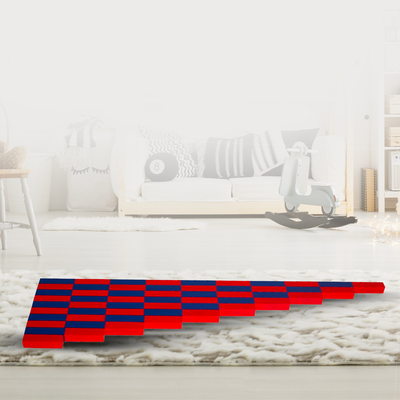
Montessori Number Rods are a set of ten wooden rods, each progressively longer, ranging from 10 cm to 100 cm, and distinctly coloured with alternating red and blue segments. This material is designed to give children a concrete, sensorial experience of quantity and numerical sequence. This works because it allows children to physically see and feel the difference between one and ten, building a strong foundation for abstract mathematical concepts. Parents can easily introduce these rods at home to help their child grasp the fundamental principles of counting and number relationships.
Why Montessori Number Rods Work Wonders for Young Learners
Why do Montessori Number Rods prove so effective for children aged 3-6 years, especially in diverse learning environments like those found across India? Firstly, they embody sensorial learning. Children learn by touching, seeing, and comparing, which is a much more profound way to absorb information than simply listening. The alternating red and blue colours provide a visual cue for each unit, reinforcing the quantity of each rod without needing to count every segment initially. This approach supports holistic child development India by nurturing not just cognitive skills but also fine motor coordination and concentration.
Building a Foundation: From Counting to Quantity
Introducing the number rods to your child can be a beautiful bonding experience. Start by laying them out in sequence from shortest to longest. Point to the shortest rod and say, 'This is one.' Then move to the next, 'This is two,' and so on, up to ten. The magic truly begins when your child can match the spoken word to the tangible length. For a wider range of early Montessori mathematics materials that support this journey, do explore the curated selection available at SkilloToys. Once your child is familiar with the sequence, you can introduce counting each segment, building a one-to-one correspondence between the number and its quantity. Remember, the goal isn't speed but a deep, internal understanding.
Practical Activities with Number Rods at Home
Integrating Montessori learning activities into your daily rhythm doesn't require a dedicated classroom; a quiet corner in your living room or even on a charpai can become a vibrant learning space. Here are a few ways you can use the number rods:
The 'Matching' Game: Numbers and Symbols
Once your child is confident with the rods' quantities, you can introduce numeral cards (1-10). The activity involves selecting a number rod, counting its segments, and then finding the corresponding numeral card. For instance, after counting the segments of the 'three' rod, your child places the '3' card next to it. This activity bridges the gap between concrete quantity and abstract symbol, a crucial step in early maths. For quality educational toys for toddlers that complement such learning, explore the extensive wooden toys collection at SkilloToys.com.
Simple Addition and Subtraction
The number rods are also fantastic for introducing basic addition and subtraction. For addition, your child can take the 'three' rod and the 'two' rod, place them end-to-end, and then find the single rod that matches their combined length (which would be the 'five' rod). This visual representation makes the concept of 'combining' quantities very clear. Similarly, for subtraction, you can demonstrate taking away a shorter rod from a longer one to see what's left. This hands-on method makes abstract operations feel intuitive and logical.
Creating a Montessori-Friendly Space in Your Indian Home
Embracing Montessori at home India doesn't mean transforming your entire home into a stark, minimalist space. It's about thoughtful preparation. In a joint family setting, involve grandparents in understanding the purpose of these materials – their wisdom combined with a child's natural curiosity can create a beautiful learning environment. Even in a small apartment, designate a low shelf or a specific mat for the number rods and other learning materials. This accessibility empowers children to choose their work independently, fostering self-reliance and focus, much like they would learn to fold their clothes for a festival or help with household chores.
Remember, the goal of Montessori, as envisioned by Maria Montessori, is to follow the child. If your little one isn't interested in the number rods one day, don't force it. Simply present the material again another time. For a comprehensive range of resources that support the entire Montessori method learning materials and toys philosophy, SkilloToys.com offers a thoughtful selection designed for the Indian home.
Key Takeaways
- Montessori Number Rods offer a concrete, sensorial way to introduce early mathematical concepts like quantity and sequence to children.
- They support learning by doing, aligning with Maria Montessori's philosophy and fostering deep conceptual understanding over rote memorisation.
- The alternating red and blue segments provide visual cues that help children grasp numerical values intuitively.
- Activities like sequential counting, matching rods with numeral cards, and simple addition/subtraction can be done easily at home.
- Integrating Montessori at home in India involves creating an accessible, prepared environment and encouraging independent exploration, even in small or joint family settings.
Frequently Asked Questions About Montessori Number Rods
What age is appropriate for introducing Montessori Number Rods?
Montessori Number Rods are typically introduced to children between 3 to 4 years old, once they show an interest in counting and comparison. However, every child develops at their own pace, so observe your child's readiness rather than strictly adhering to age guidelines.
How do Number Rods differ from traditional counting blocks?
Unlike traditional counting blocks which often focus on rote counting, Number Rods provide a clear visual and tactile representation of quantity and numerical sequence. Each rod's length directly corresponds to its numerical value, making abstract concepts concrete and self-correcting.
Can I make Montessori Number Rods at home?
While professional Montessori Number Rods are crafted to precise dimensions and colours for optimal learning, you can certainly create a DIY version using wood or cardboard. Ensure the lengths are accurate and the alternating red and blue segments are clearly defined to maintain the material's integrity.
What's the next step after my child masters the Number Rods?
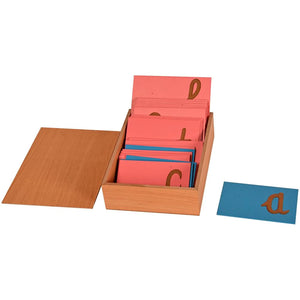
Once your child has a solid understanding of quantity and sequence with the Number Rods, you can introduce more complex Montessori maths materials like the Sandpaper Numerals, Spindle Boxes, or even the Red and Blue Number Rods (which combine rods with numeral cards for deeper abstract understanding). These materials progressively build on the foundational concepts.
At SkilloToys.com, we believe in empowering Indian parents with the finest Montessori educational toys that foster a lifelong love for learning. Explore our range and embark on a joyful learning journey with your child today.