Teaching Reading at Home with Sandpaper Letters & Movable Alphabet
Many Indian parents dream of giving their children the best start, especially when it comes to literacy. If you’re exploring Montessori principles for your little one at home, you might be wondering about effective ways to introduce reading. Today, let's explore a beautiful and tactile approach: teaching reading with Sandpaper Letters and the Movable Alphabet at home. These classic Montessori materials offer a gentle, multi-sensory pathway to literacy, perfectly suited for the inquisitive minds of children aged 0-6 years.
Montessori’s approach to reading is fundamentally different from traditional methods, focusing on the child's natural developmental stages. Sandpaper Letters are individual letter shapes (consonants and vowels) cut from sandpaper and mounted on smooth boards. This works because children trace the rough letter with their fingers, engaging their tactile, visual, and auditory senses simultaneously, embedding the sound and form of the letter in their memory. Parents can introduce these letters one by one, allowing their child to master each sound before moving on.
The Magic of Sandpaper Letters: A Sensory Start to Reading
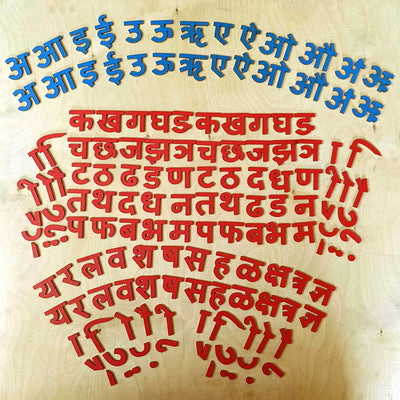
Imagine your child, sitting comfortably on a floor mat in your living room, perhaps with their dadi or nani nearby, tracing the letter 'अ' or 'म'. This is the beauty of Sandpaper Letters – they transform abstract symbols into a tangible experience. Your child feels the letter's shape, hears its sound, and sees its form simultaneously. This multi-sensory engagement builds strong neural pathways for reading. Explore high-quality Montessori Sandpaper Letters perfect for your home at SkilloToys.
Introducing Sounds, Not Names
A common misconception is to teach letter names first. In Montessori, we focus on the phonetic sound of the letter. So, for 'm', we teach 'mmm' (as in mango), not 'em'. This makes the process of blending sounds to form words much more intuitive later on. Start with a few contrasting sounds that are easy for your child to differentiate, like 'm', 's', 'a', 't'.
The Three-Period Lesson for Mastery
Maria Montessori developed the Three-Period Lesson as a beautiful way to introduce new concepts. First, for Naming (This is), hold up the 'm' Sandpaper Letter and say, 'This is /mmm/', inviting your child to trace. Next, for Recognition (Show me), lay out a few letters and ask, 'Show me /mmm/.' Finally, for Recall (What is this?), point to the 'm' and ask, 'What is this sound?' This gentle repetition builds confidence and ensures true understanding, a vital aspect of Montessori language materials.
Building Words with the Movable Alphabet: From Sounds to Stories
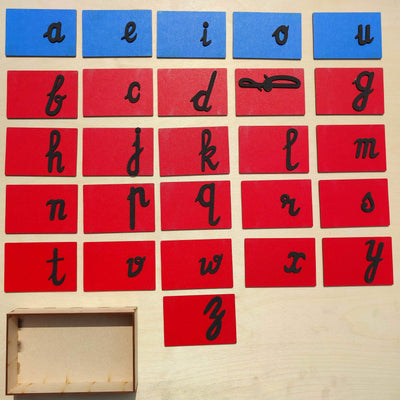
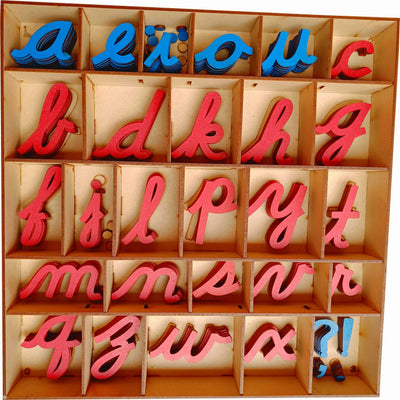
Once your child has a good grasp of several letter sounds through the Sandpaper Letters, they are ready for the Movable Alphabet. This fantastic material allows children to construct words physically, even before their hands are ready for the fine motor skills of writing. It's like a puzzle where each piece is a sound, and putting them together creates meaning. This activity is a cornerstone for Montessori learning activities at home.
From Simple CVC Words to Complex Sentences
Start with simple CVC (consonant-vowel-consonant) words that are phonetically regular, like 'cat', 'sun', 'bat'. You can use small objects found around your Indian home – a 'mat', a 'pot', a 'cup'. Lay out the object, say its name, and then ask your child to build it using the Movable Alphabet. This hands-on experience bridges the gap between spoken words and written symbols, fostering early child development India.
Integrating into Daily Life
Remember, Montessori is about integrating learning into life. Point out letter sounds on shop signs during a walk, or when reading a storybook. In a joint family setting, grandparents can also join in, perhaps by helping the child find objects whose names start with a particular sound. These informal interactions reinforce formal lessons and make learning a joyful part of family life. These educational toys for toddlers aren't just for school; they are for life!
Creating a Montessori Reading Corner at Home
Even in a small apartment in Bengaluru, you can carve out a dedicated space for these activities. A low shelf, a comfortable mat, and easy access to the materials make all the difference. This encourages independence and fosters a love for learning. Remember, the goal is not just to teach reading, but to cultivate a deep appreciation for language. For a complete range of authentic materials, explore our Montessori learning materials collection.
Nurturing a Love for Reading: Beyond the Materials
While Sandpaper Letters and the Movable Alphabet are powerful tools, the most crucial element is a supportive and encouraging environment. Read aloud to your child regularly, visit local libraries (or set up a mini one at home!), and let them see you enjoying books. Celebrate every small achievement, whether it’s recognising a new sound or building their first three-letter word. This holistic approach is what makes Montessori at home India so impactful.
Key Takeaways for Teaching Reading at Home
- Montessori introduces reading through multi-sensory experiences using Sandpaper Letters.
- Focus on teaching phonetic letter sounds before letter names for easier blending.
- The Three-Period Lesson is an effective method for introducing and reinforcing new sounds.
- The Movable Alphabet allows children to build words physically before writing, bridging the gap from spoken to written language.
- Integrate reading activities into daily life and family interactions for reinforced learning.
- Create a dedicated, accessible learning space at home to encourage independent engagement.
- Beyond materials, nurture a love for reading through regular read-alouds and a language-rich environment.
Frequently Asked Questions About Montessori Reading at Home
At what age should I introduce Sandpaper Letters?
Children typically show readiness for Sandpaper Letters between 2.5 to 4 years. Look for an interest in sounds or letters in books. Always follow your child's lead, as readiness varies greatly among individuals.
Can I make my own Sandpaper Letters at home?
While DIY options exist, purchasing high-quality, accurately scaled Sandpaper Letters from a reputable source ensures consistency and proper sensory input. For a durable and effective experience, authentic materials are highly recommended for optimal learning outcomes.
How often should we practice with these materials?
Short, consistent sessions are more effective than long, infrequent ones. Aim for 5-15 minutes daily, or whenever your child shows interest and enthusiasm. Remember, learning should always be an enjoyable, child-led activity.
My child isn't interested. What should I do?
Never force the materials. Put them away for a few weeks or months and reintroduce them later when curiosity might pique. Observe your child for other interests; perhaps they are drawn to practical life or sensorial exploration instead.
Is this method suitable for all children?
Montessori methods are designed to be universally accessible and child-centric, catering to diverse learning styles. The multi-sensory approach often benefits a wide range of children, leveraging natural curiosity and hands-on engagement effectively.
Embarking on this reading journey with your child using Montessori methods is a truly rewarding experience. At SkilloToys.com, we are committed to providing you with the best Montessori educational toys to support your child's growth and development right here in India. Happy learning!