Toddlers Learn Math Through Objects, Not Just Numbers
Ever watched your little one meticulously stack their building blocks, sorting their colourful golas into piles, or lining up their toy cars from biggest to smallest? It might look like simple play, but did you know toddlers learn maths through physical objects not numbers? Yes, that’s right! Before they even utter their first numerical word, their amazing little brains are already grasping foundational mathematical concepts through hands-on experiences. For Indian parents exploring Montessori at home, understanding this can truly transform your approach to early learning.
This method of learning, where children build a concrete understanding of quantity and relationships before abstract symbols, is central to the Montessori philosophy. This works because toddlers are sensory learners; their world is explored through touch, sight, and manipulation. Parents can harness this natural inclination by providing rich, tangible experiences that lay a strong foundation for future mathematical fluency.
The Montessori Magic: From Concrete to Abstract
Maria Montessori observed that young children possess an absorbent mind, especially for order, sequence, and exactness. She developed a curriculum that leverages this innate ability, starting with the concrete. Imagine a child handling a set of counting beads, feeling the weight of each one, seeing the distinct quantity. This tactile engagement helps them internalise the concept of 'three' long before they learn to write or recognise the numeral '3'. This is why educational toys for toddlers often focus on manipulative experiences.
In many Indian homes, with grandparents often sharing wisdom, this idea of practical, hands-on learning feels very natural. Our kitchens are filled with opportunities – counting spoons, sorting lentils, arranging spices. These everyday activities are potent Montessori learning activities.
Building Foundations with Familiar Objects
Think about a toddler playing with laddu moulds or sorting colourful bangles. They are implicitly categorising, comparing sizes, and understanding patterns. These are early mathematical concepts in action. The Pink Tower, a classic Montessori material, allows children to visually and physically discriminate between different sizes and understand graduation without a single number involved. Similarly, Spindle Boxes help children connect a quantity to its numeral through direct experience, placing the correct number of spindles into each numbered compartment.
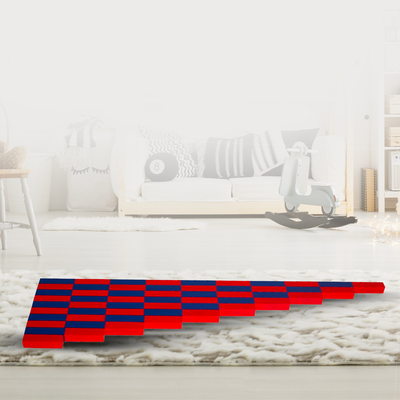
Montessori mathematics materials are specifically designed to isolate concepts and provide hands-on exploration. From the Red Rods that teach length and sequence to the Golden Beads that introduce the decimal system, each material guides the child from the concrete to the abstract, fostering genuine understanding rather than rote memorisation. Many parents find that simple wooden toys can also serve this purpose beautifully, offering open-ended opportunities for sorting, stacking, and pattern recognition.
Practical Math in Indian Homes
Incorporating this learning into daily life within an Indian context is wonderfully easy. Instead of just asking "How many rotis do you want?", try "Can you count out three rotis for yourself?" During Diwali, let your child count the diyas or arrange them symmetrically. When preparing for a family meal, ask them to count out plates or spoons. These small, consistent interactions build a strong sense of number in a meaningful context. Even in a small apartment, creating a dedicated little corner with age-appropriate Montessori method learning materials can make a huge difference in your child's development.
Encourage your child to help sort clothes by size or colour, or arrange their blocks from shortest to tallest. These activities not only develop early math skills but also fine motor skills and a sense of order, crucial for child development India. Remember, the goal isn't to rush them into numbers, but to build a robust internal understanding of quantity and mathematical relationships.
Key Takeaways for Early Math Learning
- Toddlers naturally learn math through sensory, hands-on experiences with physical objects, not just abstract numbers.
- The Montessori approach emphasises concrete understanding before introducing numerical symbols.
- Everyday activities in Indian homes, like sorting lentils or counting diyas, are excellent opportunities for early math learning.
- Montessori materials and simple wooden toys are designed to isolate mathematical concepts for easy understanding.
- Focus on building a child's internal sense of quantity, order, and sequence through practical interaction.
Frequently Asked Questions About Toddler Math Learning
What does "concrete to abstract" mean in early math?
Concrete to abstract means children first learn mathematical concepts by interacting with physical objects they can touch, see, and manipulate. Only after developing this hands-on understanding are abstract symbols like written numbers and equations introduced, making the learning meaningful and deeply rooted.
How can I introduce math concepts without numbers to my toddler?
Focus on activities like sorting objects by colour, size, or shape; stacking blocks from largest to smallest; matching pairs; or simply counting everyday items like fruits or toys aloud. These experiences build foundational understanding of quantity, comparison, and patterns without needing to write or recognise numerals.
Are Montessori math materials really necessary?
While Montessori mathematics materials like the Pink Tower or Golden Beads are expertly designed to isolate concepts, they are not strictly "necessary" if you can replicate similar learning experiences. Everyday objects and well-chosen educational toys for toddlers can also be highly effective, especially when paired with a thoughtful, guided approach at home.
How does this approach help with child development in India?
This hands-on, contextual learning aligns beautifully with traditional Indian values of practical wisdom and family involvement. It promotes critical thinking, problem-solving, and a deep understanding of concepts, rather than rote memorisation, preparing children for future academic success and confident engagement with the world around them.
Embracing the fact that toddlers learn maths through physical objects, not numbers, opens up a world of enriching experiences for your little one. At SkilloToys.com, we are dedicated to supporting your child's developmental journey with carefully curated Montessori and educational toys that foster this natural, joyful learning.