Toddlers Learn Maths Through Physical Objects, Not Numbers
Did you know toddlers learn maths through physical objects, not numbers? It sounds counter-intuitive, doesn't it? As parents in bustling Indian homes, we often introduce numbers through rhymes or flashcards. But Maria Montessori's brilliant insight teaches us that young children, especially toddlers, build their foundational understanding of mathematics not through abstract symbols, but through tangible experiences. Their little hands and eager minds naturally grasp concepts like quantity, size, and sequence by manipulating real-world items.
This approach, central to Montessori philosophy, suggests that children learn best by doing. Early mathematics for toddlers is less about memorising "one, two, three" and more about understanding what "three" actually looks and feels like. This works because a toddler’s brain is wired for concrete experiences; they need to touch, sort, and compare to make sense of the world. Parents can integrate this understanding by providing plenty of opportunities for hands-on exploration with everyday objects or specially designed educational toys.
Why Hands-On Learning is Key for Toddler Maths
In our vibrant Indian households, where children often learn alongside grandparents or older siblings, there are countless opportunities for practical math. Imagine your child helping Dadi sort rajma beans for dinner, or arranging diyas during Diwali. These aren't just chores; they are rich, sensory-driven math lessons! When a child handles a specific number of objects, they connect the idea of 'quantity' to a physical reality, which is crucial for early child development in India.
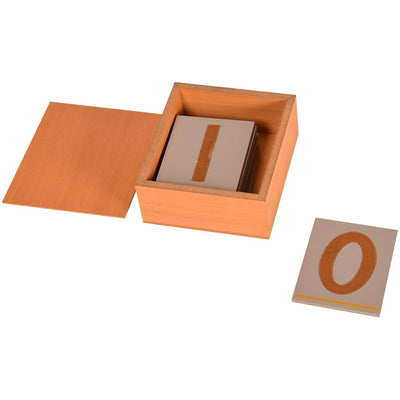
The Montessori method emphasises 'concrete to abstract' learning. This means starting with materials children can touch, feel, and move, and gradually moving towards written symbols. For example, understanding "three" begins with holding three small stones, then three blocks, before eventually seeing the numeral '3' and associating it with that quantity. This sensory engagement makes learning deep and lasting.
Montessori Maths at Home: Simple Activities for Toddlers
You don't need a dedicated classroom to introduce these concepts. Your small apartment or a shared family space offers ample opportunities. Think about sorting laundry by size, counting the chapatis on the plate, or lining up bangles by colour and size. These everyday "Montessori learning activities" help toddlers build spatial awareness, logical thinking, and early number sense.
One excellent example is the use of Montessori mathematics materials like the Number Rods. These wooden rods vary in length, each representing a quantity from one to ten, and are coloured in alternating red and blue segments. A child holds the 'one' rod, then the 'two' rod, physically experiencing that 'two' is twice as long as 'one'. This tangible difference creates a powerful mental imprint.
Another fantastic resource are wooden toys that encourage sorting, stacking, and matching. Building blocks, shape sorters, and stacking rings aren't just fun; they're vital tools for developing pre-math skills. When a toddler stacks blocks from largest to smallest, they are unconsciously grappling with concepts of seriation and comparison – foundational mathematical ideas.
Building a Strong Foundation: More Than Just Counting
Early maths for toddlers goes beyond just reciting numbers. It encompasses skills like:
- One-to-one correspondence: Understanding that each object counted corresponds to one number. (e.g., placing one sweet on each plate).
- Classification: Grouping objects based on shared characteristics. (e.g., sorting toys by colour or type).
- Seriation: Arranging objects in a logical sequence. (e.g., smallest to largest, shortest to tallest).
- Spatial relationships: Understanding concepts like 'under,' 'over,' 'next to,' 'inside.'
These concepts, when explored through play with concrete objects, naturally prepare children for more complex mathematical reasoning later on. It’s about building a robust mental framework, not just memorising facts. Investing in Montessori method learning materials and toys can significantly support this journey.
In the vibrant tapestry of Indian family life, children are often surrounded by textures, colours, and sounds. Harnessing this sensory-rich environment to teach maths is both natural and effective. Whether it's counting beads during a puja, sorting vegetables from the market, or simply playing with natural materials like pebbles and leaves, every interaction can be a mathematical discovery.
Key Takeaways for Parents
- Toddlers learn foundational math concepts through hands-on experiences with physical objects, not abstract numbers.
- Maria Montessori's approach emphasizes concrete-to-abstract learning for deep understanding.
- Everyday activities in Indian homes, like sorting pulses or arranging festival items, are rich math learning opportunities.
- Educational toys like Number Rods and wooden blocks help develop one-to-one correspondence, classification, and seriation.
- Early math skills include more than just counting; they involve spatial reasoning and logical thinking.
Frequently Asked Questions About Toddler Maths
At what age should I introduce numbers to my toddler?
Instead of formally introducing abstract numbers, focus on quantity and comparison from around 18 months onwards. Let them experience "more" or "less" with physical objects before associating symbols with quantities, typically closer to 3-4 years old.
What are some simple Montessori math activities for a 2-year-old?
For a 2-year-old, focus on practical life activities like sorting small toys by colour, stacking different sized rings, or transferring objects from one bowl to another using tongs. Counting everyday items they interact with, like fruits or family members, is also great.
How can I make math fun and engaging for my child at home?
Integrate math into play and daily routines. Use descriptive language ("That's a big ball, this is a small ball"). Provide open-ended materials like blocks, natural items, and sorting trays. Allow them to explore at their own pace without pressure or drills.
Do Montessori educational toys really help with math development?
Yes, Montessori educational toys are specifically designed to isolate concepts and provide hands-on learning. Materials like the Pink Tower, Red Rods, and Number Rods allow children to visually and tactilely experience mathematical relationships, building a strong conceptual foundation.
Embracing this understanding transforms everyday moments into powerful learning opportunities. At SkilloToys.com, we believe in providing materials that support your child's natural curiosity and build a strong foundation for their future, one hands-on experience at a time.