Toddlers Learn Maths with Physical Objects, Not Numbers
Ever wondered how your little one starts grasping the world of numbers? It might surprise you to learn that for toddlers, the journey into mathematics doesn't begin with reciting 1-2-3 or recognising digits. Instead, toddlers learn maths through physical objects, hands-on experiences, and sensory exploration. In a busy Indian home, whether it’s counting ladoos during Diwali or sorting socks after laundry, these everyday interactions lay a robust foundation for future mathematical understanding.
This approach, central to Montessori philosophy, means that young children build their understanding of quantity, comparison, and patterns by interacting with tangible items. For a toddler, a 'two' is not an abstract symbol but two distinct blocks they can hold, stack, and move. This works because children are concrete thinkers, especially in their early years. Parents can foster this by providing opportunities for their child to engage with materials that represent mathematical concepts in a physical way.
Why Physical Objects are Key for Early Maths
Imagine explaining the concept of 'more' or 'less' to a child without anything to point to. It's incredibly challenging! Dr. Maria Montessori observed that children need to see, touch, and manipulate quantities to truly internalise their meaning. When a child plays with a set of wooden blocks, they are not just building; they are naturally exploring concepts like size, order, balance, and spatial relationships. This is foundational for their cognitive development in mathematics.
Building Foundations with Montessori Mathematics Materials
In a Montessori environment, carefully designed materials help bridge the gap between concrete experience and abstract concepts. The iconic Pink Tower, for instance, isn't just a stacking toy; it introduces the concept of dimension and seriation (ordering by size) without a single number in sight. Similarly, Red Rods teach length and comparison. These Montessori Mathematics Materials are fantastic for helping children literally feel the difference between quantities.
For parents keen on Montessori at home in India, integrating these principles can be quite simple. Think about involving your child in kitchen activities: sorting lentils, counting fruits for the fruit chaat, or dividing rotis for family members. These are all practical lessons in quantity, division, and classification that resonate deeply within our Indian cultural context.
Everyday Learning: Montessori Activities at Home
You don't need a dedicated classroom to offer rich mathematical experiences. Your home is already full of learning opportunities. Here’s how you can encourage educational toys for toddlers and everyday items to foster maths skills:
Counting & Quantity: Beyond Rote Memorisation
Instead of just asking "How many?" and expecting a number, encourage your child to count out loud as they physically touch each object. "One spoon, two spoons, three spoons for chai!" This links the spoken word to the tangible item. Gather a small basket of items – perhaps colourful bangles, pebbles from the garden, or even different sized leaves – and let your child sort, group, and count them. This concrete experience helps build a true understanding of numeration.
In many Indian joint families, grandparents often naturally engage children this way, asking them to fetch a certain number of spices or help set the table with specific counts of plates. These interactions are invaluable for child development India.
Exploring Shapes & Spatial Reasoning
Shapes are everywhere! From the round chapati to the square window, point them out. Wooden toys like shape sorters are excellent for toddlers to learn geometric forms through touch and manipulation. Even simple block play, stacking and arranging, helps children understand concepts like "on top," "underneath," "inside," and "next to," developing their spatial awareness and problem-solving skills.
Living in smaller apartments often means creative play spaces. Utilise vertical space with stackable items, or designate a "maths corner" with a tray of counting beads and small sorting bowls. This encourages focused engagement without needing a large area.
Pattern Recognition & Sequencing
Patterns are the backbone of advanced mathematics. You can create simple patterns with beads, blocks, or even pieces of fruit (apple, banana, apple, banana). Ask your child what comes next. During festivals, making rangoli designs or arranging flowers for pooja are wonderful, culturally relevant ways to explore symmetry, patterns, and order.
Key Takeaways for Early Maths Learning:
- Toddlers primarily learn mathematical concepts through direct, hands-on interaction with physical objects, not abstract numbers or symbols.
- Maria Montessori's philosophy emphasises concrete materials to build foundational understanding of quantity, size, and sequence.
- Everyday activities in an Indian home, like cooking or sorting, offer rich opportunities for practical maths learning.
- Montessori materials such as the Pink Tower and Red Rods help children internalise abstract concepts through sensory experiences.
- Encourage counting by touching objects, exploring shapes in the environment, and creating simple patterns.
- This concrete approach fosters true mathematical understanding, crucial for holistic child development.
Frequently Asked Questions about Toddler Maths Learning:
Why is it better for toddlers to learn maths with objects instead of just numbers?
Toddlers are concrete thinkers and understand the world through their senses. Learning with physical objects allows them to see, touch, and manipulate quantities, building a tangible understanding of what numbers represent, rather than just memorising symbols without meaning.
What are some simple Montessori activities for maths at home in India?
Simple activities include sorting different types of lentils, counting out specific numbers of bangles, arranging flowers for pooja by size, or using household items like clothes pegs to count. Engaging them in setting the table or distributing snacks also introduces basic division.
At what age should I introduce abstract numbers and counting?
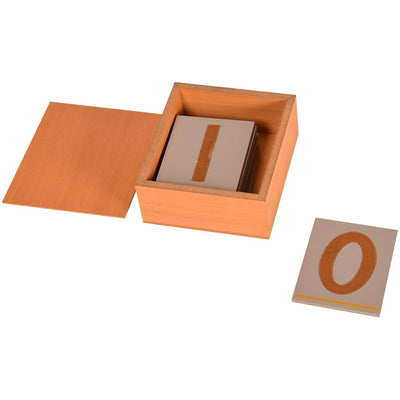
While toddlers can begin to recognise number symbols and count by rote around 2-3 years, a true understanding of quantity typically develops later, usually between 4-6 years, after extensive concrete experiences. The Montessori approach introduces numbers as symbols (like with Sandpaper Numerals) only after the child has a solid physical understanding of the quantity.
How can I make sure my child is truly understanding, not just memorising?
Observe your child's interaction. Do they group items correctly when asked for "three"? Can they identify "more" or "less" without counting? Encourage them to explain their thinking. If they can apply the concept to different sets of objects, they're likely understanding rather than just memorising.
Are specific Montessori maths materials necessary?
While specific Montessori Mathematics Materials are meticulously designed for specific learning outcomes, you can certainly start with everyday household items. However, materials like the Number Rods or Spindle Box provide precise, isolated concepts that are hard to replicate perfectly, offering immense value for focused learning.
Embracing this hands-on approach enriches your child's early learning journey, turning every interaction into a moment of discovery. Explore our range of Montessori-inspired wooden toys and learning materials at SkilloToys.com to support your little one's natural mathematical brilliance.