Barefoot Play for Kids' Motor Skills: A Montessori Guide
Recent reports, like one from The Times of India, highlight that spending time barefoot can significantly boost kids' balancing and jumping skills, sparking curiosity among Indian parents. Indeed, allowing for natural movement through barefoot play for kids motor skills development is a cornerstone of Montessori education, offering profound benefits for a child's physical and cognitive growth. This simple, yet powerful practice provides unfiltered sensory feedback that wired for optimal development.
Barefoot play, in its essence, is allowing children to walk, run, and explore without shoes or socks. This matters because it provides direct sensory input from the ground to the brain, which is crucial for developing robust gross motor skills. Indian parents can easily incorporate this by creating safe indoor and outdoor spaces for their children to experience the world through their feet.
The Sensory Superhighway: Benefits of Barefoot Walking for Children
Our feet are incredible sensory organs, packed with over 200,000 nerve endings. When children engage in barefoot play, these nerve endings send rich, detailed information about texture, temperature, and pressure directly to the brain. This constant stream of feedback is vital for developing proprioception — the body's sense of its position in space — and the vestibular system, which governs balance.
Research shows that children who regularly walk barefoot exhibit superior spatial awareness and a more refined gait compared to those constantly in shoes. This direct connection allows the brain to map the environment more accurately, fostering intuitive movement and reducing the risk of falls. Maria Montessori herself observed the profound impact of sensory experiences on a child's learning, making barefoot activities a natural extension of her philosophy for montessori sensory play.
Building Blocks of Strength: Natural Movement Children Need
Modern footwear, while offering protection, often restricts the natural movement of a child's foot, limiting the development of crucial muscles and arches. Barefoot play actively engages and strengthens these intrinsic foot muscles, promoting healthier foot structure from an early age. This is particularly important in a country like India, where many children spend their early years in soft footwear that may not always support natural foot development.
Studies indicate that children who frequently go barefoot develop stronger arches and more flexible ankles. This strengthening isn't just about the feet; it forms the foundation for powerful gross motor skills activities kids engage in, from running and jumping to climbing and skipping. Think of a child navigating uneven terrain in a park, feeling every bump and dip — this is a comprehensive workout for their entire lower body and core.
Mastering Stability: Enhancing Balancing Skills Development
One of the most immediate and observable benefits of barefoot play is the dramatic improvement in a child's balance. The varied sensations from different surfaces — cool grass, warm pavement, soft mud — force the feet to adapt, constantly making micro-adjustments that strengthen the ankles, knees, and hips. This active engagement is paramount for developing robust balancing skills development.
Consider a child in a Bengaluru courtyard, running barefoot during a festival, their feet instinctively gripping the ground, adjusting to the uneven tiles. This real-world, dynamic sensory input is far more effective than any structured exercise in a gym. It teaches their brain and body to work together seamlessly, enhancing coordination and agility.
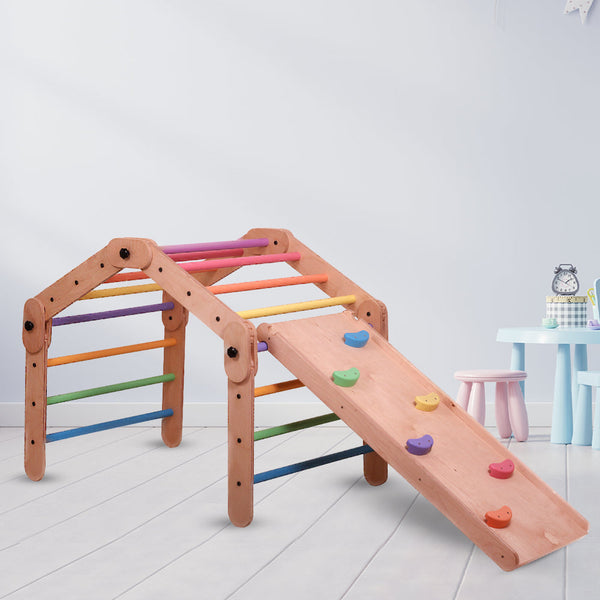
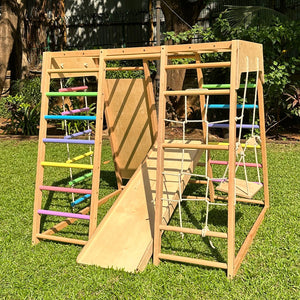
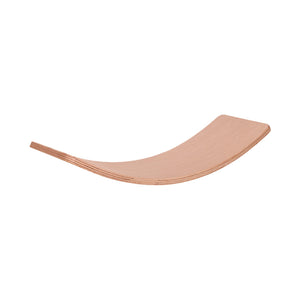
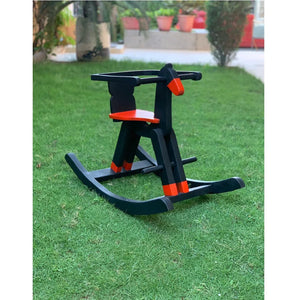
To further support these developments, consider incorporating engaging gross motor skill toys that encourage movement, climbing, and balancing, complementing their barefoot explorations.
How to Safely Incorporate Barefoot Play at Home and Beyond
Integrating barefoot play into your child's routine doesn't require drastic changes. Start small: dedicate specific indoor areas where shoes are removed, encouraging your child to walk on different textures like wooden floors, rugs, or play mats. For outdoor adventures, supervise closely in your garden, a clean park, or a sandy beach, ensuring the ground is free from hazards.
Many Indian families have a tradition of children playing barefoot in their homes or gardens, a practice that aligns perfectly with these developmental benefits. Encourage exploring different natural surfaces, such as walking on dewy grass in the morning — a common practice that provides excellent sensory input. Remember, consistency is key; even short bursts of barefoot time daily can make a significant difference in strengthening their feet and overall physical abilities.
Beyond the Feet: Cognitive and Emotional Connections
The benefits of barefoot play extend beyond physical development. The enhanced sensory input and improved motor control contribute to better body awareness, which in turn can boost confidence and independence. When a child feels more secure in their movements, they are more willing to explore, experiment, and engage with their environment.
This deeper connection to their surroundings fosters a sense of calm and focus, crucial for cognitive development. For instance, the grounding sensation of walking barefoot on earth can have a calming effect, helping children regulate their emotions and improve concentration, an often-overlooked aspect of holistic learning emphasized in Montessori principles. Exploring different textures can also stimulate curiosity, leading to imaginative play scenarios that also engage fine motor skills.
Embracing barefoot play is a simple, impactful step parents can take to support their child's holistic development. By providing opportunities for natural movement, we are not just strengthening their bodies; we are nurturing their innate curiosity, enhancing their sensory world, and laying a solid foundation for lifelong learning and well-being. It's a powerful return to basics that aligns perfectly with Montessori wisdom.