Early Childhood Motor Skills Curriculum: A Montessori Head Start
As India embraces a new early childhood curriculum, parents are keenly seeking effective strategies to ensure their children get a strong developmental foundation. A robust early childhood motor skills curriculum is pivotal for this 'head start,' laying the groundwork not just for physical prowess but also for cognitive and emotional growth. Montessori principles offer a uniquely powerful framework that aligns perfectly with these national initiatives, providing a holistic and child-centric approach to skill development.
The recent focus on early learning, highlighted by initiatives like UNICEF's 'It's Right to Play,' underscores the critical importance of foundational development before formal schooling. This societal shift towards valuing early years education means that understanding how to foster essential motor skills has never been more relevant for Indian families, from Bengaluru's bustling apartments to quiet village homes.
What is an Early Childhood Motor Skills Curriculum?
An early childhood motor skills curriculum encompasses structured and unstructured activities designed to develop a child's gross motor skills (large muscle movements like running and jumping) and fine motor skills (small muscle movements like grasping and writing). This matters because these skills are fundamental for independence, problem-solving, and academic readiness. Indian parents can actively support this by providing a stimulating environment and age-appropriate tools at home.
New Curriculum India: Why Montessori Offers a Crucial Head Start
India's evolving educational landscape, particularly with the new curriculum's emphasis on play-based learning and experiential engagement for young children, finds a natural partner in Montessori pedagogy. Research consistently shows that a prepared environment, rich with opportunities for purposeful movement, is essential for a child's developing brain. Maria Montessori herself observed that movement is intrinsically linked to intellectual development, stating, “The hand is the instrument of the intelligence.”
This insight is particularly vital for the approximately 159 million children under six in India. Ensuring they receive a robust foundation in motor skills development is not just about physical health; it's about equipping them with the tools for lifelong learning and self-sufficiency. The 'Montessori head start' comes from its meticulous approach to sequencing activities that build skills incrementally, allowing children to master one concept before moving to the next, much like learning the alphabets before forming words.
Montessori's Role in Physical Development Early Childhood
Montessori education systematically addresses both gross and fine motor skills, recognizing their interdependence. For instance, a child learning to carry a tray of materials (gross motor) also develops precision and control necessary for delicate tasks like pouring water (fine motor). This integrated approach is far more effective than isolated skill practice.
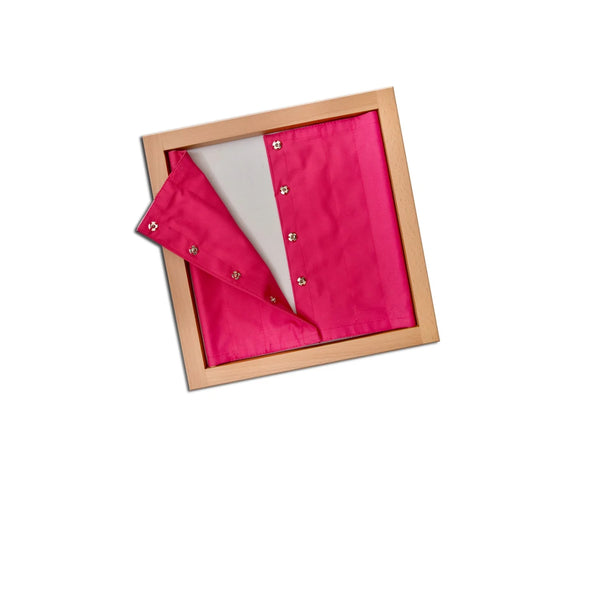
Studies indicate that children engaged in Montessori environments often demonstrate superior fine motor control and spatial reasoning compared to their peers. This is crucial for future tasks like writing, drawing, and even basic self-care, which are often the first markers of independence parents observe. Consider the precise movements involved in using a spoon to eat dal or fastening buttons on a kurta — these are complex fine motor actions that Montessori activities inherently strengthen.
Practical Montessori Activities for Indian Homes to Boost Motor Skills
You don't need a full Montessori classroom to bring its benefits home. Many daily activities in an Indian household can be transformed into opportunities for physical development early childhood. For toddlers (1-3 years), simple tasks like fetching their chappals, placing clothes in a laundry basket, or even helping sort out different coloured vegetables for dinner are excellent gross motor builders. For fine motor skills, activities like tearing paper, threading large beads, or using child-safe scissors are ideal.
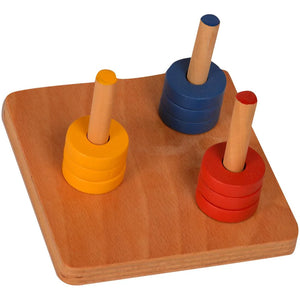
For preschoolers (3-6 years), encourage practical life skills. Let them help dust furniture with a small cloth, sweep up fallen crumbs with a child-sized broom, or assist in washing vegetables. These activities, often overseen by grandparents in joint families, are invaluable. For more structured engagement, consider specific materials that isolate skills. A fine motor skill kit, for example, can offer challenges like bead stringing or using tongs to transfer small objects, directly translating to better pencil grip and control.
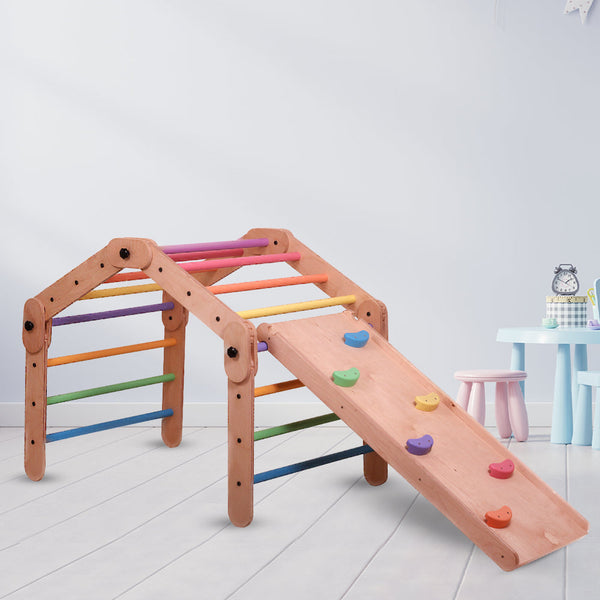
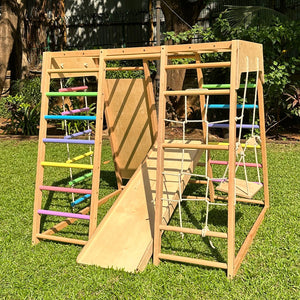
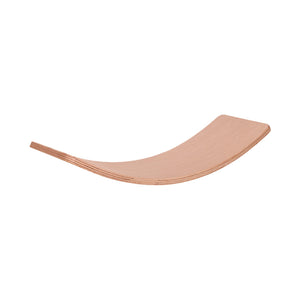
Another powerful strategy is providing opportunities for controlled movement. An open space where a child can practice balancing on a line – either drawn with chalk or using masking tape on the floor – significantly aids gross motor development. Our collection of gross motor skill toys provides engaging options that promote coordination and strength, such as climbing structures or balance boards, perfect even for smaller urban homes. Remember, the goal is not perfection but sustained, purposeful engagement.
Nurturing the ‘Right to Play’ for a Bright Future
The new curriculum, echoing UNICEF's call for 'It's Right to Play,' truly recognizes play as the child's work. Montessori principles have always championed this, understanding that through play, children develop not just physically but also emotionally and cognitively. Allowing a child to freely choose an activity, like building a tower with wooden blocks, teaches them patience, problem-solving, and perseverance, alongside refining their hand-eye coordination.
Parents often face pressure regarding early academic readiness, but focusing on motor skill development offers a holistic path. By building a strong physical foundation, you're not just preparing them for the playground; you're preparing them for the classroom and for life itself. A child who has strong fine motor control can focus on the content of their writing rather than struggling with forming letters, providing a genuine 'head start' in the most meaningful sense.