Wooden Puzzles for Kids: Boost Fine Motor Skills
When it comes to nurturing crucial developmental milestones, wooden puzzles for kids stand out as powerful, foundational tools. Research shows that engaging with these simple yet effective educational puzzles significantly boosts fine motor skills, which are essential for tasks like writing, buttoning clothes, and feeding oneself. This directly aligns with the “Right to Play” initiative from UNICEF, emphasizing that structured, purposeful play is vital for a child's holistic growth, not just as a pastime.
What are Fine Motor Skills? Fine motor skills involve the coordination of small muscles, typically in the hands and fingers, with the eyes. This matters because these skills are fundamental for everyday tasks like holding a pencil, using scissors, tying shoelaces, and dressing independently. Indian parents can actively foster these abilities through engaging play, laying a strong foundation for both school and self-reliance.
The Montessori Philosophy Behind Wooden Puzzles
Maria Montessori, a visionary educator, recognized the profound impact of purposeful activity on a child’s development. Her philosophy, deeply rooted in observing children, advocates for “prepared environments” and self-correcting materials. Wooden puzzles, particularly those known as Montessori puzzles, embody this approach perfectly. They are designed not just for entertainment, but as “work” that allows a child to learn through discovery and repetition.
A 2019 framework by NCERT identifies critical thinking and problem-solving as key outcomes of early childhood education. When a 2-year-old like Rohan in a bustling Bengaluru home struggles to fit a puzzle piece, he isn’t just playing; he’s engaged in a complex cognitive task. He learns patience, develops spatial reasoning, and crucially, discovers self-correction – a core Montessori principle that fosters independence rather than reliance on adult intervention.
How Wooden Puzzles Nurture Fine Motor Skills Development
The act of manipulating puzzle pieces directly targets and strengthens the small muscles in a child’s hands and fingers. From the earliest grasp of a chunky knob puzzle to the precise placement of a jigsaw piece, children are constantly refining their dexterity. This repeated action cultivates the pincer grip, where the thumb and forefinger work together, which is a precursor to holding a pencil correctly.
This engagement makes puzzles excellent hand-eye coordination toys. As Aanya, a 3-year-old in a joint family, visually assesses an empty space and then carefully guides a piece into it, her brain and hands are working in perfect synchrony. This integrated movement is critical for countless daily activities and, importantly, for academic readiness. Without strong hand-eye coordination, tasks like drawing, cutting, and eventually writing can become frustrating.
Beyond Fine Motor: Other Educational Puzzles Benefits
While fine motor skills are a primary benefit, the advantages of puzzles extend much further. The Times of India recently highlighted “5 fun tricks to supercharge fine motor skills,” and puzzles are undoubtedly a foundational one because they offer more than just physical exercise. Puzzles inherently demand concentration, focus, and sustained attention – invaluable skills for any child entering school in India where academic pressures can be high.
Moreover, wooden puzzles are silent teachers of “patience muscle” and problem-solving resilience. The struggle to fit a piece correctly, without immediate adult intervention, builds an internal locus of control and strengthens persistence. This ability to persevere through challenges, to try, fail, and try again, is a far more valuable asset for lifelong learning than merely getting the “right answer” quickly. Children learn to trust their own thinking processes, which is a profound “educational puzzle benefit.”
Choosing the Right Wooden Puzzles for Toddlers in India
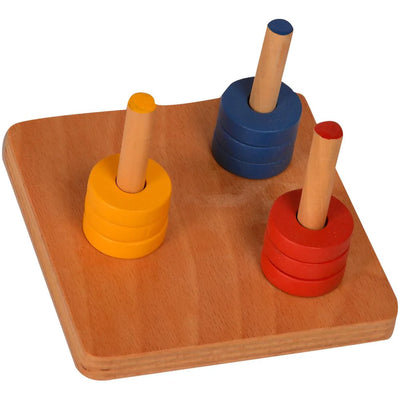
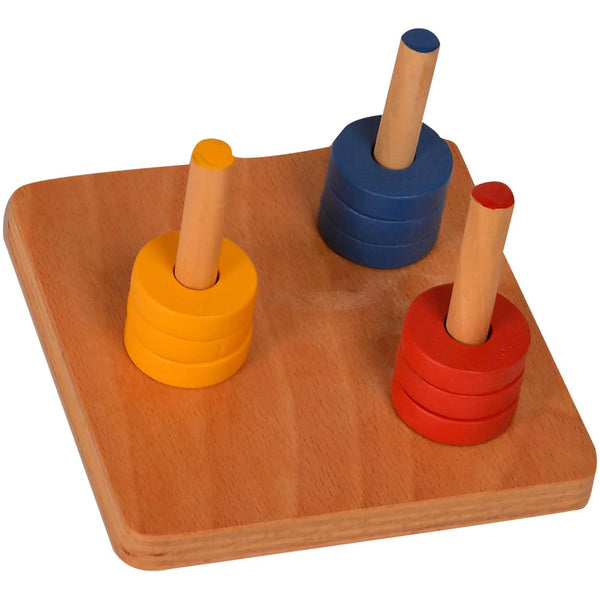
Selecting age-appropriate puzzles is crucial for sustained engagement and developmental impact. For the youngest learners, puzzles for toddlers should feature large, easy-to-grasp knobs and simple shapes (e.g., circle, square, triangle). As children approach two to three years, they can progress to slightly more complex inlay puzzles with multiple pieces or chunky animal shapes.
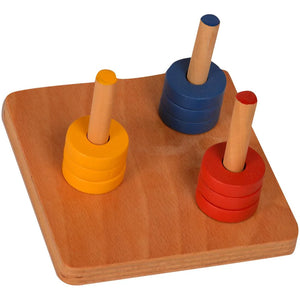
When choosing, prioritize quality and safety. Look for solid wood construction, smooth edges, and non-toxic, child-safe paints. In Indian homes, where toys are often shared across generations or among cousins, durability is key. Consider exploring our range of fine motor skill toys and Montessori educational materials for durable, high-quality options designed to grow with your child.
Practical Tips for Parents: Maximising Puzzle Play
Engaging your child with puzzles in a Montessori-inspired way means observing more and intervening less. Instead of immediately showing them where a piece goes, sit back and watch. Offer verbal encouragement like, “You’re trying so hard!” or “What do you notice about that shape?” This approach empowers children to find solutions independently, boosting their confidence and intrinsic motivation.
Create a dedicated “work” space for puzzles – perhaps a small mat or a corner of the floor, similar to how a dadi might set up a clean, quiet space for a puja or craft. Introduce one puzzle at a time to prevent overstimulation and help your child focus. Celebrate their effort and concentration, not just the completion of the puzzle. This helps them understand that the process of learning and trying is as valuable as the outcome.
By consciously incorporating wooden puzzles into your child's play, you're not just providing entertainment. You are actively investing in their cognitive and physical foundations, giving them the essential tools for self-reliance and academic success, starting right here in their Indian home.