Educational Toys Outdoors: Montessori for Independent Learning
Outdoor educational toys, rooted in the Montessori philosophy, provide children in India with rich, hands-on experiences crucial for developing independent learning and robust problem-solving skills. Research shows that engaging with natural elements and open-ended play equipment empowers children to initiate their own activities, make choices, and find creative solutions, rather than being passively entertained. This approach ensures children are not just playing, but actively constructing their understanding of the world around them.
What is Montessori Outdoor Learning?
Montessori outdoor learning integrates the principles of self-directed exploration and purposeful activity with the natural environment. This matters because it allows children to apply their innate curiosity and develop critical life skills in a dynamic, sensory-rich setting. Indian parents can facilitate this by offering simple, open-ended materials and ample unstructured outdoor time, even in urban spaces.
The Montessori Difference: Cultivating Self-Directed Learning in Nature
The core of Montessori education lies in fostering independence and a love for learning. When extended outdoors, this philosophy transforms simple backyard time into a powerful classroom. Unlike highly structured play, Montessori outdoor learning encourages children to lead their own activities, choosing what to explore and how. Child development experts agree that this freedom to choose is foundational for developing self-regulation and intrinsic motivation. Imagine a child in a Bengaluru park, not just swinging, but deciding to collect fallen leaves, sort them by colour, or create a 'nest' for a toy bird.
This independent play benefits children by building their confidence and sense of agency. When they decide to stack pebbles or balance on an uneven log, they are making decisions, testing hypotheses, and learning from natural consequences – skills vital for future academic and life success. This hands-on, self-directed learning children experience outdoors contrasts sharply with passive screen engagement, which a recent India Today report highlights as contributing to vitamin D deficiency and less robust physical development among children.
Outdoor Problem-Solving Toys: Nature's Classroom for Critical Thinking
The natural world is perhaps the most sophisticated problem-solving lab available. Outdoor problem-solving toys, often simple and open-ended, push children to think creatively without prescribed instructions. A set of wooden planks, for instance, isn't just for building; it becomes a bridge across an imaginary river, a ramp for rolling stones, or a stage for a puppet show. Each new idea presents a challenge: how to make the bridge stable? How to make the stone roll faster?
Maria Montessori herself observed that children learn best through direct engagement and exploration. When a 4-year-old in a joint family courtyard tries to fill a bucket with water using a leaky pipe, or figures out how to make a sandcastle stand without crumbling, they are engaging in complex engineering and physics, not just play. These experiences, powered by educational toys that complement nature's offerings, strengthen neural pathways associated with critical thinking far more effectively than pre-programmed digital tasks. Studies indicate that children who regularly engage in complex, unstructured outdoor play demonstrate enhanced cognitive flexibility and better academic performance later on. Parents can find a range of such open-ended equipment in the gross motor skill collection at SkilloToys, designed to stimulate imaginative construction and physical challenge.
Beyond Screens: Nurturing Holistic Growth Outdoors
In a world where children spend more time indoors, glued to screens, the wisdom of outdoor play is more relevant than ever. The Times of India recently featured a pediatrician emphasizing the health benefits of "playing in the mud," a sentiment deeply aligned with Montessori's reverence for sensory exploration. Outdoor Montessori experiences provide crucial sensory input – the smell of wet earth after monsoon, the texture of rough bark, the sound of birds – all of which stimulate brain development and focus.
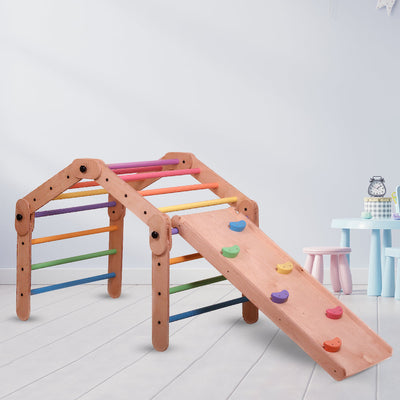
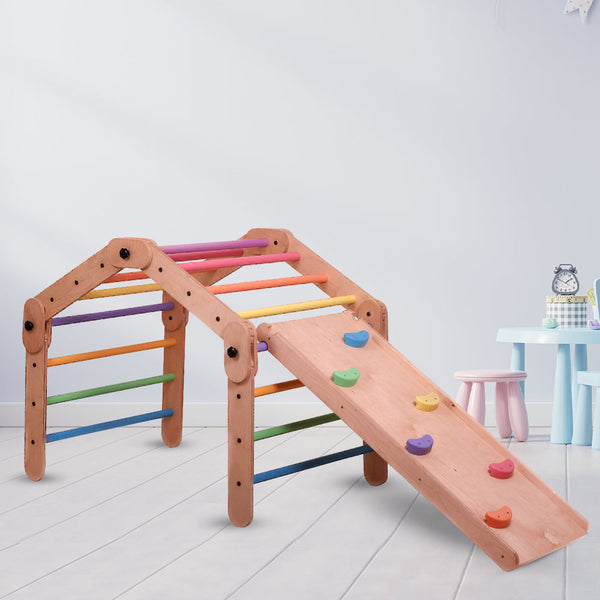
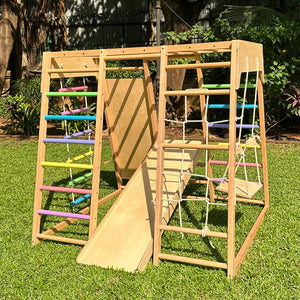
For children like young Rohan, a 3-year-old in a Bangalore apartment, access to meaningful outdoor experiences is vital. Simple additions like a climbing triangle or balancing beam can transform a small balcony or shared common area into an adventure zone. These Montessori outdoor educational toys are not merely physical tools; they are catalysts for social-emotional development. Children learn to negotiate space, share materials, and cooperate on projects, skills essential for navigating their family and school environments. Our Montessori method learning materials embrace this philosophy, providing foundational tools for growth both indoors and out.
Bringing Montessori Outdoor Play to Your Indian Home
Integrating Montessori outdoor principles into daily life in India is simpler than you might think. Start by providing open-ended materials like large blocks, ropes, buckets, and natural items such as stones, leaves, and sticks. Encourage your child to freely explore and use these items as they see fit, without adult interference.
- Create a "Yes" Space: Designate a safe outdoor area where your child can explore without constant supervision. This could be a balcony, a garden patch, or even a designated corner of a joint family's shared space.
- Embrace Imperfection: Let children get dirty! Playing in mud or sand is a profound sensory experience that boosts immunity and fosters a connection with nature.
- Observe, Don't Direct: Instead of telling your child what to do, watch their play. What problems are they trying to solve? How are they interacting with their environment? Your observation provides insight into their developmental stage and interests.
- Connect with Nature: Even in urban settings, visit local parks, lakes, or simply spend time in your building's common green areas. Point out different plants, birds, and insects, encouraging a sense of wonder and respect for the environment.
Remember, the goal isn't elaborate setups, but fostering an environment where children can engage deeply with the world, guided by their own curiosity and problem-solving drive.
- Outdoor Montessori play cultivates independent learning by empowering children to initiate and direct their own activities.
- Unstructured outdoor environments and open-ended materials are superior for developing real-world problem-solving skills.
- Maria Montessori's philosophy, applied outdoors, addresses modern challenges like excessive screen time and vitamin D deficiency.
- Natural consequences in outdoor play build resilience and a deeper understanding of cause and effect.
- Simple, accessible materials like ropes, planks, and natural items can effectively serve as Montessori outdoor educational toys.
- Encouraging independent outdoor exploration enhances cognitive flexibility and social-emotional development in children.
What is the main benefit of outdoor educational toys?
The main benefit is fostering self-directed learning and robust problem-solving skills. Children learn to make choices, test ideas, and adapt to natural challenges, building confidence and critical thinking in an engaging, hands-on manner.
How does Montessori outdoor learning promote independence?
Montessori outdoor learning promotes independence by allowing children the freedom to choose their own activities and explore at their own pace. This self-initiated play strengthens decision-making abilities, builds self-reliance, and cultivates an intrinsic motivation to learn.
Are specific "outdoor Montessori toys" necessary?
While specific gross motor tools can be beneficial, Montessori outdoor play emphasizes open-ended materials like sticks, stones, water, and simple wooden structures. The focus is on the child's interaction with the environment, not elaborate pre-programmed toys.
How can I encourage problem-solving with outdoor play in a small urban space?
Even in small urban spaces like balconies or shared courtyards, you can encourage problem-solving by providing open-ended items such as large blocks, buckets, ropes, or even a small sandpit. These encourage children to build, connect, and experiment with spatial relationships and natural materials.
What role do parents play in Montessori outdoor learning?
Parents play the role of facilitators and observers in Montessori outdoor learning. Provide a safe, stimulating environment with accessible materials, then step back and allow your child to explore and learn independently. Offer support only when genuinely needed, rathercribing their play.
Does outdoor Montessori address screen time concerns?
Yes, outdoor Montessori directly addresses screen time concerns by offering a compelling and developmentally superior alternative. It engages children physically, cognitively, and emotionally with the real world, fostering crucial skills that passive screen engagement cannot replicate, and promoting overall well-being.