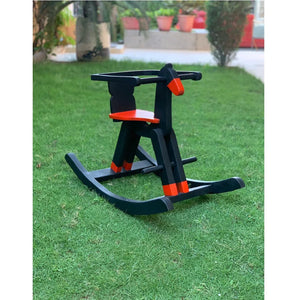
Toys for 4-Year-Old Boys: Gross Motor Play Beats Screens
For 4-year-old boys, engaging with effective toys for 4 year old boys that promote gross motor skills is essential for holistic development, particularly in a world saturated with screens. These Montessori-inspired activities not only build strength and coordination but also cultivate authentic child's play, which is crucial for cognitive and emotional well-being. Research consistently shows that physical activity is a cornerstone for early learning.
Authentic child's play is self-directed, intrinsically motivated, and imaginative, free from adult intervention or specific goals. This matters because it fosters creativity, problem-solving, and emotional regulation. Indian parents can provide open-ended materials and a safe environment for this vital developmental process.
Reclaiming Child's Play from the Screen's Grip
The contemporary Indian household often finds itself grappling with the allure of digital devices. With screens becoming ubiquitous, from smartphones in the hands of grandparents to educational apps for toddlers, genuine, unstructured play often takes a backseat. This shift has not gone unnoticed; as India Today recently noted, "the playground could be the classroom children need most" in the age of AI, underscoring the critical role of physical engagement.
The New Indian Express also highlighted the importance of "Child's Play," advocating for its preservation in a rapidly modernizing society. For 4-year-old boys, this means fewer hours passively absorbing content and more time actively exploring their physical capabilities. Child development experts agree that rich gross motor experiences are not just about burning energy, but about building crucial neural pathways and fostering a lifelong love for movement.
Why Gross Motor Skills Are Crucial for 4-Year-Old Boys
At four, a child's body is a magnificent engine of discovery. Gross motor skills—large muscle movements like running, jumping, climbing, and balancing—are not merely physical feats. They are foundational for cognitive development, attention span, and even early literacy. The American Academy of Pediatrics recommends at least 60 minutes of unstructured free play daily for preschoolers, emphasizing its role in developing executive functions like planning and impulse control.
Without sufficient opportunities for active play, 4-year-old boys may struggle with spatial awareness, body coordination, and even emotional regulation, manifesting as restlessness or difficulty focusing in later learning environments. A Bangalore-based parent, for instance, shared how her son, Krish, initially glued to rhymes on a tablet, showed marked improvements in his focus and ability to sit still after just weeks of dedicated gross motor play.
Montessori Gross Motor Toys: Cultivating Authentic Movement
Maria Montessori firmly believed that "the hand is the instrument of the intelligence." This philosophy extends profoundly to gross motor development. Unlike flashy electronic gadgets that dictate interaction, Montessori gross motor toys invite self-directed exploration. They are designed to be simple, durable, and open-ended, allowing a child's imagination and inherent drive to move freely.
These toys empower children to test their limits, problem-solve, and develop self-confidence through repeated, self-chosen actions. The satisfying thud of a foot on a balance board or the careful placement of hands on a climbing arch engages a child's whole being, fostering a deep sense of accomplishment that a screen cannot replicate.
Montessori Essentials for Physical Development 4-Year-Old Boys
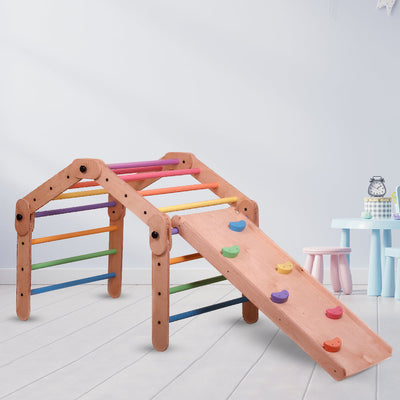
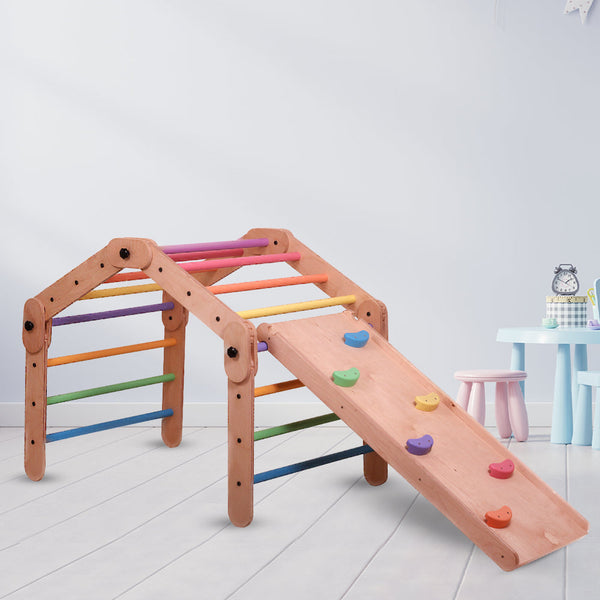
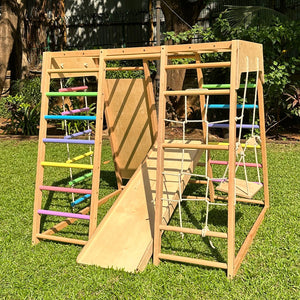
For parents eager to introduce purposeful movement, specific Montessori gross motor toys are invaluable. A sturdy wooden climbing arch or ramp encourages natural climbing, crawling, and sliding motions, strengthening core muscles and spatial awareness. A simple set of wooden stepping stones or a balance beam offers endless opportunities for coordination and balance practice.
These aren't just "toys"; they are tools for development. As a child navigates these structures, they are constantly calculating distance, assessing risk, and adapting their movements—all complex cognitive processes. The child isn't just playing; they are learning physics, geometry, and self-reliance, aligning perfectly with the ethos of authentic child's play.
Creating a Play-Rich Environment in the Indian Home
In many Indian homes, particularly in bustling metros like Delhi or Mumbai, space can be a constraint. However, fostering an environment rich in gross motor opportunities doesn't require a large backyard. It demands intentionality. Dedicate a corner in the living room or an unused balcony for movement. A simple rocker board can transform into a boat, a mountain, or a quiet reading nook, fitting into even compact apartments.
Encourage traditional Indian games passed down by grandparents, like hopscotch (even a taped version indoors) or "kho-kho" variations that involve chasing and tagging. The idea is to make movement a natural, integrated part of daily life. The Supreme Court's ongoing discussion about making sports a fundamental right for children, as reported by The Times of India, further underscores the societal recognition of physical activity's importance.
Practical Tips for Reducing Screen Time Kids Can Embrace
Reducing screen time isn't about outright bans, but about offering compelling alternatives. Here's how:
- Set "Play Zones": Designate areas for gross motor activities. When the climbing arch is out, screens are off.
- Model Active Behaviour: Join your child in a game of catch or a walk in the park. Children learn best by observing.
- Establish "Screen-Free" Times: Make mealtimes and the hour before bed mandatory screen-free periods for the entire family.
- Involve Grandparents: Grandparents, often natural storytellers and play partners, can be incredible allies in promoting imaginative, screen-free engagement. Their traditional wisdom often aligns perfectly with the value of open-ended play.
- Rotate Toys: Keep a selection of gross motor toys accessible and rotate others. This keeps the child's interest fresh and prevents boredom from leading to screen-seeking.
By consciously providing opportunities for Montessori gross motor play, parents are not just giving their 4-year-old boys toys; they are gifting them resilience, creativity, and the joy of authentic discovery, preparing them not just for school, but for a full, active life. Explore our range of Montessori learning materials to find the perfect tools for your child's physical journey.