Unstructured Outdoor Play Benefits: A Montessori Guide
The profound unstructured outdoor play benefits for children extend far beyond mere physical exercise, serving as a critical foundation for cognitive and emotional development. From a Montessori perspective, this child-led exploration is not simply recreation, but essential "work" where children construct their understanding of the world, fostering independence, resilience, and problem-solving skills vital for navigating a complex future. For Indian parents, understanding this fundamental importance of outdoor play empowers them to consciously cultivate environments that support true child-led discovery, even amidst urban challenges and academic pressures.
As the 'Child's Play' headline in The New Indian Express suggests, there's a growing conversation about the very essence of play. In an age where ‘In the age of AI, the playground could be the classroom children need most,’ as India Today notes, reconnecting with genuine, unstructured outdoor play isn't just a nostalgic ideal; it's a strategic investment in our children's future.
What is True Child's Play?
True child's play is intrinsically motivated, self-directed activity engaged in for its own sake, without adult intervention, rules, or external goals. This matters because it allows children to practice decision-making, problem-solving, and creativity, essential for holistic development. Indian parents can facilitate this by providing safe, stimulating environments and trusting their child's innate drive to explore.
The Core Unstructured Outdoor Play Benefits: Beyond the Obvious
While we readily acknowledge the physical advantages – stronger muscles, improved balance, better coordination – the real magic of unstructured outdoor play benefits lies deeper. When a child “aimlessly” digs in the mud, climbs a low wall, or invents a game with pebbles, they are engaged in profound self-education.
Research consistently shows that children who experience ample free outdoor play develop superior executive function skills, including planning, problem-solving, and self-regulation. The American Academy of Pediatrics highlights that free play is critical for healthy brain development, allowing children to explore boundaries, manage risks, and build resilience – qualities that cannot be taught through worksheets or structured activities alone.
Consider 5-year-old Rohan in a Bangalore park. He isn't following a coach's instructions; instead, he's building an elaborate "bridge" with discarded leaves and twigs across a small puddle. He's testing structural integrity, adapting to unexpected changes (a sudden gust of wind!), and negotiating "toll fees" with his younger cousin. This isn't just fun; it's a masterclass in engineering, economics, and social negotiation, all self-taught.
Montessori Child's Play: The Philosophy of Freedom in Nature
Maria Montessori, a pioneer in child development, profoundly understood the child's innate drive for self-directed learning. Her philosophy of Montessori child's play extends naturally to the outdoors, viewing nature as the ultimate "prepared environment." Here, the materials are infinite – dirt, water, trees, insects, sunlight – and the child is the master of their own discovery.
In Montessori, the adult's role is not to direct but to observe and facilitate. This means ensuring a safe space and providing access to simple, open-ended tools, then stepping back to allow the child's inner teacher to emerge. A child left to their own devices in a garden, for instance, might spend an hour observing an ant colony, developing focus and scientific inquiry without any formal lesson plan.
Importance of Outdoor Play in India: Adapting to Modern Realities
For many Indian families, particularly those in bustling metros like Bengaluru, creating space for importance of outdoor play India can feel challenging. Small apartments, academic pressure from a young age, and parental concerns about safety often limit opportunities for free exploration. Yet, it is precisely in this context that embracing unstructured outdoor play becomes even more vital.
The sentiment echoed by The Times of India, questioning if sports should become a fundamental right, underscores a societal recognition that children need more than just academics. Grandparents, with their traditional wisdom, often instinctively understand this, encouraging children to play freely in courtyards or nearby open spaces, valuing fresh air and robust physical activity.
Even a small balcony can be transformed into a "prepared outdoor environment" with a tray of sand, a few natural objects, and some water. A visit to a local park or community garden, allowing children the freedom to run, climb, and simply be, offers immense developmental benefits. It's about prioritising the time and space, rather than elaborate setups.
Fostering Free Play Development: Simple Steps for Parents
Cultivating genuine free play development means shifting our perspective as parents. Instead of asking “What should my child be doing?” we can ask “What environment can I provide for my child to do what they need?” Here are some practical steps:
- Provide Access to Nature: Even if it's just a local park or a patch of grass. Allow children to touch, smell, and observe.
- Offer Open-Ended Materials: Sticks, stones, leaves, sand, water. Simple items encourage imagination far more than complex, single-purpose toys.
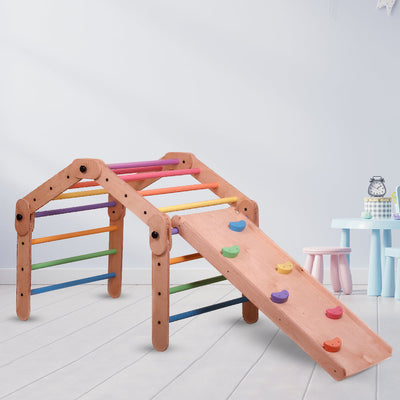
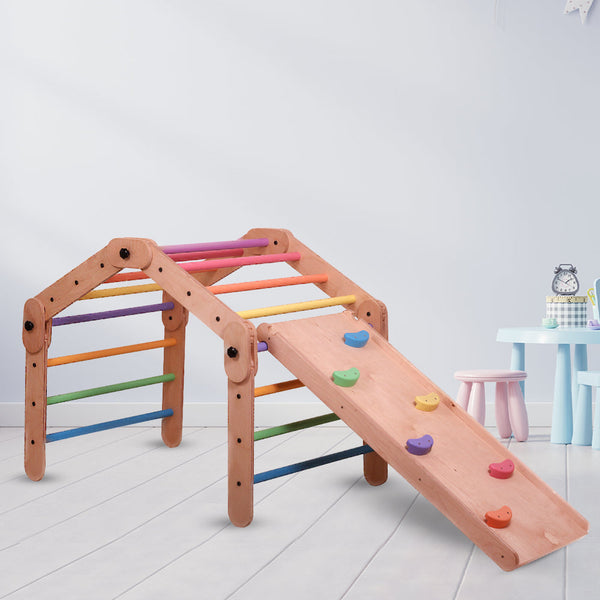
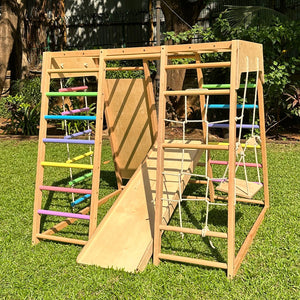
- Embrace “Risky” Play: Within safe limits, allow children to climb, jump, and explore perceived risks. This builds confidence and teaches self-assessment. Consider robust gross motor toys that encourage active, self-directed physical challenges, like balance boards or climbing frames, which are excellent for developing coordination and strength.
- Step Back and Observe: Resist the urge to intervene, instruct, or even praise every action. Allow your child to experience the natural consequences of their choices and the intrinsic joy of their own achievements.
- Dress for Mess: Old clothes and bare feet are perfect for truly immersive outdoor play. The dirt, the splashes, the grass stains – these are badges of a well-played day.
Maria Montessori believed that “The child has a mind able to absorb knowledge. He has the power to teach himself.” This profound insight reminds us that the greatest gift we can give our children, especially in their outdoor adventures, is the freedom to teach themselves. Embracing the unstructured outdoor play benefits is not just about physical activity; it's about nurturing an adaptable, resilient, and joyful human being ready for whatever the future holds.
For more insights into creating enriching environments for your child's holistic growth, explore our range of Montessori method learning materials and toys designed to support self-directed play.