Wooden Puzzles for Kids: Cognitive Growth for 3-5 Year Olds
Wooden puzzles for kids aged 3-5 years are foundational tools that significantly boost cognitive development, fine motor skills, and problem-solving abilities. Research shows that engaging with these tactile, self-correcting activities fosters crucial skills like concentration, spatial reasoning, and resilience, all vital for school readiness. This direct, hands-on learning approach aligns perfectly with early childhood education goals, providing a robust pathway for a child's holistic growth.
As your little one transitions from toddlerhood to preschool, their world expands rapidly. Parents in bustling Bengaluru homes, often balancing joint family life with professional commitments, understand the pressure to prepare their child for school. The right educational activities, like engaging with wooden puzzles, can make a significant difference, nurturing not just academic skills but also the patience and persistence needed for future challenges.
What are preschool learning puzzles?
Preschool learning puzzles are educational tools designed to challenge and develop specific cognitive and motor skills in children aged 3-5. This matters because they provide structured problem-solving opportunities, promoting logical thinking and persistence. Indian parents can use these puzzles to build foundational academic skills at home, preparing their child for primary school.
Nurturing Cognitive Skills & Spatial Reasoning with Wooden Puzzles
Child development experts agree that the years between three and five are critical for building foundational cognitive skills. Engaging with wooden puzzles directly strengthens spatial reasoning, a child's ability to understand and remember the relationships between objects in space. When a child manipulates a puzzle piece, trying to fit it into the correct slot, they are actively engaging in mental rotation and visual discrimination – complex cognitive processes simplified into play.
Studies indicate that children who regularly play with puzzles perform better on tasks requiring spatial visualization. This skill is not just about building blocks; it underpins later success in subjects like mathematics, geometry, and even reading. Imagine little Aanya in her Mumbai apartment, her brow furrowed in concentration as she turns a wooden animal piece, her small fingers carefully guiding it into place. This is not just playtime; it's active brain building.
The National Council of Educational Research and Training (NCERT) emphasizes activity-based learning in its Early Childhood Care and Education (ECCE) framework, advocating for materials that promote hands-on exploration. Wooden puzzles, with their tangible nature and immediate feedback, are perfectly aligned with this philosophy. They are prime examples of cognitive development toys for kids that foster independent learning.
Building Problem-Solving and Resilience: Why Montessori Puzzles Matter
Beyond spatial skills, wooden puzzles are powerful tools for cultivating problem-solving abilities and resilience in preschoolers. Unlike many screen-based activities that offer immediate, often passive, rewards, a physical puzzle demands active engagement, trial, and error. Maria Montessori herself championed materials that allowed for self-correction, enabling children to learn from their mistakes without adult intervention.
When a child picks up a puzzle piece and it doesn't fit, they don't give up immediately. They might try turning it, looking for a different spot, or even setting it aside for a moment. This cycle of observation, hypothesis, testing, and self-correction is the very essence of problem-solving. This process builds what UNICEF, in its focus on early childhood education, calls 'adaptive capabilities' – the ability to navigate challenges and persist. This intrinsic motivation to complete a task, without external praise, is a critical life skill, especially in a competitive environment like India where academic pressure often starts early.
Consider five-year-old Rohan, whose grandparents encourage him to complete a 20-piece map puzzle of India during his summer holidays. The initial frustration gives way to determined effort, and the triumphant cheer when the last state clicks into place is a pure example of earned accomplishment. These are the kinds of enriching experiences that build a robust foundation for Montessori learning and beyond.
Choosing the Right Wooden Puzzles for 3 and 4-Year-Olds
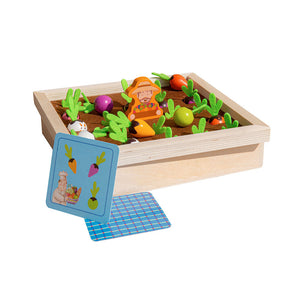
Selecting the appropriate puzzles is crucial to ensure engagement and continued learning. For puzzles for 3 year olds, focus on those with fewer, larger pieces (around 4-12 pieces) and clear, familiar images. Simple knob puzzles, often depicting animals, vehicles, or basic shapes, are excellent for developing fine motor skills and hand-eye coordination. These offer quick successes that boost confidence.
As children mature into 4-year-olds, they are ready for more complexity. Puzzles for 4 year olds can feature 12-25 pieces, often with more intricate scenes, alphabets, or numbers. Layered puzzles, where pieces fit on top of each other to form a complete image, introduce an extra dimension of spatial reasoning. Look for options that allow for gradual progression, maintaining a challenge that is just right – not too easy, not too frustrating.
Remember, the goal is to foster a love for learning, not to push a child beyond their developmental readiness. Observe your child: Are they engaged? Do they show signs of frustration or delight? These cues will guide you in choosing the best activity kits and puzzles.
Engaging Your Child: More Than Just Playtime
While the self-correcting nature of wooden puzzles encourages independent play, your involvement as a parent can deepen the learning experience. Sit with your child, describe the shapes and colours, and ask open-ended questions like, "Where do you think this piece might go?" or "What animal is this?" This interaction enhances language development and strengthens your bond.
In many Indian homes, playtime is often a community activity, with grandparents or older siblings joining in. This shared experience can be incredibly enriching, modeling cooperative play and problem-solving. Make puzzle time a relaxed ritual, perhaps after an afternoon nap or before dinner, rather than a forced educational task. The aim is to make learning joyful and organic.
Providing a variety of engaging wooden puzzles is an investment in your child's future, laying robust foundations for cognitive development and academic success. These simple, timeless toys are more than just entertainment; they are gateways to sharper minds and confident problem-solvers, perfectly preparing your little one for the exciting journey of school.