Goa Class 1 Age Rule: School Readiness & Montessori Prep
The recent Goa Class 1 age rule change, raising the entry age to six years, is sending ripples across India, particularly causing alarm among parents and pre-schools regarding future academic planning. This policy shift, aligning with NEP 2020 guidelines, aims to ensure children are developmentally ready, prompting families to re-evaluate their child's early education journey. For Indian parents anxiously preparing their children for school, this news from Google News – 'Goa raises Class 1 age to six: India slows school entry, but the real alarm rings in pre-schools' – highlights a critical concern about school readiness.
SkilloToys understands the unique pressures faced by Indian parents, from securing the 'right' school to ensuring their child thrives in a competitive environment. This new policy isn't just about age; it's about a deeper understanding of what true school readiness means. Fortunately, the Montessori method offers a proven pathway to prepare children comprehensively, equipping them with the skills and confidence to excel, irrespective of evolving age regulations.
Goa Class 1 Age Rule Explained: Implications for Indian Families
The Goa Class 1 age rule mandates that children must be six years old by June 1st of the admission year to be eligible for Class 1. This new regulation is a direct implementation of the National Education Policy (NEP) 2020's recommendation for a universal entry age into the foundational stage of schooling across India. It signifies a national move towards ensuring children have adequate developmental preparation before formal primary education begins.
This matters because studies indicate that children who begin formal schooling at a developmentally appropriate age, with a strong foundation in pre-literacy and pre-numeracy skills, show better academic outcomes and reduced stress. Indian parents can respond to this by focusing on holistic development and robust preschool preparation rather than rushing their child into school prematurely.
Goa's New Rule and India's Evolving School Entry Age Landscape
Goa's decision to raise the Class 1 entry age to six years is a significant step towards national alignment with the NEP 2020. This policy envisions a comprehensive 'foundational stage' of five years, encompassing three years of preschool (LKG, UKG equivalent) and two years of Class 1 and 2, for children aged 3-8 years. The aim is to provide a strong base in foundational literacy and numeracy, as well as social and emotional skills, before children tackle more complex academics.
This shift directly influences the broader landscape of school entry age India. While states like Karnataka and Maharashtra have also moved towards aligning their policies, the staggered implementation across the country can be a source of confusion for families, especially those with children nearing school-going age. Research by the National Council of Educational Research and Training (NCERT) consistently emphasizes that foundational literacy and numeracy are best established when children are developmentally prepared, making age-appropriate entry crucial.
Understanding Preschool Age Rules in India: LKG & UKG Implications
The updated Class 1 age in Goa naturally impacts the admission criteria for younger classes, directly influencing preschool age India norms. Traditionally, many schools in India have admitted children to LKG at 3 years and UKG at 4 years. With Class 1 now starting at six, this structure reinforces the importance of a full three-year preschool experience.
Parents often feel pressure to enrol their child as early as possible for LKG or UKG, fearing they might 'fall behind'. However, child development experts agree that quality engagement during these formative years, focused on play-based learning and practical life skills, is far more beneficial than early academic push. Understanding the revised LKG UKG age rules means Indian families can confidently prioritise a child's holistic development over competitive entry, knowing they have ample time for rich learning experiences.
Montessori Prep: Ensuring True School Readiness, Not Just Age Compliance
For SkilloToys, true Montessori school readiness age isn't solely about a chronological number; it's about a child's internal preparedness. The Montessori method, pioneered by Dr. Maria Montessori, focuses on developing key life skills like independence, concentration, coordination, and a deep, intrinsic love for learning. These are the foundations that enable a child to thrive in any academic setting, whether they enter Class 1 at five or six.
A Montessori environment provides purposeful activities that naturally align with developmental milestones. For instance, engaging with practical life materials helps children develop fine motor skills, focus, and self-care abilities vital for school. Similarly, sensorial materials like the Pink Tower or Brown Stair refine discrimination and build a logical mind, which are critical for mathematical and scientific thinking. These hands-on experiences empower children, making them confident learners, ready to embrace new challenges.
Empowering Your Child with Montessori for a Confident Start
The 'alarm in pre-schools' noted by The Times of India underscores a critical need for effective early childhood education that genuinely prepares children. Montessori offers a powerful antidote to this anxiety, focusing on the individual child's pace and innate curiosity. Rather than rote learning, Montessori encourages exploration and discovery, building a robust foundation for future academic success.
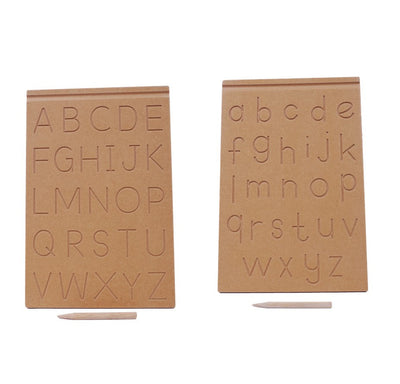
Whether your child enters Class 1 at age five or six, a Montessori foundation ensures they possess the crucial skills: the ability to focus on a task, solve problems independently, work cooperatively, and communicate effectively. These are not merely academic skills but life skills, crucial for navigating the demands of school and beyond. Providing enriching experiences at home with language materials such as sandpaper letters and movable alphabets can further enhance pre-literacy skills, setting children up for success.
Child development experts, including those advocating for the Montessori method, consistently highlight that school readiness is a holistic concept, encompassing social, emotional, cognitive, and physical development, not merely chronological age. By focusing on these core areas, SkilloToys empowers Indian parents to prepare their children not just for Class 1, but for a lifelong journey of confident learning.
- The Goa Class 1 age rule mandates entry at six years, aligning with NEP 2020.
- This policy shift aims to ensure children are developmentally ready for primary schooling.
- NEP 2020 recommends a five-year foundational stage (3 years preschool + Class 1 & 2).
- Montessori education fosters true school readiness through developing independence, concentration, and practical skills.
- Effective preschool preparation, focused on holistic development, is more crucial than early academic pressure.
- Parents can support their child's readiness at home with Montessori-inspired educational toys.
What is the new Class 1 age rule in Goa?
The new Class 1 age rule in Goa mandates that children must be six years old by June 1st of the admission year to be eligible for Class 1. This aligns with the National Education Policy (NEP) 2020's recommendation for foundational stage entry.
How does the NEP 2020 impact school entry age in India?
The NEP 2020 recommends a universal school entry age of six years for Class 1 across India. This policy aims to ensure children have completed a structured three-year foundational learning period in preschool before entering primary school, promoting holistic development.
Does this rule affect LKG and UKG admissions?
Yes, indirectly. If Class 1 entry is at age six, then LKG and UKG entry ages will be adjusted accordingly, typically to 3 and 4 years respectively, to ensure children complete the full preschool cycle. Parents should confirm specific age cut-offs with their chosen schools.
How does Montessori prepare children for these age changes?
Montessori education focuses on intrinsic readiness, fostering independence, concentration, problem-solving skills, and a love for learning. This child-centred approach ensures children are developmentally prepared for formal schooling, regardless of specific age mandates, by building strong foundational skills.
What is the 'foundational stage' as per NEP 2020?
The 'foundational stage' in NEP 2020 refers to five years of learning, comprising three years of preschool (Anganwadi/preschool/Balavatika) and two years of primary school (Class 1 and 2). This stage focuses on activity-based learning, foundational literacy, and numeracy for children aged 3-8 years.