Learning Levels in Grade 1 India: Montessori Advantage
Montessori education definitively builds strong learning levels in Grade 1 India, fostering independent learners ready for academic success. Research indicates children exposed to Montessori principles often demonstrate superior foundational skills, crucial for navigating the curriculum ahead. This approach empowers Indian children with critical thinking and self-reliance, giving them a significant early advantage in their educational journey.
Recent headlines like 'The early advantage: Learning levels in grade 1' highlight a critical conversation for Indian parents. With the National Education Policy (NEP) 2020 emphasising foundational literacy and numeracy, the focus on early childhood education has intensified across the nation, from bustling Bengaluru to quiet villages. Parents, often supported by grandparents and joint families, are increasingly anxious about their child's preparedness for the formal school system, particularly for Grade 1.
Montessori education is a child-centered approach developed by Dr. Maria Montessori, focusing on self-directed activity, hands-on learning, and collaborative play. This matters immensely because it cultivates natural curiosity and deep understanding, rather than rote memorisation. Indian parents can implement Montessori principles at home or choose schools that align with this philosophy to nurture their child's innate potential.
Connecting the News: Why Strong Learning Levels Matter for Grade 1 in India
The conversation around 'early advantage' and learning levels in Grade 1 India is more relevant than ever. Studies indicate that strong foundational skills developed before age six are direct predictors of academic achievement in later grades. For Indian children, navigating the competitive academic landscape requires more than just memorisation; it demands conceptual understanding and problem-solving abilities right from the start.
The NEP 2020's "Foundations First" initiative underscores the government's commitment to strengthening early learning. This policy shift acknowledges that robust early childhood education is not a luxury but a necessity for building a resilient, adaptable generation. SkilloToys believes that by understanding how Montessori aligns with these national goals, parents can make informed choices that positively impact their child's future.
Montessori's Foundation for Robust Early Learning Skills
Maria Montessori's philosophy is rooted in observing children's natural development. It provides a prepared environment where children can explore and learn at their own pace, guided by their intrinsic curiosity. This method is particularly effective in building essential cognitive and motor skills, vital for successful Grade 1 readiness skills India demands.
For instance, activities involving Practical Life materials, such as pouring water, buttoning clothes, or sweeping, teach concentration, coordination, and independence. These simple yet profound exercises are not merely chores; they are foundational building blocks that refine fine motor skills necessary for writing and develop an ordered mind crucial for academic tasks.
Furthermore, Sensorial materials like the Pink Tower or Broad Stair engage children in exploring dimensions, colours, and textures. These experiences directly enhance discrimination skills, logical reasoning, and early mathematical concepts. Child development experts agree that direct sensory experiences are paramount for developing neural pathways that support complex learning.
Building Essential Grade 1 Readiness Skills India Values
Montessori education doesn't just teach facts; it cultivates a comprehensive set of Grade 1 readiness skills India needs for its young learners. These include not only cognitive abilities but also critical social-emotional development, independence, and a love for learning.
Children in Montessori environments learn self-regulation, how to collaborate with peers, and how to resolve conflicts peacefully. These interpersonal skills are invaluable in a classroom setting and throughout life, especially in a diverse country like India where community and cooperation are highly valued. Studies indicate that children with strong social-emotional skills adapt better to school and show greater academic success.
The emphasis on independent work and choice empowers children to take ownership of their learning. This self-directed approach helps them transition smoothly into the structured environment of Grade 1, where they are expected to manage tasks, follow instructions, and maintain focus. It reduces school pressure by instilling an intrinsic motivation to learn.
From Concrete to Abstract: Montessori's Path to Academic Success in Grade 1
Montessori provides a clear, structured progression from concrete manipulation to abstract understanding, directly supporting academic success in Grade 1. This methodology is particularly effective for subjects like mathematics and language, which form the bedrock of early schooling.
For mathematics, children use tactile materials like Golden Beads to grasp concepts of quantity, place value, and operations before moving to symbolic representations. This hands-on experience solidifies their understanding, preventing common struggles with abstract math later on. Research consistently shows that a concrete-to-abstract approach significantly boosts mathematical comprehension.
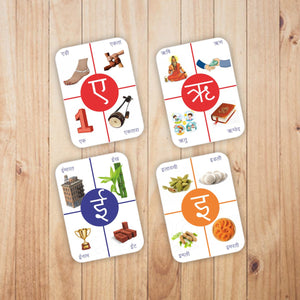
Similarly, for language development, Montessori Language materials such as Sandpaper Letters and the Movable Alphabet allow children aged 3-6 years to touch, trace, and construct words phonetically. This multi-sensory approach accelerates literacy, preparing them not just to recognise letters but to confidently read and write in various Indian languages by Grade 1. An independent study by Dr. Angeline Lillard found that Montessori students outperformed peers in literacy and math skills by Grade 1.
The Enduring Advantage: Beyond Grade 1 Success
The benefits of a Montessori foundation extend far beyond simply achieving strong learning levels in Grade 1 India. This educational approach cultivates a lifelong love for learning, critical thinking, creativity, and adaptability—qualities that are essential for success in an ever-evolving world.
Children who have experienced Montessori often become proactive problem-solvers and resilient individuals, equipped to face academic and life challenges with confidence. They are encouraged to ask questions, explore solutions, and collaborate, fostering a deep intellectual curiosity that continues to serve them throughout their schooling and into adulthood. This holistic development ensures they are not just ready for Grade 1, but for life itself.
- Montessori education significantly enhances foundational learning levels for Grade 1 success in India.
- The NEP 2020's focus on early learning aligns with Montessori's emphasis on foundational skills.
- Montessori builds essential Grade 1 readiness skills, including fine motor, cognitive, and social-emotional development.
- Concrete Montessori materials (e.g., Practical Life, Sensorial) bridge the gap from tactile experience to abstract understanding.
- Children in Montessori environments demonstrate superior literacy and mathematical comprehension by Grade 1.
- Montessori fosters independence, critical thinking, and a lifelong love for learning, extending benefits beyond early grades.
What specific skills does Montessori develop for Grade 1 readiness?
Montessori develops a comprehensive range of skills for Grade 1 readiness, including fine motor coordination for writing, concentration, problem-solving, independence, and strong social-emotional skills like cooperation and self-regulation. It ensures children are academically and personally prepared for formal schooling.
How does Montessori support learning levels in Grade 1 India in math?
Montessori supports mathematical learning levels in Grade 1 India by using concrete materials, such as Golden Beads and geometric solids, to teach concepts of number, quantity, and operations. This hands-on approach ensures a deep, intuitive understanding of mathematical principles before children encounter abstract symbols, building a solid foundation.
Is Montessori effective for children from diverse Indian backgrounds?
Yes, Montessori is highly effective for children from diverse Indian backgrounds because its child-centered approach respects individual pace and cultural context. It provides a universal framework for development while allowing for adaptation, nurturing each child's unique potential irrespective of their socio-economic or linguistic background.
Can Montessori principles be applied at home in an Indian context?
Yes, Montessori principles can absolutely be applied at home in an Indian context, often with the support of extended family. Creating a prepared environment, encouraging practical life skills (like helping with household chores or festive preparations), and providing open-ended learning materials from SkilloToys can significantly boost a child's development.
How does Montessori help reduce academic pressure for Grade 1?
Montessori helps reduce academic pressure for Grade 1 by fostering intrinsic motivation and a love for learning, rather than external rewards or fear of failure. Children learn at their own pace in a supportive environment, developing confidence and self-efficacy that prepares them to approach new academic challenges with enthusiasm, not anxiety.