Malayalam Alphabet Milestones for Preschool & LKG Readiness
For Indian parents in Bengaluru and across the nation, understanding **malayalam alphabets** milestones is crucial for successful preschool and LKG readiness. These age-specific benchmarks help track a child's progress in recognising, understanding, and eventually writing Malayalam letters, ensuring a smooth transition into formal education.
Preparing your child for school can feel like a significant responsibility, especially when it comes to foundational literacy in regional languages. This comprehensive guide outlines what to expect at each developmental stage, empowering you to support your child's Malayalam learning journey with confidence.
What is Malayalam Alphabet Readiness?
Malayalam alphabet readiness signifies a child's foundational ability to recognise, identify sounds, and eventually write letters in Malayalam, preparing them for formal literacy. This matters because a strong grasp of their mother tongue's script enhances cognitive development and eases the transition into LKG. Indian parents can foster this by integrating playful, age-appropriate learning activities into daily routines.
The journey of mastering the rich and beautiful Malayalam script is a cornerstone of early childhood education in Kerala and for Malayalam-speaking families across India. With initiatives like the National Education Policy (NEP 2020) emphasizing foundational literacy and numeracy in regional languages, the focus on early language acquisition has never been stronger. Child development experts agree that early exposure to one's mother tongue significantly boosts overall cognitive skills and academic success.
Early Foundations: Introducing Malayalam Alphabets (18 months - 3 years)
The period from 18 months to 3 years is ideal for laying the groundwork for Malayalam alphabet recognition through sensory exploration and auditory exposure. Research shows that children at this age are highly receptive to language sounds and visual cues, making it the perfect time for playful introduction rather than formal instruction.
Recognising Sounds and Shapes (18-24 months)
At this nascent stage, a child's engagement with Malayalam alphabets is primarily sensory. They begin to differentiate between sounds and notice shapes. Parents can read Malayalam storybooks, sing traditional rhymes, and point out letters in the environment, creating a rich language bath. This informal exposure helps children develop an ear for the language and its unique phonetics.
First Letter Recognition (2-3 years)
By their second and third birthdays, children start showing interest in individual letters. They might point to a familiar letter on a flashcard or a sign. Introducing Montessori Method Learning Materials such as large, colourful wooden letters or chunky alphabet puzzles can be incredibly effective. These tactile materials allow children to manipulate and feel the shape of the letters, associating them with sounds and names spoken by parents or grandparents.
Preschool Readiness: Mastering Malayalam Letter Recognition (3-4 years)
As children approach preschool age (3-4 years), their ability to connect letter shapes with their corresponding sounds develops significantly. This stage moves beyond mere recognition to an understanding of the phonetic elements of Malayalam. Studies indicate that children who engage in structured play with letters before preschool exhibit stronger literacy skills later on.
Letter-Sound Association (3-3.5 years)
During this period, the focus shifts to phonological awareness – understanding that letters represent specific sounds. Parents can play 'I spy' with Malayalam letters or use simple letter-sound games. For instance, finding objects that start with a particular Malayalam sound. This foundational step is critical for reading readiness, as it directly supports the decoding process.
Early Tracing & Pre-Writing Skills (3.5-4 years)
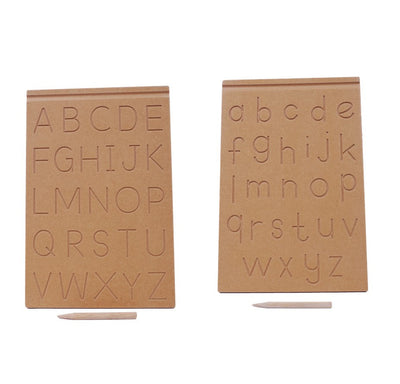
Towards the latter half of the 3-4 year mark, children develop fine motor skills necessary for pre-writing. They can trace simple lines, curves, and eventually, the basic strokes of Malayalam letters. Using chalkboards, finger painting, or large crayons allows them to practice these movements. Encouraging these activities builds muscle memory and prepares them for holding a pencil correctly, a key step for malayalam writing readiness.
LKG Readiness: Developing Malayalam Writing Skills (4-5 years)
By the time children are ready for LKG, typically between 4 and 5 years, they are expected to move towards forming Malayalam letters independently. This milestone is a culmination of earlier recognition and pre-writing activities. Research suggests that structured yet playful engagement with writing tools enhances confidence and proficiency in early literacy.
Forming Letters Independently (4-4.5 years)
Children at this age begin to mimic the formation of Malayalam letters, often with some assistance. Providing resources like Malayalam Sandpaper Letters offers a tactile way to trace and internalise letter shapes. This hands-on method, pioneered by Maria Montessori, reinforces the visual and kinesthetic learning experience. Parents can guide them, ensuring correct stroke order, which is vital for efficient and legible writing.
Simple Word Formation (4.5-5 years)
As they approach 5 years, some children may start experimenting with forming simple two or three-letter Malayalam words. This indicates a growing understanding of how letters combine to create meaning. Using a Montessori Movable Alphabet, where children arrange individual letters to form words, is an excellent way to support this development. It makes the abstract concept of word building concrete and enjoyable.
Supporting Your Child's Malayalam Learning Journey
Parents play the most critical role in nurturing their child's language development. In Indian homes, the presence of joint families and grandparents often provides an invaluable resource for language immersion, storytelling, and cultural connection. Embrace this rich environment to foster a love for Malayalam.
Prioritise play-based learning over rote memorization. Educational Toys that focus on language, puzzles, and creative expression are more effective than strict academic drills. Celebrate every small achievement, from recognising a single letter to attempting to write their name. Patience and positive reinforcement build a child's confidence, making learning a joyous experience rather than a pressure-filled task.
- Malayalam alphabet learning begins with sensory exposure and sound recognition from 18 months to 3 years.
- Preschool readiness (3-4 years) focuses on associating Malayalam letter shapes with their phonetic sounds.
- LKG readiness (4-5 years) involves developing fine motor skills for tracing and independently forming Malayalam letters.
- The NEP 2020 advocates for foundational literacy in regional languages, highlighting the importance of early Malayalam learning.
- Montessori materials like sandpaper letters and movable alphabets offer multi-sensory, self-correcting ways to learn Malayalam alphabets.
- Consistent, play-based learning in a supportive home environment, often aided by grandparents, significantly boosts a child's confidence and proficiency.
What is the best age to introduce Malayalam alphabets?
The ideal age to introduce Malayalam alphabets is around 2.5 to 3 years, focusing initially on auditory recognition of sounds and visual recognition of letters through play. Formal learning often begins around 3 to 4 years for preschool readiness.
How can I help my child recognise Malayalam letters?
You can help your child recognise Malayalam letters through multi-sensory experiences like tracing sandpaper letters, singing alphabet songs, identifying letters in books or around the house, and engaging in playful activities. Consistency and patience are key for effective learning.
What are common signs of Malayalam writing readiness?
Common signs of Malayalam writing readiness include good fine motor skills, a strong pencil grasp, the ability to trace lines and shapes accurately, and a genuine interest in making marks or forming letters. Children typically show these signs around 4-5 years of age, moving from tracing to independent letter formation.
Is early exposure to Malayalam alphabets beneficial?
Yes, early exposure to Malayalam alphabets is highly beneficial as it builds a strong foundation for literacy, enhances cognitive development, and eases the transition into formal schooling. The National Education Policy (NEP 2020) strongly advocates for foundational literacy in regional languages.
How does the Montessori method support Malayalam alphabet learning?
The Montessori method supports Malayalam alphabet learning by providing concrete, self-correcting materials like sandpaper letters and movable alphabets, which engage multiple senses. This approach allows children to learn at their own pace, fostering independence and a love for language.