Educational Toys: Building Sensory Resilience (0-5 Years)
Montessori educational toys are instrumental in building sensory resilience in children aged 0-5 years by providing controlled, sequential, and engaging multi-sensory experiences that gradually introduce varied stimuli. This structured exposure helps children process sensory information effectively, adapting to diverse environments, much like the adaptive play offered at Umang Vatika, ensuring they navigate India's vibrant public spaces and bustling family gatherings with confidence and calm. Child development experts agree that early, purposeful sensory engagement is foundational for healthy neural development and adaptability.
What is Sensory Resilience? Sensory resilience is a child's ability to effectively regulate their responses to various sensory inputs from their environment, adapting smoothly to different sounds, sights, textures, and movements without becoming overwhelmed or disengaged. This matters because it enables children to thrive in dynamic settings, from a quiet home to a crowded railway station or a lively festival. Indian parents can foster this by providing a rich, yet balanced, array of sensory experiences, often facilitated by appropriate Montessori tools.
The Science Behind Sensory Resilience
Research shows that the first five years are a critical window for sensory development, as the brain rapidly forms neural pathways that process information from the senses. When children are exposed to a balanced range of sensory experiences through purposeful play, their brains learn to interpret, filter, and respond to stimuli efficiently. This foundational processing power is what allows them to confidently engage with the world, rather than retreating from overwhelming sensations.
Studies indicate that children with strong sensory regulation skills demonstrate greater emotional stability, improved focus, and enhanced social engagement. This preparedness extends beyond the home, making transitions to new places like a relative's house during Diwali, a doctor's visit, or even school much smoother. Equipping your child with robust sensory resilience means empowering them with a lifelong skill for navigating an ever-changing world.
How Montessori Educational Toys Foster Adaptability
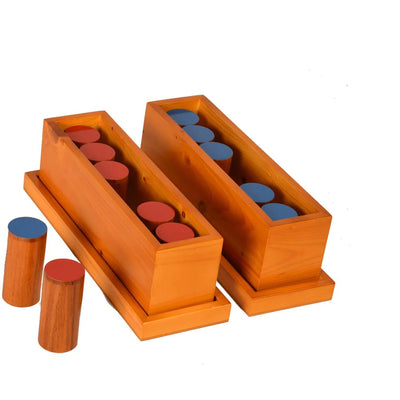
Maria Montessori's philosophy is rooted in observation and the provision of "prepared environments" that naturally encourage sensory exploration and development. Her specifically designed educational toys are not just playthings; they are tools engineered to isolate qualities and offer precise sensory input, allowing children to focus and refine their senses without distraction. This systematic approach cultivates an internal sense of order and adaptability.
Multi-Sensory Engagement & Exploration
Montessori materials naturally engage multiple senses simultaneously, but in a controlled manner. For instance, holding a Pink Tower block involves visual discrimination of size, tactile experience of its smooth surface, and proprioceptive feedback from lifting its weight. This focused engagement strengthens sensory processing skills.
Similarly, exploring a set of Geometric Solids allows a child to understand shapes through touch and sight, developing a nuanced understanding of their environment. Such activities enhance a child’s ability to differentiate and integrate various sensory inputs, a key component of sensory resilience for diverse sensory environments. They learn to make sense of the world by actively interacting with it.
Self-Correction & Problem-Solving
Many Montessori educational toys are designed with a "control of error" feature, meaning children can discover and correct their own mistakes without adult intervention. When a child struggles to fit a specific shape into a puzzle or stack a tower, they receive immediate sensory feedback on their actions. This process is crucial for building sensory resilience.
Through repeated attempts and self-correction, children develop perseverance and an understanding of cause and effect, which translates to their ability to manage sensory challenges. They learn to problem-solve when faced with an unexpected sound or a new texture, rather than reacting impulsively. This independence empowers them to trust their own adaptive capacities.
Preparing for Diverse Indian Environments
Indian households and public spaces are wonderfully vibrant and diverse, often presenting a rich tapestry of sensory experiences. From the aromas of spices in a joint family kitchen to the sounds of a bustling market or the textures of different fabrics during festivals, children encounter a wide range of stimuli daily. Montessori educational toys provide a safe, controlled "training ground" for these real-world scenarios.
Engaging with practical life activity kits, for example, involving pouring, spooning, or buttoning, helps children refine fine motor skills and tactile sensitivity, preparing them for tasks like dressing themselves or managing utensils in various settings. This proactive preparation builds confidence and minimizes potential overwhelm when encountering new, unpredictable sensory inputs outside the home. It’s about creating a foundation for successful navigation of the sensory landscape, whether it's a quiet afternoon with grandparents or a visit to a temple.
Choosing the Right Montessori Tools for 0-5 Years
Selecting age-appropriate Montessori educational toys is key to maximizing their developmental benefits for sensory resilience. For infants (0-12 months), focus on items that encourage visual tracking, grasping, and exploration of different textures, such as rattles, grasping beads, and textured balls. These build foundational sensory awareness.
For toddlers (1-3 years), materials like shape sorters, stackers, and simple puzzles stimulate problem-solving and fine motor skills while engaging tactile and visual senses. Practical life activities, like those found in activity kits for pouring and scooping, are excellent for this age, developing concentration and coordination. Preschoolers (3-5 years) benefit from more complex materials like sandpaper letters and numbers, geometric solids, and cultural materials, which refine all senses and prepare them for academic concepts while further strengthening their ability to process complex sensory information. Always prioritize open-ended, child-led play with high-quality, safe materials.
- Montessori educational toys build sensory resilience by offering controlled, multi-sensory experiences for children aged 0-5.
- Early childhood (0-5 years) is a critical period for developing neural pathways that process sensory information effectively.
- Montessori materials are specifically designed to isolate sensory qualities, aiding focused learning and adaptability.
- The "control of error" in Montessori toys fosters self-correction, an essential skill for managing sensory challenges independently.
- Engaging with diverse Montessori tools prepares children for the rich, often intense, sensory environments found across India.
- Child development experts recommend age-appropriate sensory activities to enhance a child's ability to regulate responses to stimuli.
What is sensory resilience in children?
Sensory resilience is a child's capacity to adjust to and manage various sensory inputs—like sounds, sights, and textures—without becoming overwhelmed. It allows them to adapt smoothly to new or changing environments, fostering calm and engagement.
How do educational toys help with sensory development?
Educational toys, especially Montessori ones, provide structured and purposeful sensory experiences that strengthen neural pathways responsible for processing sensory information. They offer opportunities for focused exploration, aiding the brain in learning to interpret and filter stimuli effectively.
Are Montessori toys suitable for all children, including those with sensory sensitivities?
Yes, Montessori toys are highly suitable for all children, including those with sensory sensitivities. Their design focuses on isolating specific sensory qualities and allowing child-led exploration at their own pace, which can be very calming and constructive for sensitive children.
At what age should I start focusing on sensory resilience?
Focus on sensory resilience should begin from birth, as early experiences significantly shape brain development. Providing a rich, varied, yet controlled sensory environment from infancy through toddlerhood (0-5 years) is crucial for building a strong foundation.
How can I create a sensory-rich environment at home in India?
To create a sensory-rich environment, incorporate Montessori educational toys that offer diverse textures, sounds, and visual stimuli. Also, engage children in practical life activities, expose them to varied spices and foods, and include them in safe, controlled experiences of daily Indian life, such as visiting a local market or participating in family rituals.