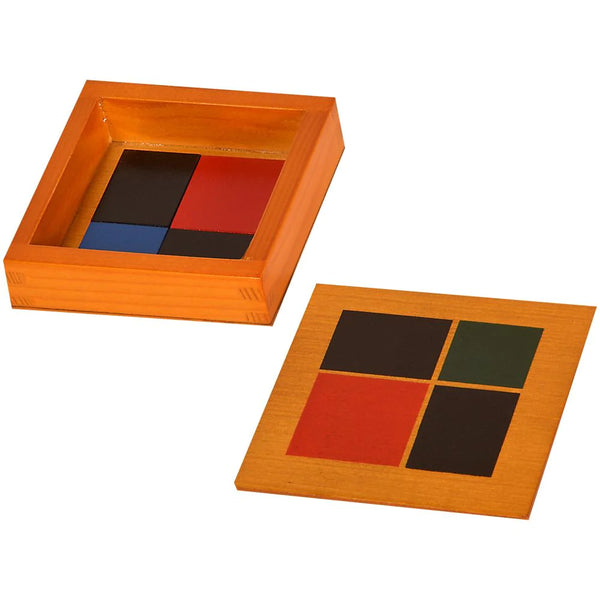
Wooden Puzzles for Kids: Boosting Sensory Development (0-5 Years)
Wooden puzzles for kids are foundational tools for sensory development, offering tactile, visual, and proprioceptive experiences crucial for growth between 0-5 years. These simple, natural toys, like those championed by SkilloToys, help children in India build vital fine motor skills, spatial reasoning, and concentration through engaging, hands-on play.
In bustling Indian households, from a cozy Bengaluru apartment to a vibrant joint family home, parents are constantly seeking enriching ways to foster their child's development. While screen time often beckons, the enduring appeal and profound benefits of traditional wooden toys, especially puzzles, remain unmatched for holistic growth.
What are Sensory Puzzles and Why Do They Matter?
A sensory puzzle is a toy designed to engage and stimulate one or more of a child's senses—touch, sight, proprioception, and more. This matters because rich sensory input in early childhood is fundamental for brain development and learning. Indian parents can use these puzzles to provide diverse sensory experiences, supporting holistic growth.
The Multisensory Magic of Wooden Puzzles for Kids
Child development experts agree that a diverse range of sensory experiences is critical for wiring a young brain. Wooden puzzles, unlike their plastic or digital counterparts, naturally engage multiple senses in a gentle, focused manner. Consider the distinct feel of a smooth wooden piece, the subtle scent of natural wood, or the satisfying 'clunk' as two pieces fit perfectly together on a traditional wooden table in a grandparent's home.
Research from institutions like the Harvard Center on the Developing Child consistently highlights the importance of tactile play in cognitive development. When a child manipulates a chunky wooden shape, they are not just playing; they are receiving essential proprioceptive input—the sense of body position and movement—which is foundational for coordination and body awareness. This is a subtle yet profound benefit often overlooked.
Fine Motor Skills & Cognitive Growth: The Power of Montessori Wooden Puzzles
The act of grasping, lifting, and placing puzzle pieces directly contributes to fine motor skill development puzzles. For a toddler, mastering a simple knobbed puzzle means refining the pincer grasp, hand-eye coordination, and finger strength. These are not just physical feats; they are crucial precursors to later skills like writing, buttoning clothes, and self-feeding.
Maria Montessori, the pioneer of the Montessori method, emphasized the importance of self-correcting materials. Many Montessori wooden puzzles embody this principle, allowing children to discover solutions independently, fostering a sense of achievement without external correction. This builds confidence and problem-solving abilities, making them truly educational puzzles for kids.
The deliberate, unhurried nature of wooden puzzle play cultivates concentration and patience. In a world often filled with rapid-fire stimuli, the simplicity of a wooden puzzle encourages sustained attention, a skill increasingly valuable for young learners facing school pressures.
Choosing Age-Appropriate Sensory Puzzles for Toddlers (0-5 Years)
Selecting the right wooden puzzle for your child's age ensures optimal engagement and developmental benefit. SkilloToys offers a wide range of puzzles for 0-5 years, designed to grow with your child.
- 0-18 Months: Focus on very simple, chunky puzzles with few pieces, such as single-shape sorters or large peg puzzles. These introduce basic concepts of object permanence and spatial relationships. The emphasis here is on safe, chewable, non-toxic wood and easy-to-grasp shapes.
- 18-36 Months (Toddlers): As fine motor skills develop, introduce knobbed puzzles where children can practice their pincer grip, or simple animal and vehicle shape puzzles. These sensory puzzles for toddlers help with shape recognition, vocabulary, and basic problem-solving.
- 3-5 Years (Preschoolers): Children at this stage can tackle more complex puzzles, including layer puzzles that teach about sequencing, or jigsaw puzzles with 4-12 pieces. This challenges their cognitive abilities, spatial reasoning, and introduces early logical thinking, preparing them for pre-math concepts.
Integrating Puzzles into the Indian Home: Play and Development
Incorporating wooden puzzles into daily routines doesn't require a large playroom. Even in a compact urban apartment in Bengaluru, a dedicated mat or a corner of the living room can become a "learning zone." Encourage grandparents and other family members to engage with the child during puzzle time, fostering intergenerational bonding and shared learning experiences.
This mindful approach to play aligns with initiatives promoting inclusive play for all children, such as the 'Umang Vatika' at Safdarjung Hospital, which emphasizes safe and stimulating environments for children with disabilities. Providing accessible, engaging toys like wooden puzzles ensures that every child, regardless of their developmental journey, has opportunities for meaningful sensory exploration and growth.
The true strength of wooden puzzles lies in their simplicity. Unlike flashing lights and loud sounds that dictate interaction, a plain wooden puzzle invites the child to be the architect of their own play, fostering imagination and deeper cognitive processing. This makes the child an active participant in their learning, leading to more profound and lasting developmental gains. Observing your child as they concentrate, problem-solve, and finally achieve that satisfying click of a puzzle piece is a truly rewarding experience, one that builds foundational skills brick by wooden brick.