Exploring the Tiny World: Why Montessori Housefly Cards Are a Big Deal for Little Learners
Children are naturally curious about the world around them, even the smallest creatures that buzz past our windows. This innate desire to understand can be a powerful tool for learning. What if we could channel that curiosity into structured, engaging lessons, even about something as seemingly ordinary as a housefly?
That's where the beauty of Montessori education shines through. It provides tools that help children explore, identify, and categorize their discoveries. One such engaging resource is the Montessori Nomenclature Learning Cards - Housefly.
What Exactly Are Montessori Nomenclature Cards?
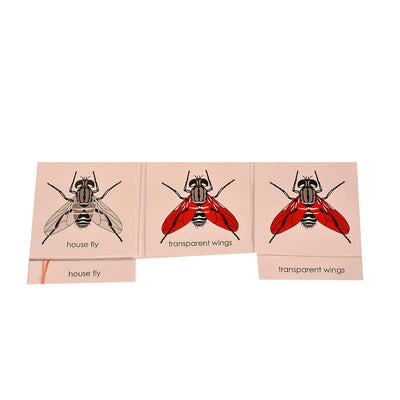
Nomenclature cards, often called '3-part cards' in the Montessori method, are a cornerstone for language and cognitive development. They are designed to help children learn the names of parts of an object, animal, or concept. Each set typically includes three types of cards:
- A picture card with the corresponding name (the 'control' card).
- A picture card only.
- A name card only.
This specific set for the housefly introduces your child to the various parts of this common insect. What makes these particular cards special is how they isolate each part in color, drawing your child's attention directly to the specific detail being named, rather than getting lost in the whole.
What Specific Skills Do These Housefly Cards Develop?
Beyond just learning about insects, these educational flashcards offer a wealth of developmental benefits, making them some of the best toys for toddlers and preschoolers in India looking to build foundational knowledge:
Language and Vocabulary Enrichment
Children will learn and internalize complex biological terms like 'abdomen', 'thorax', 'antennae', and 'legs'. This significantly expands their vocabulary and improves their ability to articulate observations. It's fantastic for language development in toddlers and older children alike.
Cognitive Development and Observation Skills
Working with these cards enhances matching, sorting, and recall abilities. Children must observe details carefully to match the correct name to the picture, honing their visual discrimination and analytical thinking. This is crucial for early development skills.
Introduction to Early Science and Biology
These cards serve as an excellent introduction to basic biology and entomology. Kids learn about the anatomy of an insect in a concrete, hands-on way, fostering an early love for science and understanding the natural world.
Concentration and Independent Learning
The self-correcting nature of the Montessori materials encourages focused attention and independent work. Children can explore at their own pace, building confidence in their learning abilities.
How Can Parents Use These Learning Cards Effectively at Home?
Integrating these Montessori learning toys into your daily routine is simple and rewarding:
- Start with Matching: For younger children (3-5 years), begin by having them match the picture-only cards to the control cards (picture + name). This builds recognition.
- Introduce Naming: Once they are comfortable with matching, introduce the name cards. Ask them to match the name card to the picture-only card, then check their work with the control card.
- Encourage Discussion: Ask questions like, 'What does the housefly use its antennae for?' or 'How many legs does it have?' This encourages deeper thinking and communication.
- Go Beyond the Cards: If you spot a housefly in real life, gently point out its parts, connecting the abstract learning to real-world observations.
These nomenclature cards are not just for rote memorization; they are a gateway to exploration, critical thinking, and a deeper appreciation for the intricate details of our natural environment.
For more engaging Montessori learning materials and educational flashcards that inspire young minds, explore the curated collection at SkilloToys.com. We believe in making learning an adventure, and these flashcards are just one way to spark that journey!