Sparking Curiosity: Learning About Salamanders with Montessori Cards
Ever noticed how a child's eyes light up when they discover something new and a little mysterious? Amphibians, with their unique life cycles and fascinating features, often hold a special place in that wonder. What if you could channel that natural curiosity into a structured, engaging learning experience right at home?
The Fascinating World of Salamanders: More Than Just a Toy
Salamanders, with their vibrant colours and incredible ability to regenerate, are truly captivating creatures. They offer a fantastic gateway into understanding biology and the natural world. Learning about their specific anatomy can be an enriching experience, building a strong foundation for future scientific exploration.
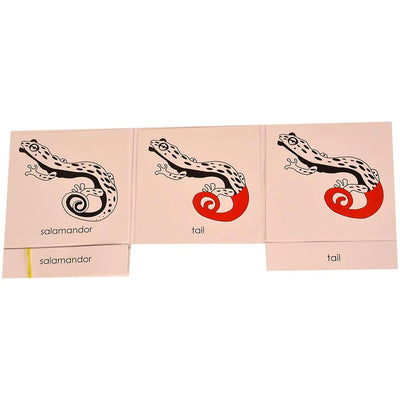
This is where the Montessori Nomenclature Learning Cards - Salamander come in. They are designed not just to entertain, but to educate, transforming complex scientific concepts into an accessible and enjoyable activity for young minds.
What Are Montessori Nomenclature Cards and Why Are They Effective?
Montessori nomenclature cards, often called 3-part cards, are a cornerstone of early childhood education. They consist of three components: a picture card, a label card, and a control card (which combines the picture and label). This system allows children to match, classify, and identify objects, developing their vocabulary and cognitive skills independently.
The beauty of this method lies in its hands-on approach and self-correction. Children can compare their matched pairs with the control card, allowing them to learn from their own discoveries without constant adult intervention. This fosters independence and a deeper understanding of the subject matter.
Skills Your Child Will Develop with Salamander Cards
These educational flashcards offer a multitude of benefits for your child's early development.
Boosts Language & Vocabulary
Learning the specific names for a salamander's parts—like 'gills,' 'tail,' or 'limbs'—significantly expands your child's vocabulary. This isn't just about memorisation; it's about connecting words to concrete images, enhancing language acquisition and descriptive abilities. It's a fantastic way to introduce complex terms naturally.
Enhances Cognitive & Scientific Understanding
By categorising and matching, children develop critical cognitive skills such as observation, differentiation, and problem-solving. They begin to grasp fundamental concepts of biology and zoology, understanding how different parts contribute to a whole creature. This builds a foundational understanding of the scientific method.
Refines Fine Motor Skills & Concentration
Handling the individual cards, carefully placing them, and matching them precisely helps refine fine motor skills and hand-eye coordination. The focused attention required for this activity also cultivates concentration and attention span, crucial skills for all future learning endeavours.
Bringing Learning Home: How to Use These Cards
Integrating these Montessori learning cards into your home routine is simple and rewarding. Start by presenting the picture and label cards for one part, clearly enunciating the name. Once your child seems comfortable, you can mix the labels and have them match them to the pictures. Later, introduce the control card for independent verification.
Remember, the goal is exploration and discovery, not rote learning. Encourage questions, discuss the function of each part, and perhaps even watch a short documentary about salamanders to bring the learning to life. These are excellent educational toys for kids, especially for those curious about the natural world.
FAQs About Learning with Montessori Salamander Cards
What are Montessori nomenclature cards?
Montessori nomenclature cards are a set of three-part cards (picture, label, and control card) designed to teach children vocabulary and concepts in a hands-on, self-correcting way. They are widely used in Montessori education for classification and identification.
How do these cards help my child learn about science?
These cards introduce children to specific scientific terms related to salamander anatomy, fostering an early understanding of biology and zoology. They help children classify parts, develop observational skills, and build a foundational scientific vocabulary.
Is this learning tool suitable for younger children, say 3-year-olds?
Absolutely! At 3 years old, children are like sponges, ready to absorb new vocabulary and categorize information. The visual nature and hands-on manipulation of the cards make them ideal for early language and cognitive development in preschoolers.
Can older kids (6-10 years) still benefit from these cards?
Yes, older children can use these cards to deepen their scientific knowledge, practice spelling complex terms, and even research further into amphibian life cycles. They serve as excellent tools for independent learning and reinforcing classroom lessons.
What's the best way for parents to introduce these cards at home?
Start by introducing the picture and label cards together, naming each part clearly. Once your child is familiar, introduce the control card for self-correction. Encourage exploration and discussion, letting your child lead the pace of learning.
At SkilloToys, we believe in nurturing young minds through purposeful play. These engaging Montessori flashcards are just one example of how we bring quality educational experiences to your doorstep. Discover more such innovative toys and learning tools designed to spark curiosity and foster growth at SkilloToys.com.