Toddler Coordination Activities: Montessori Play for 1-3 Years
Enhancing toddler coordination activities is crucial for holistic development, a timely focus given recent discussions in India about child motor skills. Research shows that engaging children in purposeful movements from an early age significantly boosts their cognitive, social, and physical growth. For Indian parents, incorporating Montessori principles into daily routines offers a powerful pathway to nurture these essential abilities, laying a strong foundation for future learning and independence.
Toddler coordination refers to the synchronized movement of various body parts, involving both fine and gross motor skills, often guided by sensory input. This matters because well-developed coordination is fundamental for daily tasks, problem-solving, and confidence. Indian parents can foster this by providing age-appropriate activities that encourage exploration and purposeful movement.
Addressing India's Child Development Focus: Why Coordination Matters
The conversation around child development in India is evolving, with experts like Krish Singh highlighting that our focus shouldn't just be on development but specifically on coordination. The recent 'India Doesn't Have a Child Development Problem. It Has a Coordination Problem.' article underscores a critical need for parents in Bengaluru and across India to proactively address this area. Developing robust coordination isn't merely about physical dexterity; it profoundly impacts a child's cognitive abilities, problem-solving skills, and even social interactions, shaping their readiness for school and life.
Child development experts agree that a strong foundation in motor skills is linked to better academic outcomes and overall well-being. While India has made significant strides in reducing child mortality, as highlighted by Unicef, the quality of early childhood development, particularly in motor skills, remains a key area for focused attention. Montessori education provides a proven framework for parents to empower their little ones.
Fine Motor Skills Toddlers: Precision and Purpose in Little Hands
Nurturing fine motor skills toddlers need involves refining the small muscle movements, primarily in their hands and fingers, often in conjunction with their eyes. These skills are vital for tasks like holding a pencil, buttoning clothes, or picking up small objects – activities that become integral to a child's independence and daily life. In an Indian home, these skills are naturally woven into daily chores and play.
Montessori offers a wealth of practical life activities designed to enhance these precise movements. Consider inviting your toddler to transfer dried lentils or rice from one bowl to another using a small spoon or even their fingers, strengthening their pincer grasp. Threading large beads onto a thick string or helping to sort spices alongside a grandparent are wonderful, culturally relevant examples. Exploring various practical life materials specifically designed for these tasks can make learning engaging and fun.
Such activities not only build strength and dexterity but also foster concentration and patience, qualities highly valued in a child's upbringing. They prepare children for writing and other detailed academic tasks, ensuring their little hands are ready for the challenges ahead.
Gross Motor Skills 1-3 Years: Building Strength and Balance
Gross motor skills 1-3 years involve the coordination of large muscle groups in the arms, legs, and torso, crucial for movement, balance, and spatial awareness. These are the skills that allow a child to walk, run, jump, climb, and maintain their balance, enabling them to explore their world confidently and safely.
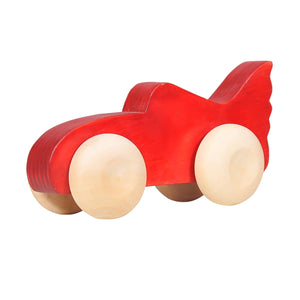
Montessori activities encourage purposeful movement and challenge these developing skills. Simple exercises like walking on a line drawn with chalk on the floor, carrying a small tray with two hands (perhaps to help serve snacks during a family gathering), or climbing up and down a small step independently are incredibly beneficial. Providing opportunities for your child to push and pull small trolleys or carry light objects like a small basket of fruits in the garden further develops their strength and coordination. Explore our collection of gross motor development toys to support these essential movements.
Allowing toddlers to freely move and engage in these activities, whether in a safe home environment or a local park, empowers them. These experiences build muscle memory, enhance proprioception (awareness of body position), and foster a sense of accomplishment.
Hand-Eye Coordination Activities: Connecting Mind and Movement
Hand-eye coordination activities are fundamental for connecting visual input with motor responses, allowing a child to perform actions with accuracy and precision. This crucial skill underpins almost every daily task, from eating with a spoon to catching a ball, and is vital for academic pursuits like reading and writing.
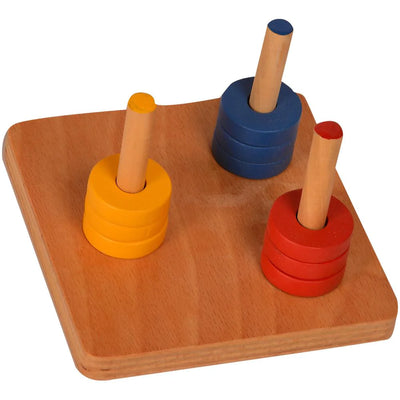
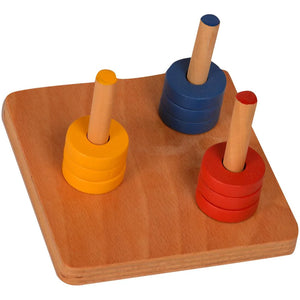
Montessori education excels in offering materials that naturally develop hand-eye coordination. Simple activities like stacking rings onto a peg, working with knobbed puzzles, or hammering pegs into a board are excellent choices. Even something as simple as drawing or scribbling with crayons on paper, where the child watches their hand create marks, strengthens this connection. For older toddlers (2.5-3 years), mimicking simple rangoli patterns with coloured sand or lentils can be a fun, culturally-inspired way to practice precision.
Providing a variety of such engaging activities stimulates neural pathways, improving the speed and accuracy with which a child's brain processes visual information and translates it into physical action. This lays a robust foundation for more complex skills they will encounter later.
Montessori Practical Life Skills: Nurturing Independence in Indian Homes
Maria Montessori firmly believed that children learn best by doing, and her practical life skills curriculum is designed to integrate real-world tasks into a child's learning. These activities, often mirroring adult chores, are more than just play; they are powerful tools for developing concentration, order, independence, and, critically, coordination. For Indian parents, these skills resonate deeply with our cultural values of self-reliance and contributing to the family unit.
Engaging toddlers in simple household tasks like sweeping with a child-sized broom, wiping spills, helping to set the table for a family meal, or washing fruits and vegetables are perfect examples. These everyday activities provide meaningful contexts for children to refine their fine and gross motor skills, develop hand-eye coordination, and build a sense of responsibility. Studies indicate that children who regularly engage in practical life activities demonstrate greater self-confidence and a higher capacity for problem-solving. This approach empowers our little ones to become active, capable members of their joint families and communities.
Fostering your toddler's coordination through purposeful Montessori activities is a powerful investment in their future. By integrating these engaging practices into daily life, Indian parents can proactively address a critical area of development, ensuring their children are well-equipped with the physical and cognitive foundations for a confident, independent life. SkilloToys is dedicated to providing the resources that make this journey enriching and accessible for every family.
- Toddler coordination is fundamental for cognitive, social, and physical development in children aged 1-3 years.
- Montessori practical life activities are highly effective in building both fine and gross motor skills.
- The pincer grasp and transferring activities enhance fine motor skills crucial for writing and self-care.
- Gross motor skills like walking on a line and carrying objects improve balance, strength, and spatial awareness.
- Hand-eye coordination is vital for linking visual perception with motor responses, impacting daily tasks and learning.
- Engaging in everyday household chores and play rooted in Montessori principles nurtures independence and self-reliance in Indian children.
Why is coordination important for toddlers?
Coordination is crucial for toddlers as it forms the bedrock for cognitive development, problem-solving abilities, and independence. It allows children to interact effectively with their environment, perform daily tasks, and build confidence in their capabilities.
What is the best age to start coordination activities?
Toddlers can begin engaging in simple coordination activities as early as 12 months, building foundational skills like pincer grasp and walking. The period from 1 to 3 years is particularly formative, with age-appropriate activities supporting rapid development in both fine and gross motor skills.
How can I incorporate Montessori activities at home in India?
Indian parents can integrate Montessori principles by creating a prepared environment with child-sized tools and opportunities for practical life skills like pouring water, sweeping, or helping with simple kitchen tasks. Encourage independent exploration and focus on activities that allow for repetition and mastery.
Are screen times bad for toddler coordination?
Research indicates that excessive screen time can negatively impact a toddler's coordination, as it reduces opportunities for hands-on exploration and physical movement. Prioritizing active play and sensory engagement over passive screen viewing is essential for healthy motor skill development.
What's the difference between fine and gross motor skills?
Fine motor skills involve smaller movements, typically of the hands and fingers, like grasping, pinching, or drawing, crucial for precision tasks. Gross motor skills involve larger movements of the limbs and torso, such as walking, running, jumping, and balancing, essential for mobility and stability.