Toddler Development Pillars India: A Montessori Guide
The 5 key toddler development pillars India parents should focus on are Practical Life, Sensorial Exploration, Language Development, Motor Skills (Gross and Fine), and Cognitive Growth. These foundational areas, integral to a Montessori approach, are crucial for a child's holistic growth from 1 to 3 years, ensuring they thrive within diverse Indian family structures and societal expectations. Child development experts agree that focusing on these pillars builds a robust foundation for future learning, aligning with national discussions on robust child development ecosystems.
Integrated toddler development refers to nurturing all key areas—physical, cognitive, social, emotional, and language—simultaneously. This matters immensely as a balanced approach prevents developmental gaps and supports a child's readiness for formal education. Indian parents can actively support this by creating a prepared environment at home, encouraging self-directed play, and integrating cultural learning into daily routines, fostering an early childhood development India needs.
Cultivating Independence Through Practical Life Skills: Key Areas Toddler Development 1-3 Years
The Practical Life pillar, a cornerstone of Montessori philosophy, focuses on activities that allow toddlers to care for themselves and their environment. Research shows that engaging children in real-world tasks significantly boosts their confidence and coordination. In an Indian home, this means involving a toddler (18-36 months) in simple activities like helping to serve ladoos during Diwali, watering plants with a small pitcher, or sorting pulses with a grandparent.
These experiences, from buttoning their kurta to sweeping a small mess, develop concentration, fine motor control, and a sense of responsibility. Maria Montessori observed that children have an innate drive to be useful, and providing them with child-sized tools and opportunities for contribution nurtures this drive. It’s about building foundational habits for self-reliance.
Providing opportunities for a toddler to practice pouring, scooping, or dressing themselves with Montessori Practical Life materials can be incredibly beneficial. Such activities not only refine their motor skills but also teach them order and sequence, vital for cognitive organisation.
Engaging the Senses: The Foundation of Sensorial Learning
Sensorial exploration is vital for understanding the world. Children from 1 to 3 years absorb information through their senses, distinguishing between textures, colours, shapes, and sounds. This pillar helps refine their sensory perception, laying the groundwork for mathematical and scientific thinking.
Montessori materials like the Pink Tower or Sandpaper Letters are designed to isolate specific qualities for the child to explore, such as dimension or texture. Studies indicate that early sensory experiences are directly linked to brain development and cognitive function. In an Indian context, this could be feeling the rough texture of a jute rug, smelling spices in the kitchen, or distinguishing colours of rangoli powder.
Encouraging toddlers to engage with a variety of textures, sounds, and visuals at home, perhaps through handling different fabrics or exploring musical instruments, significantly enhances their learning. These "sensorial impressions" form the basis for intellectual development, making sense of their surroundings in a concrete way.
Fostering Eloquence: Nurturing Language & Communication Domains
Language development is one of the most remarkable growth areas in toddlerhood, particularly between 18 and 30 months. This pillar encompasses listening, speaking, reading readiness, and developing a rich vocabulary. In India, where multilingualism is common, exposure to multiple languages at home provides a unique cognitive advantage.
Child development experts agree that consistent verbal interaction is paramount. This includes reading storybooks (perhaps about Indian festivals), singing rhymes, and engaging in conversations about daily activities. Montessori language materials, such as object boxes or nomenclature cards, help connect words with concrete objects, reinforcing vocabulary.
Creating a language-rich environment where children are encouraged to express themselves, listen actively, and understand narratives, is key. This supports their ability to communicate effectively, build relationships, and express their burgeoning thoughts and feelings within family and community settings.
Building Strength & Precision: Gross and Fine Motor Development for Toddlers
Motor skill development, encompassing both gross and fine motor abilities, is fundamental for a toddler's physical independence and interaction with their environment. Gross motor skills involve larger muscle movements like walking, running, climbing, and balancing—essential for playing in a park or navigating a crowded market.
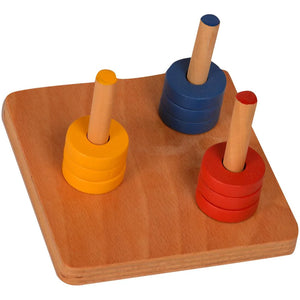
Fine motor skills involve smaller, more precise movements, such as the pincer grasp, stacking blocks, or manipulating small objects like beads. These skills are critical for self-care activities like eating with a spoon or buttoning clothes, and later for writing. SkilloToys offers a range of Montessori fine motor skill toys designed to strengthen these muscles and coordination.
Providing ample opportunities for physical activity and manipulating objects promotes healthy motor development. Activities like stringing beads, drawing with crayons, or playing with clay are excellent for refining fine motor skills. Simultaneously, allowing toddlers to explore open spaces, climb low structures, and engage in active play strengthens their gross motor coordination and balance.
Igniting Curiosity: Cognitive Development & Problem-Solving for Integrated Child Development
Cognitive development refers to a child's ability to think, understand, learn, remember, and solve problems. For toddlers, this includes developing object permanence, cause-and-effect understanding, basic reasoning, and memory. This pillar is crucial for their overall intellectual growth and readiness for future academic challenges in India's competitive educational landscape.
Montessori education emphasizes self-directed learning and problem-solving through hands-on exploration. Puzzles, sorting activities, and sequence games are excellent tools for cognitive development, encouraging children to experiment and discover solutions independently. These activities foster logical thinking and analytical skills, vital components of early childhood development in India.
Engaging toddlers in simple problem-solving scenarios, asking "what if" questions, and encouraging their natural curiosity supports this pillar. For instance, helping them figure out how to stack building blocks without them toppling, or matching shapes, directly enhances their cognitive abilities and problem-solving strategies, preparing them for complex learning environments.
- The five core toddler development pillars in India are Practical Life, Sensorial, Language, Motor Skills, and Cognitive Growth.
- Maria Montessori advocated for a prepared environment that allows children aged 1-3 years to explore and learn independently.
- Engaging toddlers in practical tasks, such as helping with household chores or festive preparations, significantly builds confidence and coordination.
- Early and diverse sensory experiences are critical for optimal brain development and are foundational for later mathematical and scientific understanding.
- Consistent verbal interaction, storytelling, and exposure to multiple languages at home foster robust language development in Indian toddlers.
- Both gross and fine motor skills are essential for a child's physical independence and interaction with their environment, from navigating playgrounds to manipulating toys.
What are the 5 key pillars of toddler development (1-3 years) in India?
The 5 key pillars are Practical Life skills, Sensorial exploration, Language development, Gross and Fine Motor skills, and Cognitive growth. These areas are interconnected and crucial for holistic development during the 1-3 year age range.
How does the Montessori approach support these toddler development pillars?
The Montessori approach supports these pillars by providing a prepared environment with child-sized, self-correcting materials that encourage independent exploration. It respects the child's natural developmental pace and innate curiosity, fostering intrinsic motivation across all domains.
What is integrated child development for toddlers in the Indian context?
Integrated child development for toddlers in India refers to nurturing all developmental areas—physical, cognitive, social-emotional, and language—in a balanced and interconnected manner, often within diverse family structures. It aims for comprehensive growth that respects cultural nuances and societal expectations.
What are the most important key areas for toddler development (1-3 years)?
The most important key areas for toddler development (1-3 years) are establishing independence through practical skills, developing sensory awareness, building strong communication abilities, refining both large and small muscle movements, and fostering problem-solving and critical thinking.
How can Indian parents best support their toddler's cognitive growth at home?
Indian parents can best support cognitive growth by engaging toddlers in activities that promote problem-solving, such as puzzles or sorting games, and by asking open-ended questions. Integrating traditional stories, riddles, and encouraging curiosity about their surroundings also significantly boosts cognitive development.