Educational Toys for Ambition & Drive in Indian Kids
Educational toys are crucial for fostering ambition and drive in Indian children by cultivating intrinsic motivation, problem-solving skills, and resilience from an early age. This proactive approach helps counter the emerging 'passive income mindset' debate, ensuring our Gen Z are equipped with the entrepreneurial spirit and self-reliance essential for a dynamic future. As Indian families navigate a rapidly changing world, the right educational toys become indispensable tools for preparing children for challenges beyond academic pressures.
Understanding Ambition and Drive in Children
Ambition in children is the intrinsic desire to achieve and excel, driven by curiosity, effort, and a love for learning, rather than external rewards. This matters because it cultivates self-reliance and resilience, crucial traits for navigating life's complexities and overcoming setbacks. Indian parents can actively foster ambition by providing environments and tools that encourage exploration, independent problem-solving, and a growth mindset.
Research shows that early childhood experiences significantly shape a child's outlook on challenges and their willingness to persevere. In Indian homes, where joint families often provide a rich support system, grandparents and elders play a vital role in reinforcing these values. Encouraging a child to finish a puzzle or master a skill, even with gentle guidance, builds confidence and a sense of accomplishment.
Countering the Passive Income Mindset: Why It Matters Now
The recent nationwide debate regarding wealthy parents and their Gen Z children's ambition highlights a critical concern for many Indian families. Parents are questioning whether too much ease, particularly through passive income, might inadvertently diminish a child's drive to strive, innovate, and contribute actively. This discussion underscores the urgent need to instill values of effort, perseverance, and intrinsic motivation from a young age.
Child development experts agree that children learn best through active engagement and overcoming challenges. Providing children with everything without effort can inadvertently create a sense of entitlement rather than ambition. The goal is not to deny comfort but to equip children with the skills and mindset to earn their successes and appreciate the value of hard work, mirroring the resilience seen in earlier generations.
Montessori Toys for Drive and Initiative in Children India
Montessori education, founded by Dr. Maria Montessori, inherently champions independence, concentration, and self-directed learning – core components of ambition and drive. Montessori materials are specifically designed to be self-correcting, allowing children to learn from their mistakes without adult intervention, thereby building resilience and problem-solving skills. This philosophy aligns perfectly with fostering initiative in Indian children.
For instance, the Pink Tower, a classic Montessori material, helps children aged around 2.5-3 years understand concepts of size and order through hands-on manipulation. This activity demands focus, fine motor skills, and logical thinking, rewarding the child with a visible sense of order upon completion. Such experiences are invaluable for cultivating a deep-seated love for learning and a proactive approach to tasks, skills essential for future leaders.
Practical Life Skills & Early Independence
Montessori Practical Life activities are foundational for building a child's sense of capability and initiative. These activities, such as pouring, scooping, dressing frames, and buttoning, empower children as young as 18-24 months to care for themselves and their environment. When a child can independently button their shirt or pour water without spilling, they gain confidence in their abilities.
This early independence is a powerful antidote to a passive mindset. It teaches children that their actions have an impact and that they are capable of mastering tasks. In a busy Indian household, involving children in simple chores like sorting clothes or watering plants, alongside engaging activity kits, can significantly boost their sense of responsibility and belonging.
Choosing Educational Toys to Build Ambition
Selecting the right educational toys is paramount. Focus on toys that are open-ended, encourage exploration, and require effort rather than instant gratification. Toys that promote problem-solving, creativity, and strategic thinking are ideal for laying the groundwork for a truly ambitious individual.
- Problem-Solving Puzzles: Look for puzzles and brain teasers appropriate for various age groups, from simple knob puzzles for 1-3 years olds to more complex logical puzzles for 3+ years. These teach perseverance and the satisfaction of finding solutions.
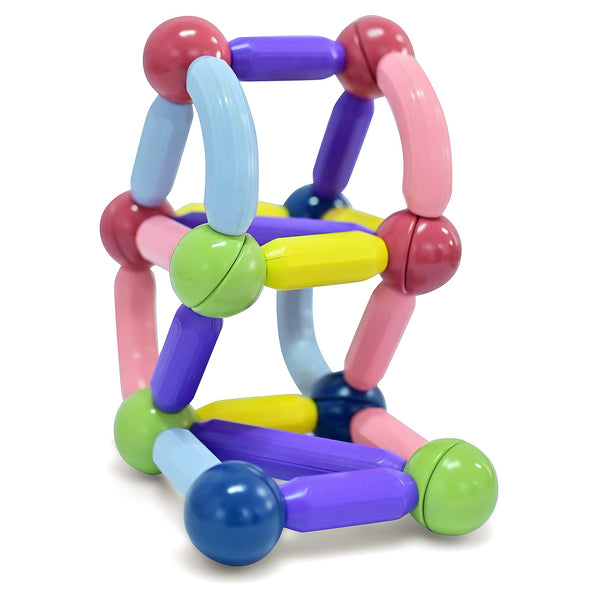
- Construction Sets: Building blocks, LEGOs, and magnetic tiles encourage spatial reasoning, planning, and creative construction. Children learn to conceptualize and execute ideas, fostering an entrepreneurial spirit.
- Role-Playing & Pretend Play: Doctor sets, kitchen sets, or miniature marketplaces allow children to act out scenarios, develop social skills, and understand different roles. This imaginative play fuels creativity and empathy, crucial for collaborative success.
- Science & Experiment Kits: Introduce age-appropriate science kits to spark curiosity about how things work. These kits encourage questioning, hypothesis testing, and a scientific temper, all vital for innovation.
Studies indicate that children who engage in open-ended, imaginative play develop stronger executive functions, including planning, attention, and working memory. These are the cognitive muscles that power ambition and successful goal attainment.
Parenting Gen Z India: Nurturing Resilience and Drive
In addition to toys, parental attitudes and communication play a significant role. Being honest about effort and challenges, as exemplified by the 'Mumma Is Feeling Tired Today' approach, helps children understand that effort is a part of life. Encouraging children to verbalize their feelings and frustrations when tackling a difficult puzzle teaches them emotional regulation, a key aspect of resilience.
Avoid over-praising for minimal effort or shielding children from all struggles. Instead, praise their effort and perseverance. For instance, if a child struggles with sandpaper letters, acknowledge their frustration but gently guide them to continue, celebrating the learning process rather than just the outcome. This approach ensures children value hard work and embrace challenges, rather than seeking shortcuts.
- Educational toys develop intrinsic motivation and a love for learning in children.
- Montessori principles cultivate independence, problem-solving, and self-correction.
- Early exposure to challenge builds resilience, crucial for future ambition.
- Choosing toys that require effort counters the 'passive income mindset'.
- Active parental engagement with toys strengthens a child's drive.
- Montessori toys like the Pink Tower foster foundational cognitive skills and initiative.
How do educational toys specifically build ambition?
Educational toys build ambition by fostering a child's intrinsic motivation and encouraging them to overcome challenges independently. They develop critical thinking, perseverance, and a sense of accomplishment, which are foundational traits for future drive and success.
Are Montessori toys effective for developing initiative in children?
Yes, Montessori toys are highly effective for developing initiative in children. Designed for self-directed learning and exploration, they encourage children to choose their activities, solve problems independently, and self-correct, cultivating a strong sense of personal agency and drive.
What is the 'passive income mindset' debate among Indian parents?
The 'passive income mindset' debate among Indian parents discusses concerns that wealthy parents, by providing abundant passive income, might inadvertently reduce their Gen Z children's ambition, drive, and willingness to pursue traditional career paths or entrepreneurship.
At what age should I start introducing toys that foster drive?
You can start introducing toys that foster drive from infancy, focusing on stimulating curiosity and independent exploration. Simple objects that encourage problem-solving for 18-24 months, like shape sorters or stacking toys, are excellent starting points for building early initiative.
Can grandparents help foster ambition through toys?
Yes, grandparents can significantly help foster ambition by engaging children in thoughtful play and choosing return gifts that promote skill development. Their wisdom and patience can guide children through challenges, reinforcing perseverance and the joy of learning without undue pressure.