Selective Toy Buying India: New Parent's Guide
For the new Indian parent, selective toy buying India is about moving beyond fleeting trends to invest in purposeful play that truly aids a child's development. This conscious approach involves understanding foundational learning principles and prioritizing toys that foster engagement, curiosity, and essential skills over mere entertainment. As The Times of India recently highlighted, modern Indian parents are becoming increasingly discerning about children's products, seeking substance over hype.
This shift isn't just a trend; it's a thoughtful evolution in parenting philosophy. Parents today are seeking out toys that resonate with their values, ensuring every purchase contributes positively to their child's growth. It's about making choices that support holistic development, from fine motor skills to cognitive abilities.
Understanding Purposeful Play India: Beyond Just 'Fun'
Purposeful play is any activity where a child actively engages with their environment and materials, fostering learning through self-discovery. This matters because it builds crucial cognitive, motor, and social-emotional skills organically. Indian parents can embrace purposeful play by selecting toys that invite exploration and align with their child's developmental stage.
Child development experts agree that play is the primary vehicle for learning in early childhood. When a child is purposefully engaged, they are not just passing time; they are actively constructing knowledge, testing hypotheses, and developing a sense of competence. It's the difference between passive observation and active participation.
The New Indian Parent's Mindset: Conscious Toy Choices India
The 'new Indian parent' is informed, analytical, and deeply invested in their child's future. This generation of parents, often navigating urban challenges and global influences, scrutinizes product labels, researches developmental benefits, and seeks expert opinions. This mindset extends beyond personal care, as noted by The Times of India, right into the toy chest.
For parents like Aarti, a working mother in Bengaluru, choosing toys for her 2-year-old involves careful consideration. She shared, "I want toys that help my daughter think, not just entertain her. With so much screen time around, I look for things that encourage her to use her hands and imagination." This reflects a broader desire for conscious toy choices India, moving towards toys that offer genuine developmental mileage.
Montessori Principles India: A Framework for Quality Educational Toys
Maria Montessori's philosophy, rooted in observing children's natural learning processes, offers an excellent framework for discerning parents. Her approach champions simplicity, order, and child-led exploration. SkilloToys aligns with these principles by offering a range of Montessori method learning materials that encourage self-correction and deep concentration.
For example, a traditional wooden block set or a shape sorter isn't just a toy; it's a tool for developing spatial reasoning, problem-solving, and fine motor skills. These materials are designed to isolate a single concept, allowing a child to master it independently. This approach resonates deeply with parents seeking quality educational toys India.
Key Montessori-Inspired Features to Look For:
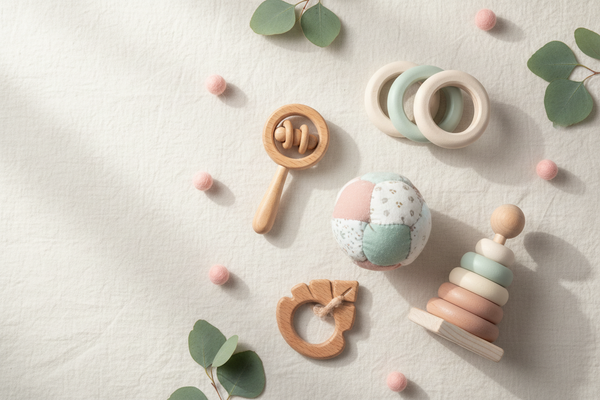
- Natural Materials: Toys made from wood, cotton, or metal offer a rich sensory experience that plastic often lacks. The satisfying weight of a wooden animal or the cool touch of a metal bell stimulates more senses.
- Purposeful Design: Each toy serves a clear developmental purpose, encouraging specific skills like stacking, pouring, or grasping. They often have an inherent "control of error," allowing the child to discover mistakes and self-correct.
- Age-Appropriateness: While a 1-year-old might explore a soft cloth book, a 3-year-old in a joint family might be mastering the challenge of an activity kit that teaches pre-reading skills. Toys should match the child's current developmental stage, not just their chronological age. Explore options for 0-1 year and 1-3 years.
Beyond Hype: Identifying Truly Quality Educational Toys India
The market is flooded with toys promising "educational benefits," but true quality lies in how a toy engages a child's mind, not just its flashing lights or catchy tunes. Research by the American Academy of Pediatrics indicates that open-ended toys which require imagination and interaction are more beneficial for development than highly structured or electronic toys.
When selecting toys, consider these green flags for quality educational toys India:
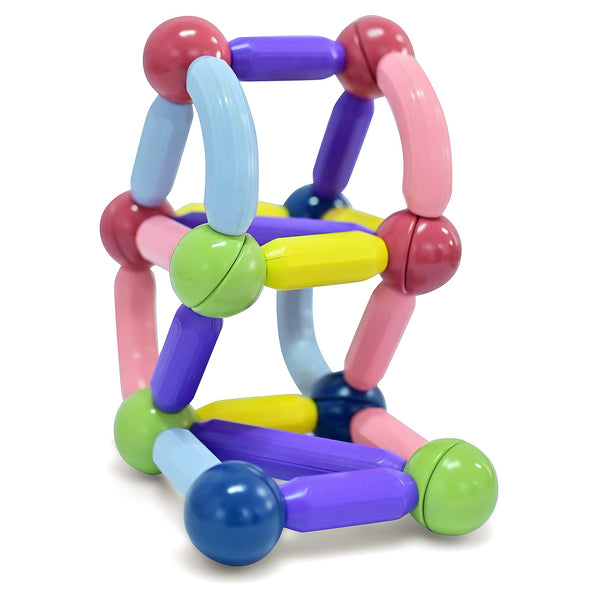
- Open-Ended Play: Can the toy be used in multiple ways? A set of plain blocks can become a fort, a car, or an abstract sculpture. An activity kit can evolve into countless scenarios.
- Child-Led Exploration: Does the toy invite the child to explore independently, without constant adult intervention? A good toy encourages problem-solving and curiosity on its own terms.
- Durability and Safety: Toys should withstand vigorous play and be free from toxic materials. This is especially crucial for infants and toddlers who mouth everything they encounter.
Avoid toys that do all the "thinking" for the child or offer only a single, pre-determined way to play. The more a toy relies on the child's input and imagination, the more valuable it is for their development. Think about the joy a 4-year-old gains from building a towering fort with simple cushions and blankets, an act of pure, purposeful play.
Practical Steps for Purposeful Play India
Bringing purposeful play into an Indian home requires more than just buying the right toys; it involves creating an environment that supports deep engagement. This is particularly relevant in urban settings where space might be limited, or in joint families where multiple generations influence play choices.
1. Observe Your Child's Interests
Before you even think about a new toy, spend time watching your child. What are they naturally drawn to? Are they fascinated by how things fit together, or do they prefer imaginative storytelling? If your child is captivated by stacking, a set of wooden rings or a toddler-friendly stacking toy would be a perfect fit. If they love mimicking household chores, a child-sized broom or kitchen set could spark hours of purposeful play.
2. Create a "Prepared Environment"
Inspired by Montessori, a prepared environment means making toys accessible, organized, and not overwhelming. In a typical Indian home, this might mean a dedicated corner in the living room for accessible shelves rather than a crammed toy box. Studies show that a clutter-free play space enhances a child's focus and creativity. Rotate toys regularly to keep interest fresh, storing away items that aren't currently being used.
3. Involve Grandparents and Family
Grandparents often have a significant role in Indian households and toy choices. Instead of seeing it as a conflict, engage them in the philosophy of purposeful play. Share how a simple wooden puzzle aids problem-solving more than a flashy gadget. They might appreciate the timelessness and safety of classic educational toys that mirror their own childhood experiences, bridging generations with meaningful play.
Remember the invaluable wisdom of a dadi who instinctively knows the joy of a simple goli or a hand-stitched doll. This cultural resonance is key; combine traditional wisdom with modern insights for the best outcomes.
Final Thoughts: Nurturing Growth Beyond Hype
Embracing purposeful play India is an investment in your child's innate curiosity and lifelong love for learning. By making conscious toy choices India, you are not just buying objects; you are providing tools for development, imagination, and independence. The new Indian parent understands that the most impactful toys are those that inspire, challenge, and allow a child to truly be themselves, building a strong foundation for their future.