

Buying guide
Montessori Method Learning Materials & Toys
Parent's buying guide
How to start building a Montessori shelf at home in India, without overspending or buying inappropriately.
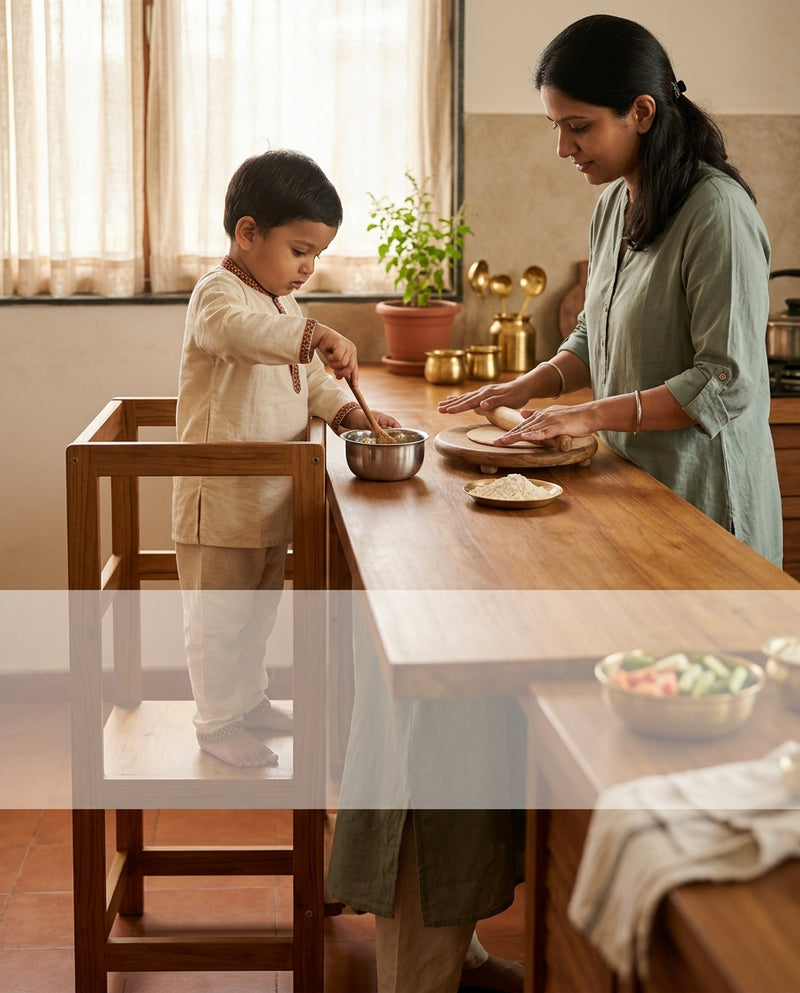
Start with practical life, always
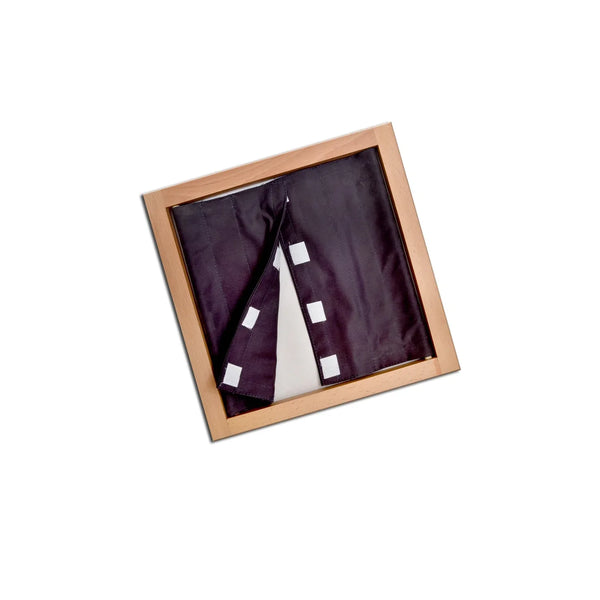
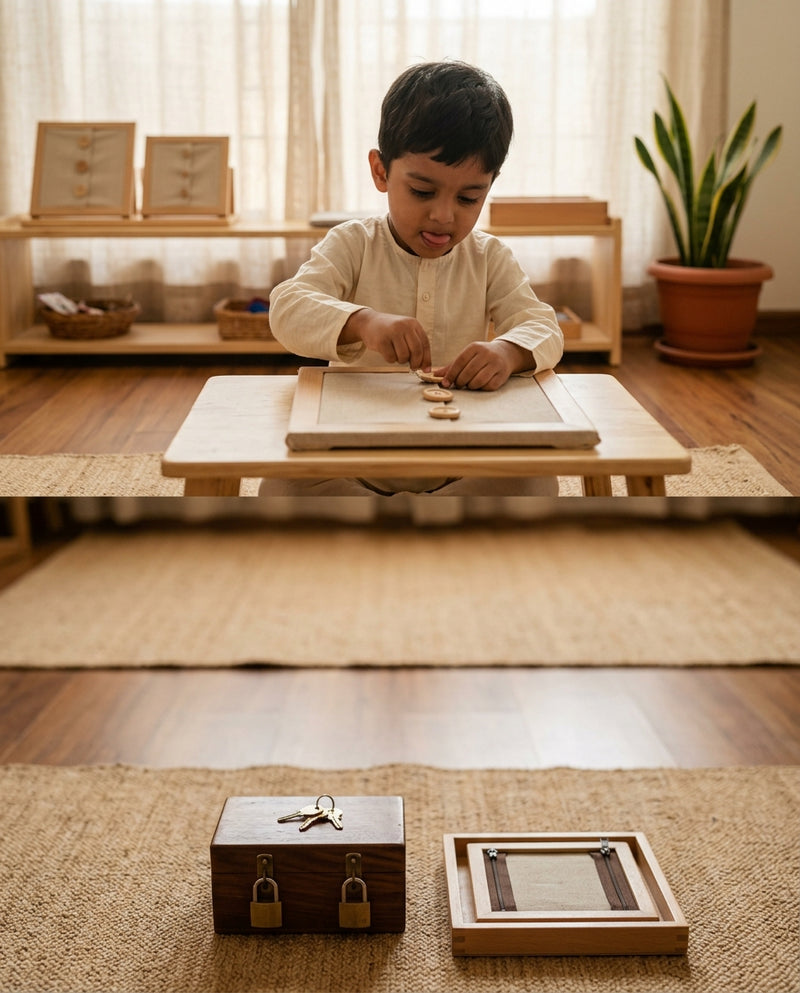
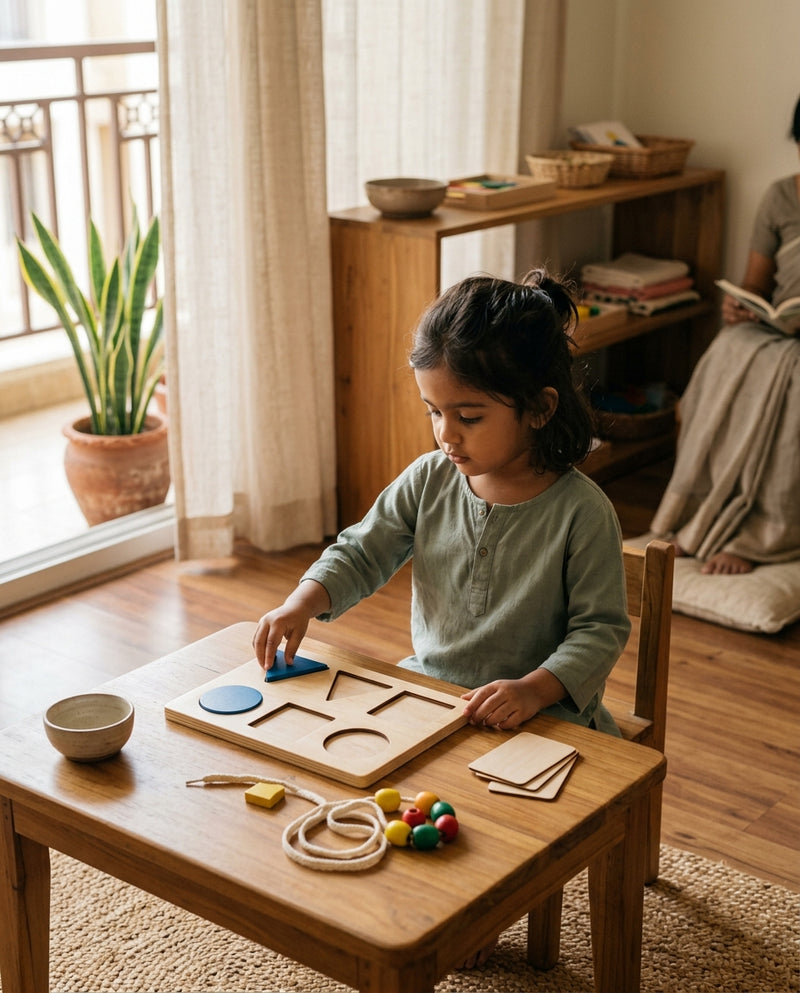
- Knife and chopping board, lacing, pouring tray, dressing frames. These come first regardless of age.
- They build concentration. Without concentration, the rest of the materials do not work.
- Cheapest area to enter the method, biggest behavioural change in the first month.
Sensorial before academic
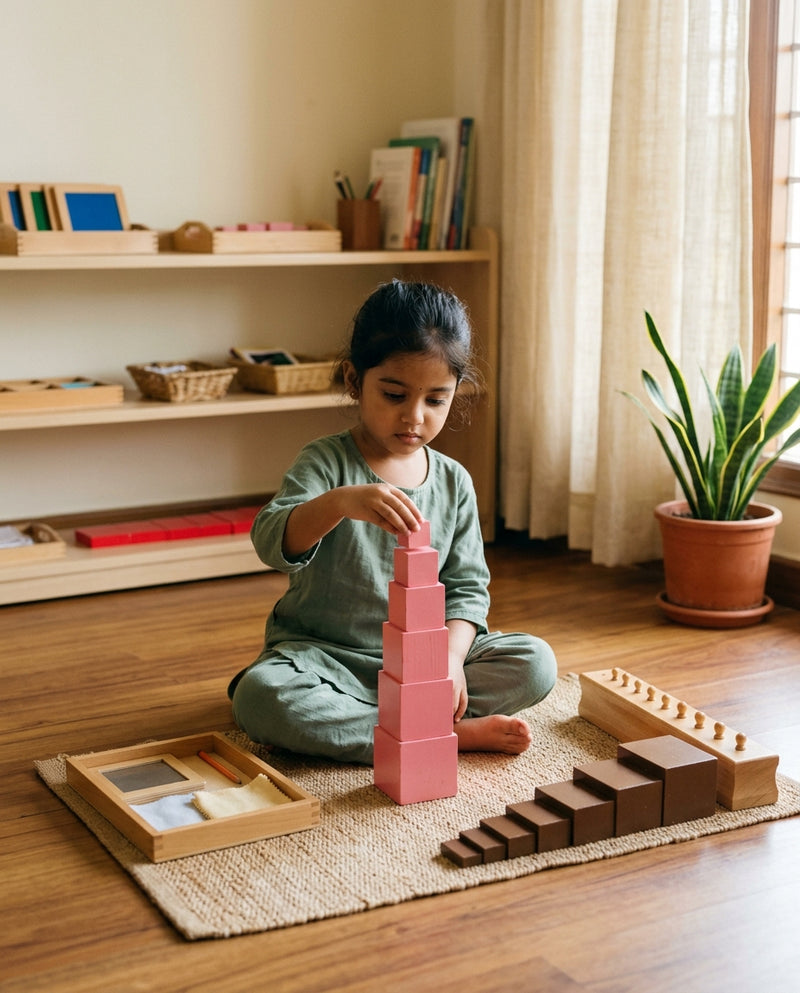
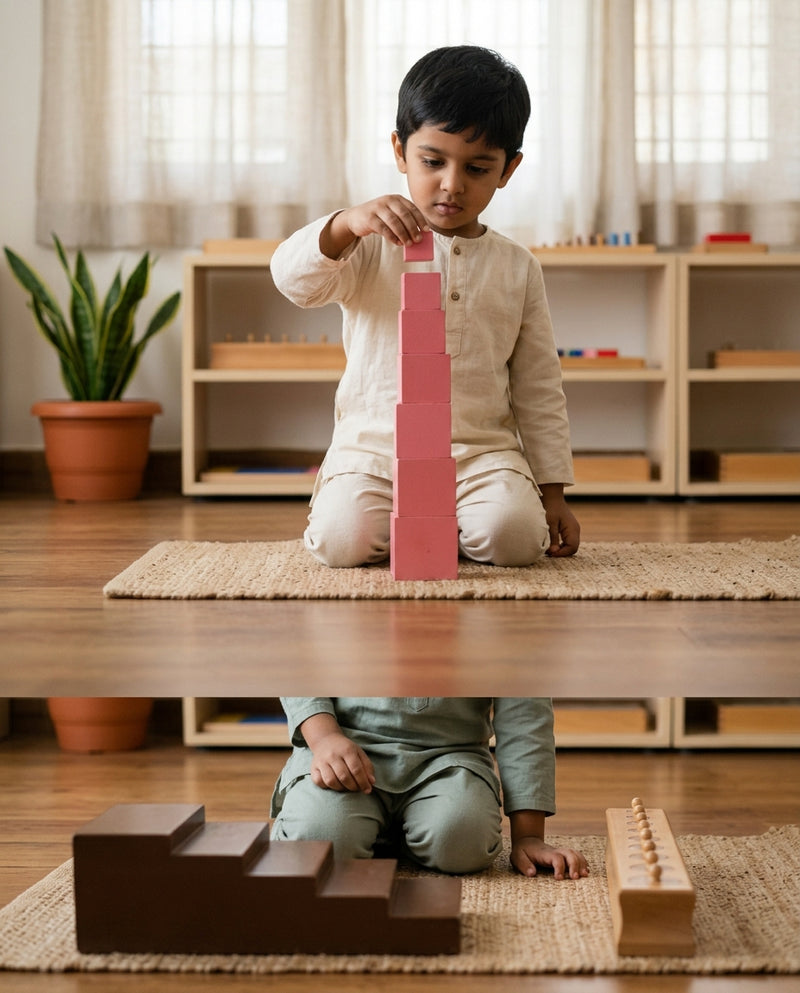
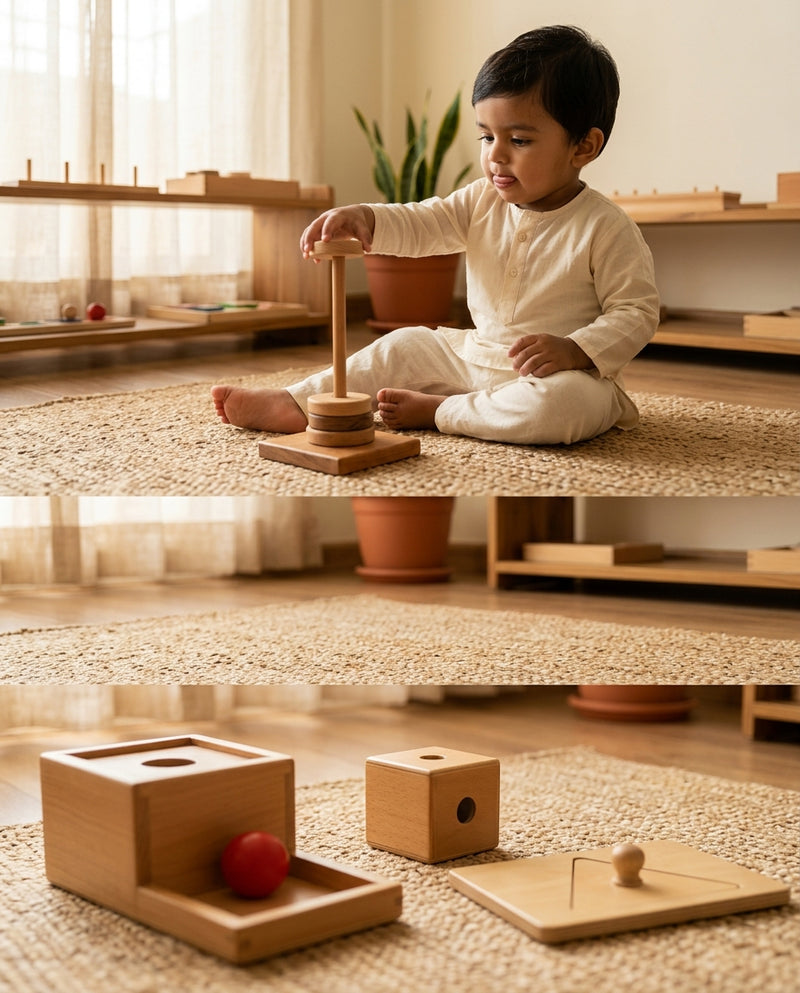
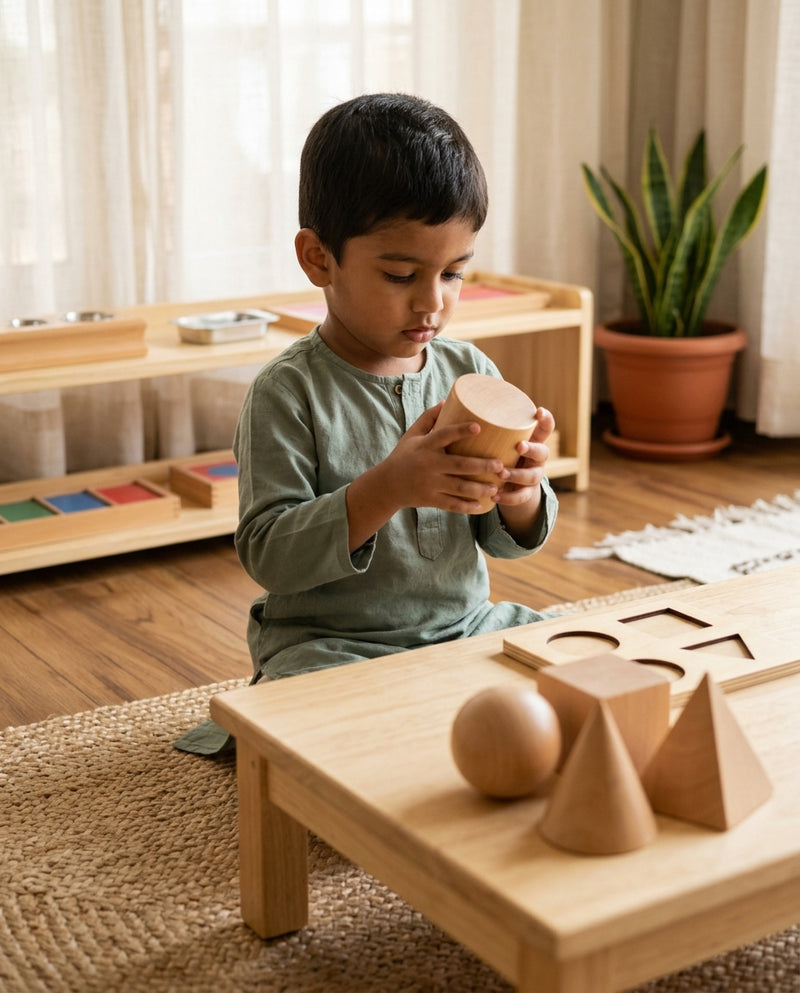
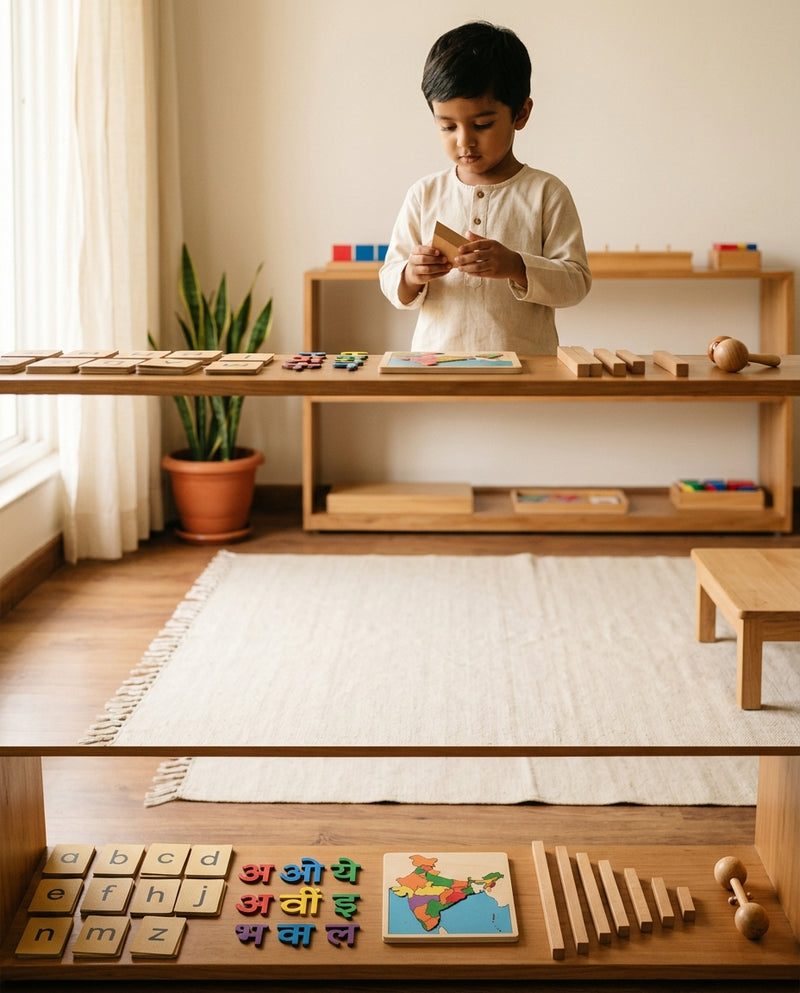
- Pink Tower, Brown Stair, Geometric Solids before you buy a single letter.
- The senses refine the mind. Skipping this step weakens later academic work.
- One or two well-chosen sensorial materials at a time, mastered, then the next.
Authentic versus inspired
- Authentic: solid wood, AMI proportions, control of error built in, lasts decades.
- Inspired: looks similar, lacks the specifications, often plastic, breaks the method.
- Worth paying more once for authentic than paying twice for inspired.
Isolation of difficulty
- Each Montessori material teaches ONE thing. Pink Tower teaches dimension. Geometric Solids teach shape.
- Modern toys often try to teach 5 things at once, succeed at none.
- One material, one skill, mastered, then move on.
Budget approach
- Phase 1 (3 to 4 years): Practical life starter + 2 sensorial. Rs. 4,000 to Rs. 7,000.
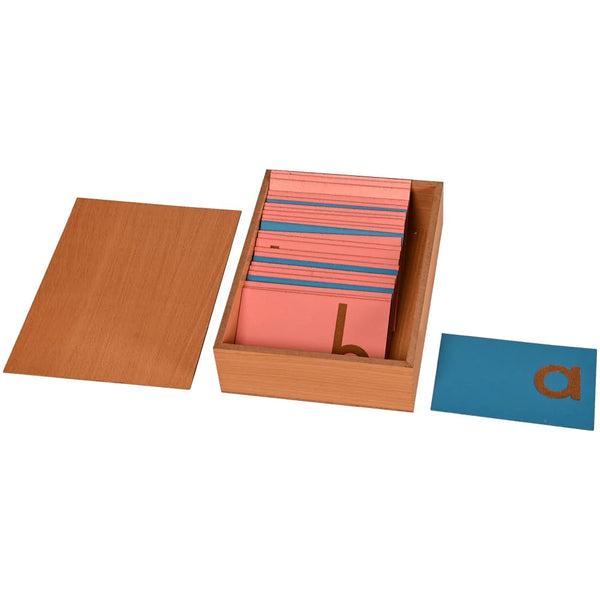
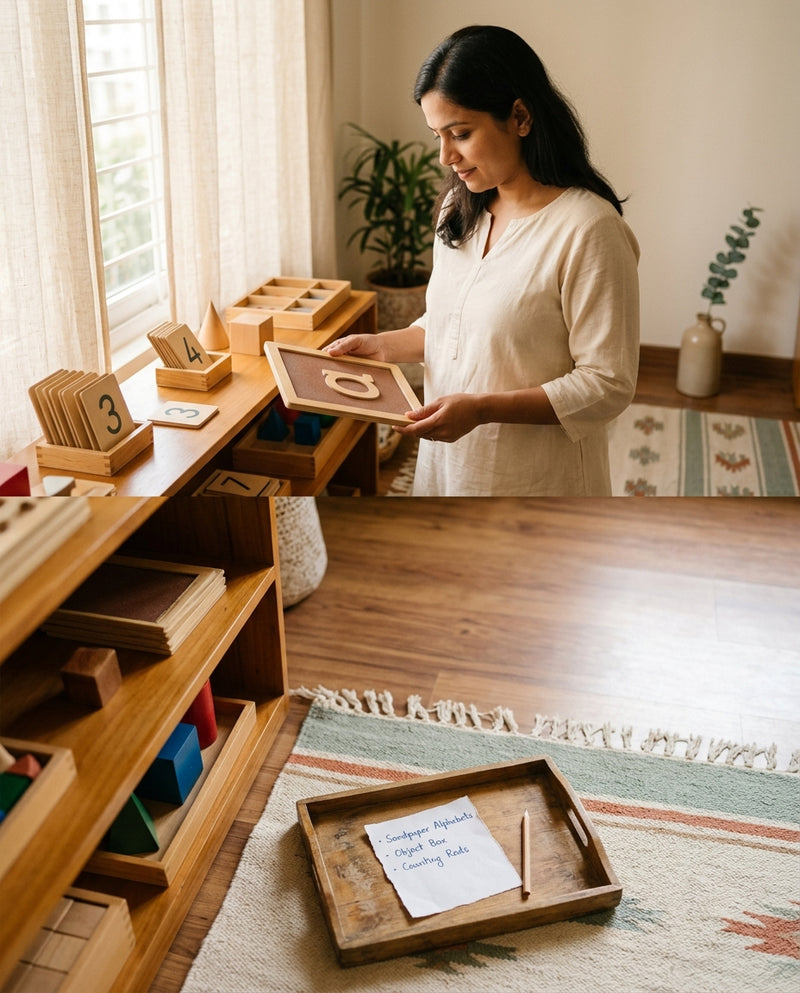
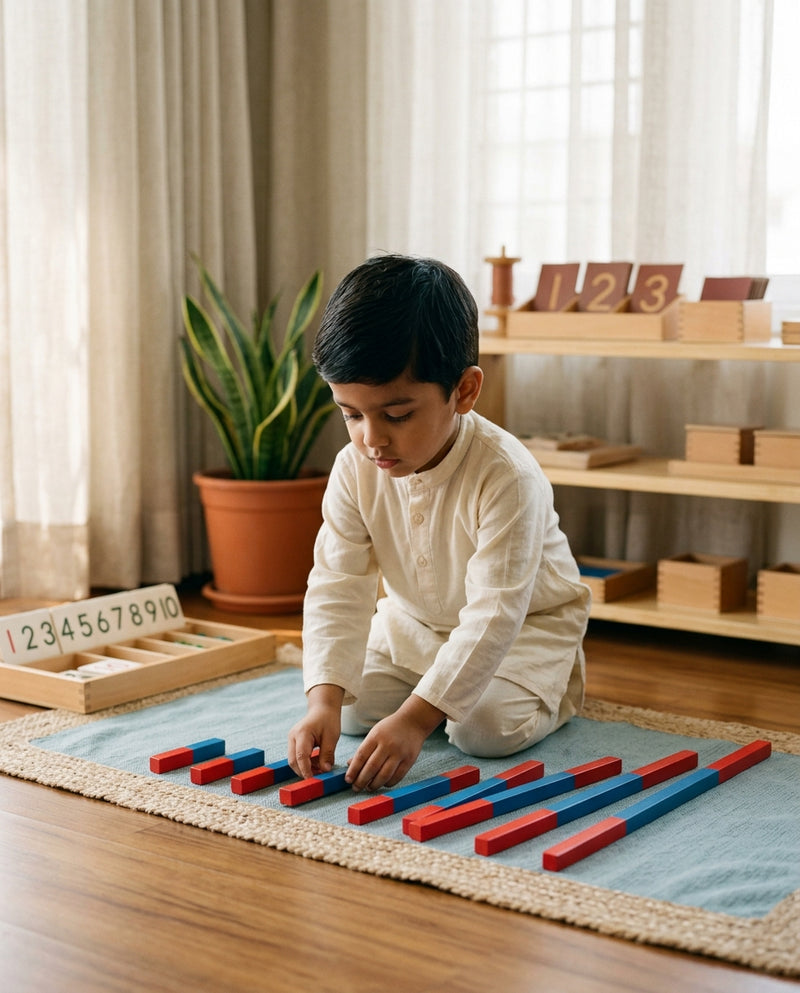
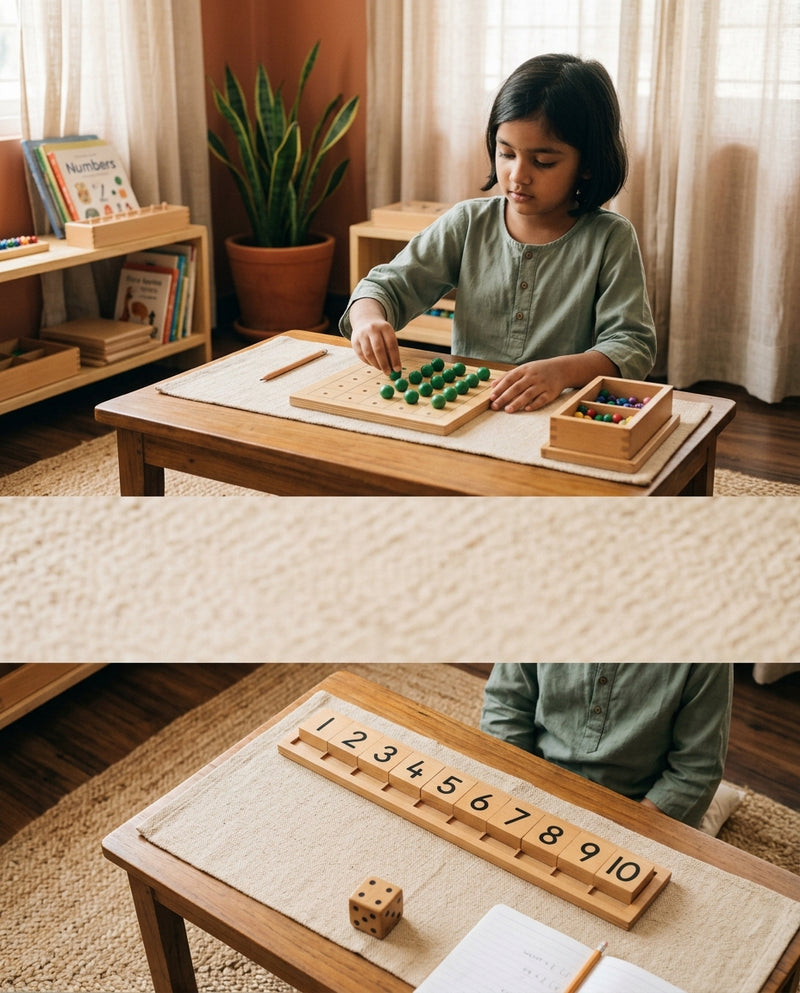
- Phase 2 (4 to 5 years): Sandpaper letters + movable alphabet + number rods. Rs. 6,000 to Rs. 10,000.
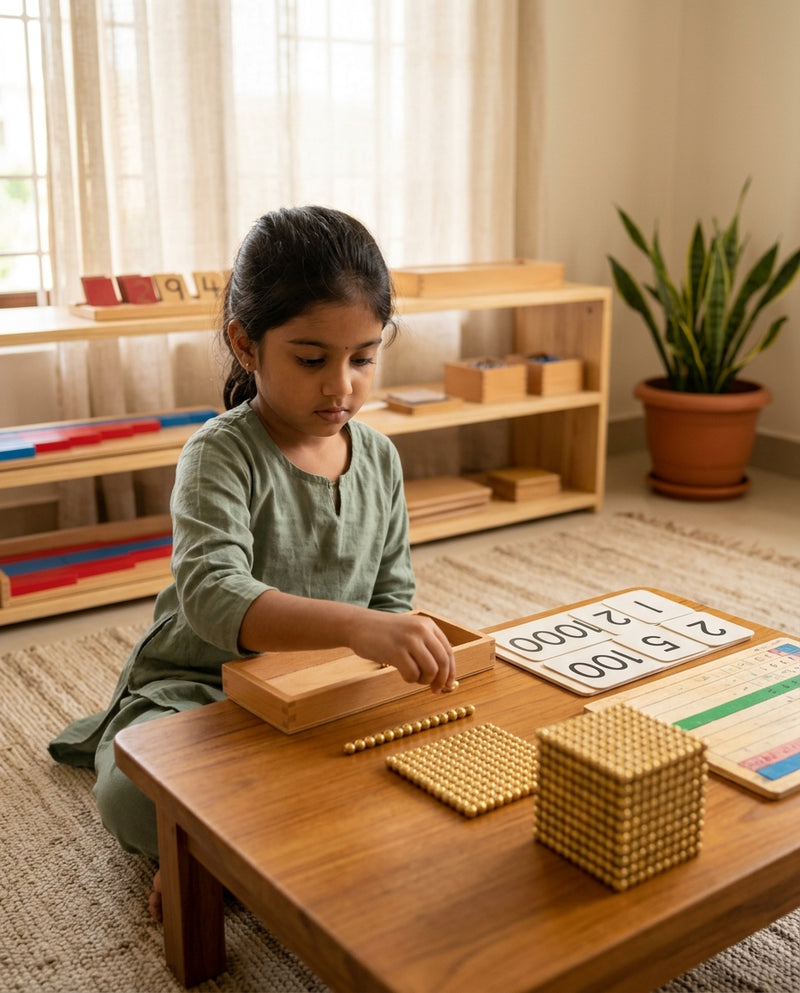
- Phase 3 (5 to 6 years): Addition board, golden beads, geometric solids. Rs. 8,000 to Rs. 12,000.
- Total Montessori home shelf over 3 years: Rs. 20,000 to Rs. 30,000. Lasts decades.
Indian home considerations
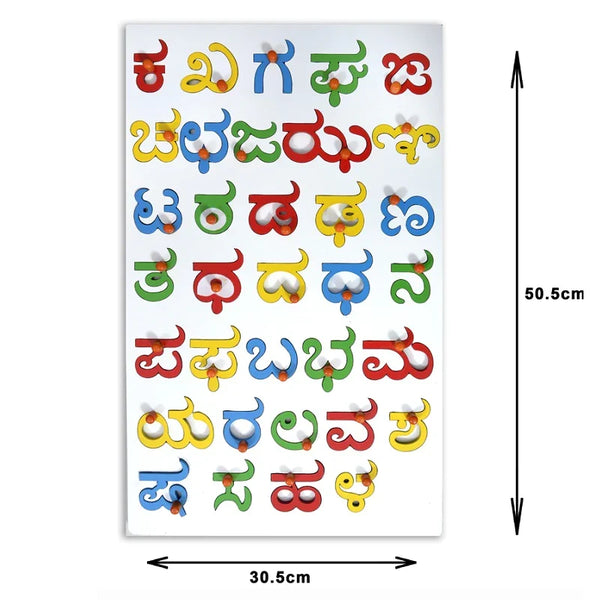
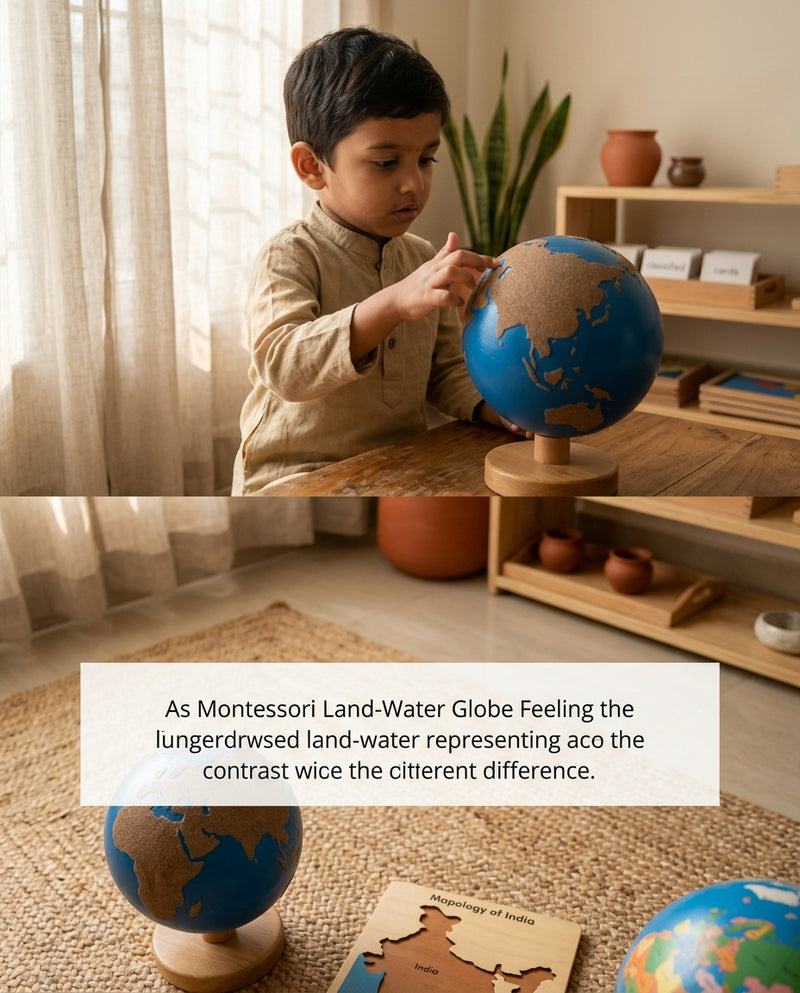
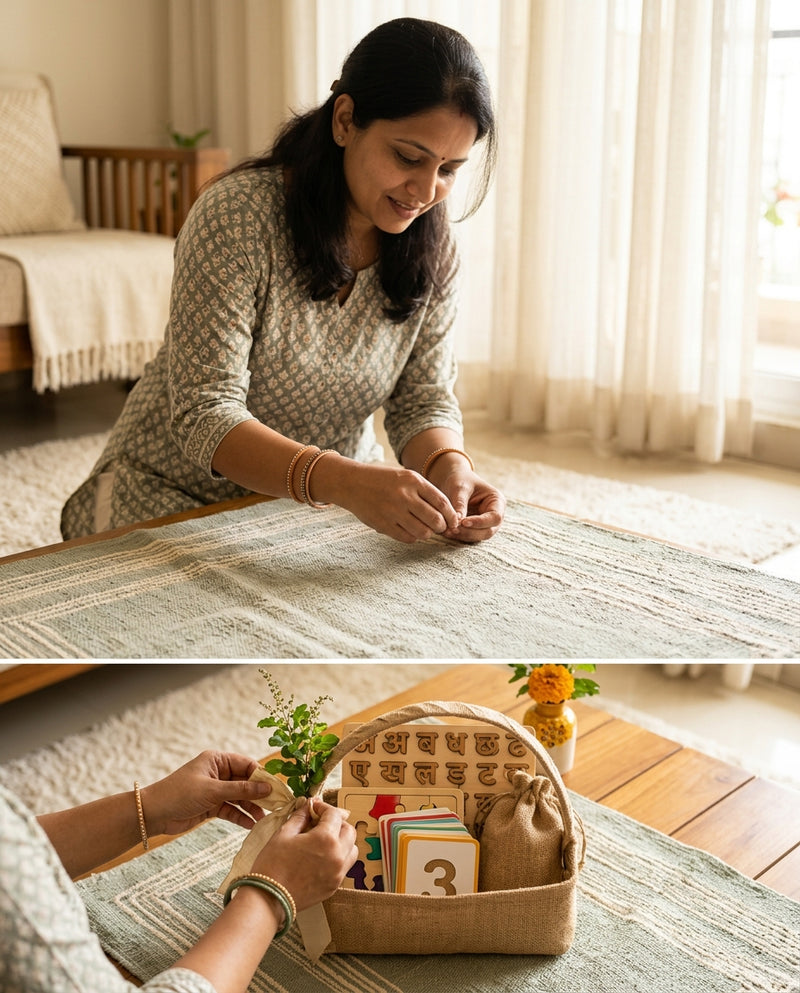
- Bilingual or trilingual from the start. Hindi + English + mother tongue alphabets, side by side.
- Joint family rotation: well-made materials pass between cousins and siblings.
- Climate: store wooden materials in dry cupboards during monsoon. Light oil annually.
Skills this shelf builds
What does an authentic Montessori shelf actually build? Maria Montessori observed children for forty years and designed every material to do one specific job. Here is what each area builds.
Practical life
- Concentration: the ability to hold attention on one task for 20 minutes or more.
- Coordination: hand-eye precision through pouring, scooping, lacing, slicing.
- Self-care: dressing, washing, packing up, the dignity of doing it yourself.
- Care of environment: child-sized cleaning tools turn cleaning into play.
- Independence: the foundation of self-esteem.
Sensorial
- Visual discrimination: Pink Tower and Brown Stair refine the eye for size and dimension.
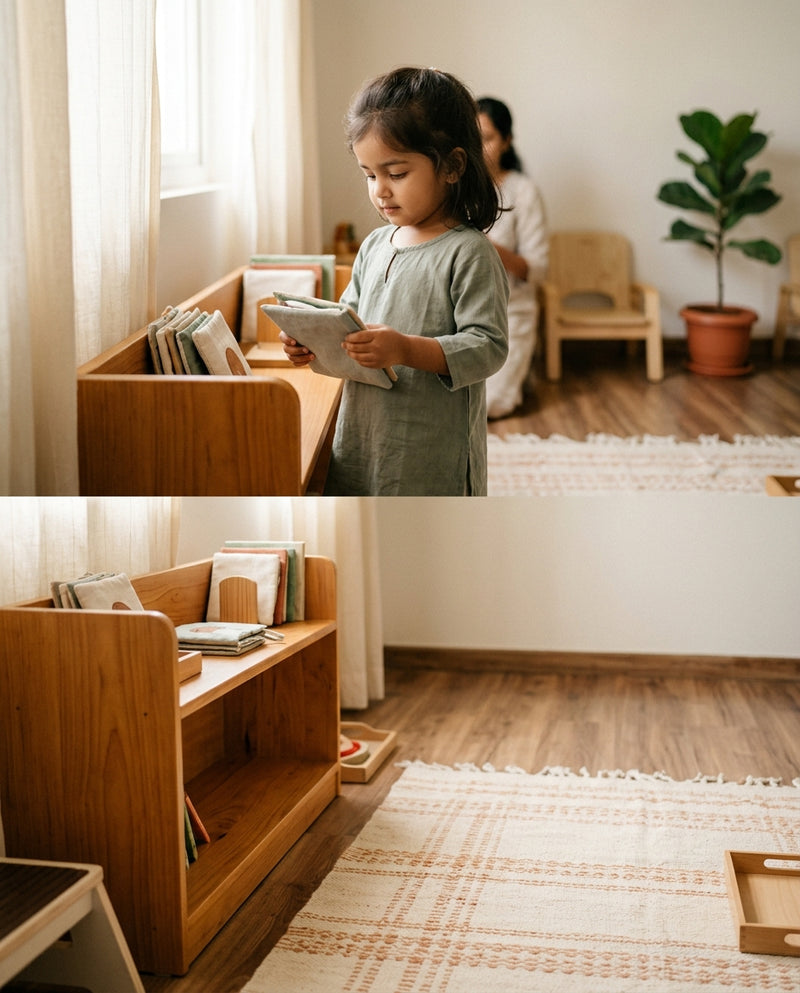
- Tactile discrimination: knobbed cylinders, fabric boxes, rough and smooth.
- Stereognostic sense: the stereognostic bag teaches recognition by touch alone.
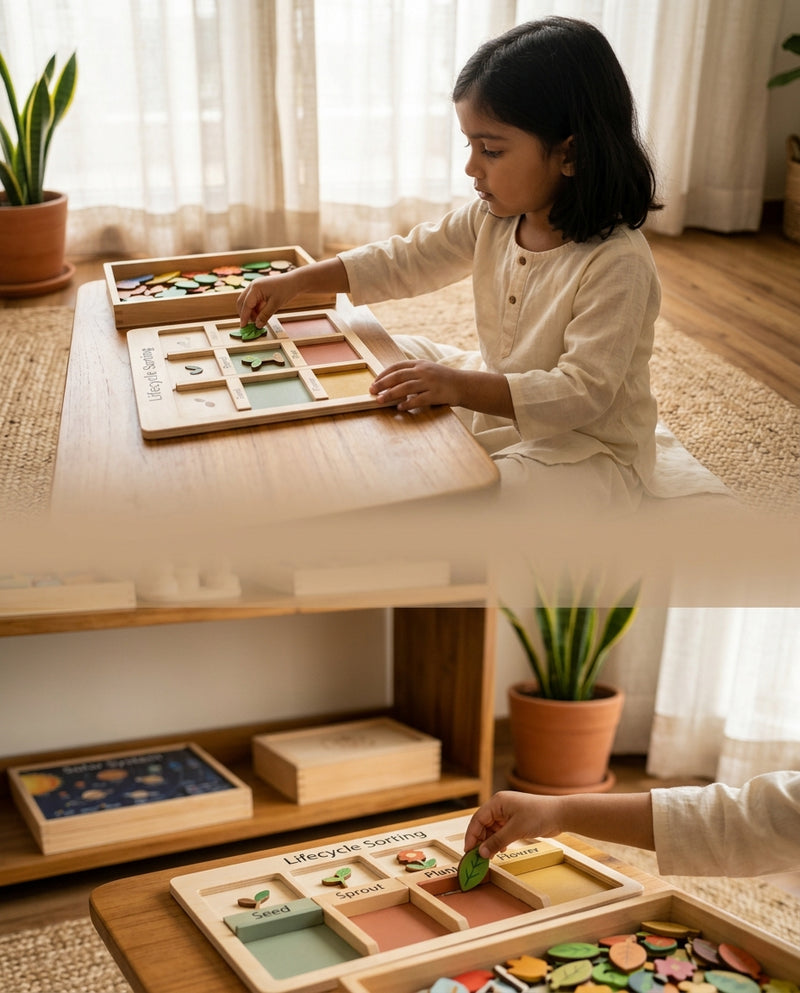
- Geometric vocabulary: solids, cabinet, leaf cabinet teach shape names early.
- Mathematical mind: binomial and trinomial cubes are pre-algebra disguised as play.
Language
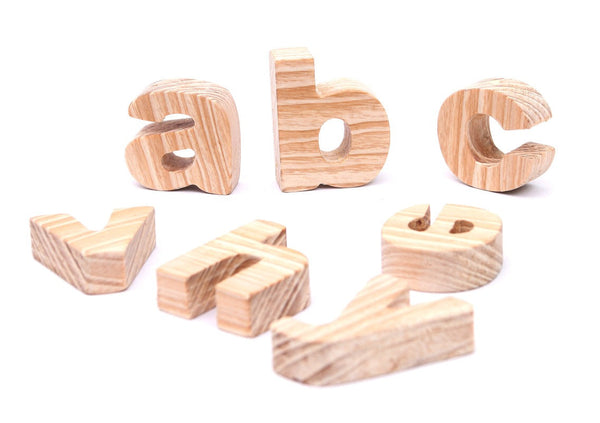
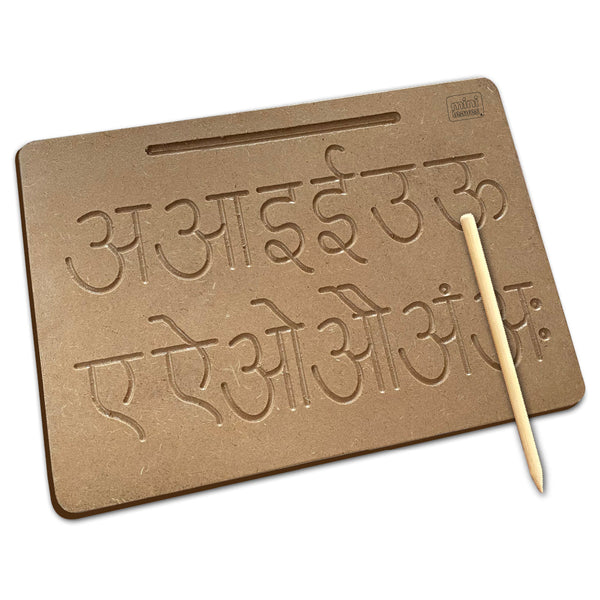
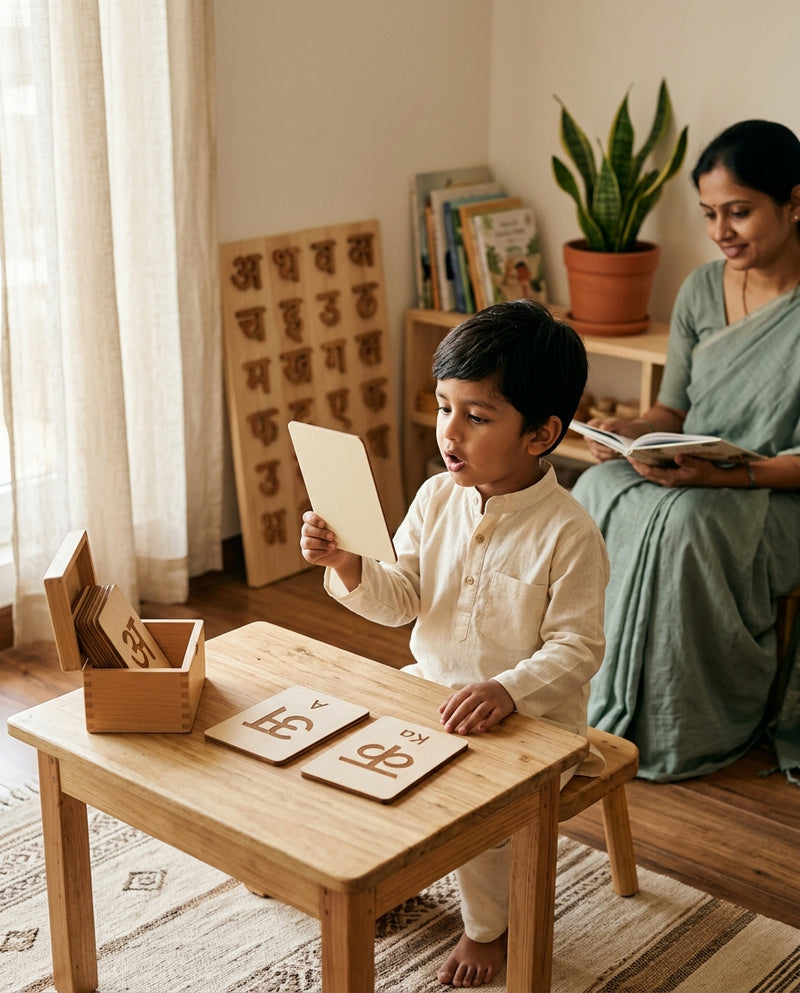
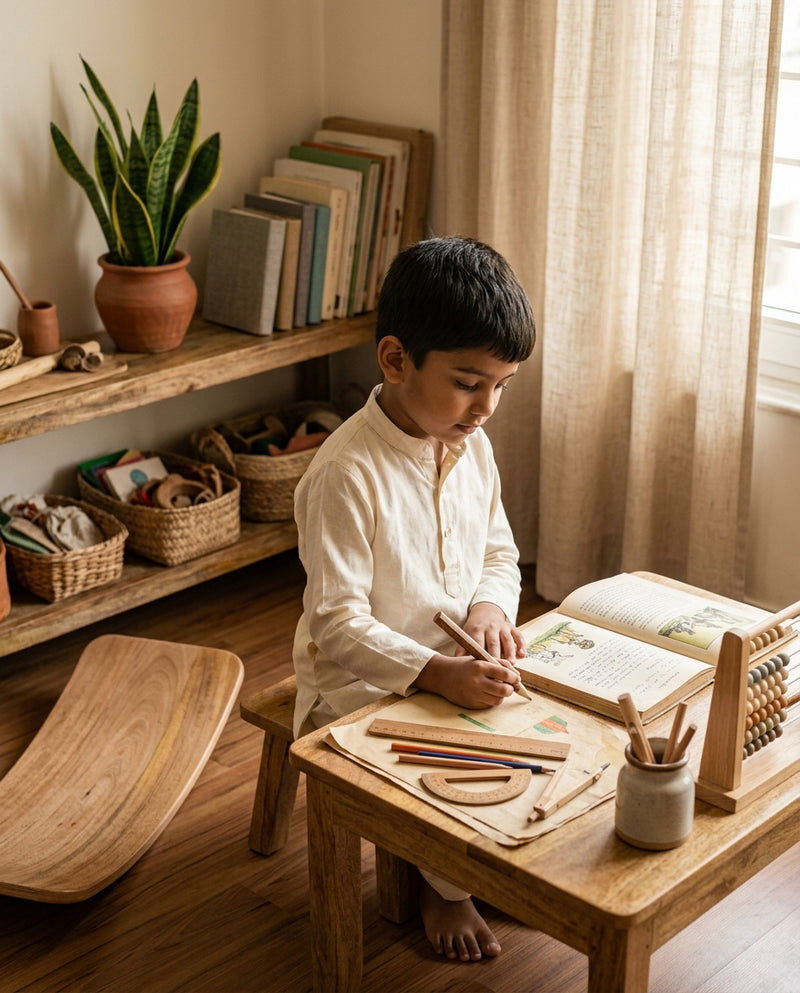
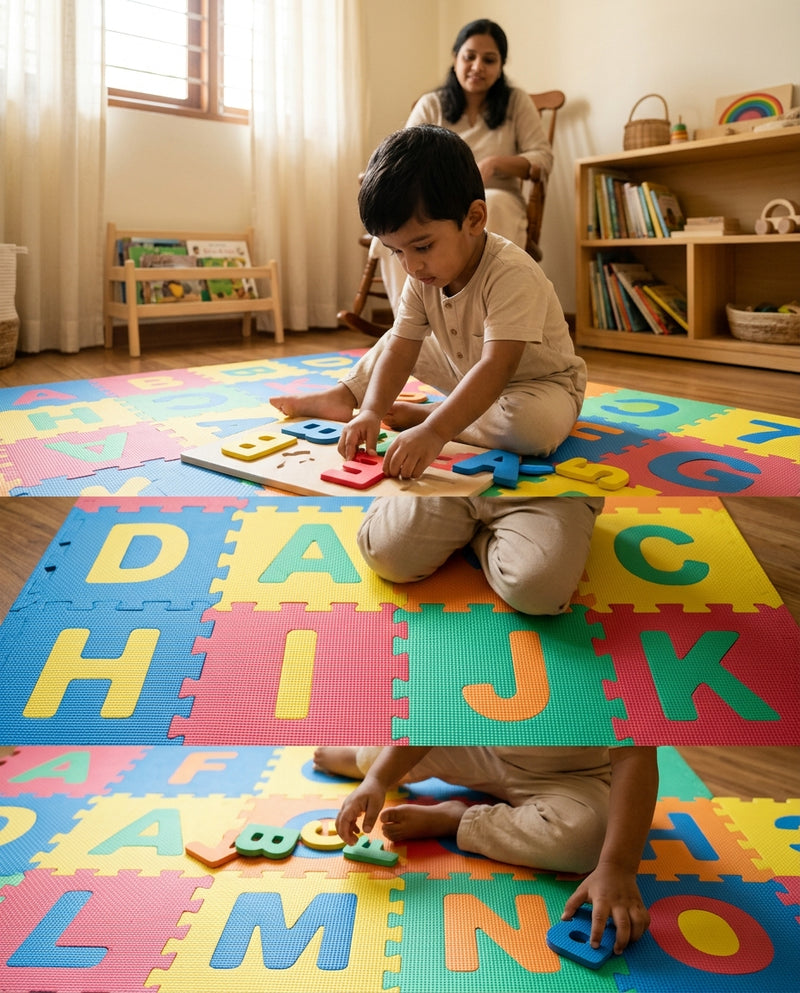
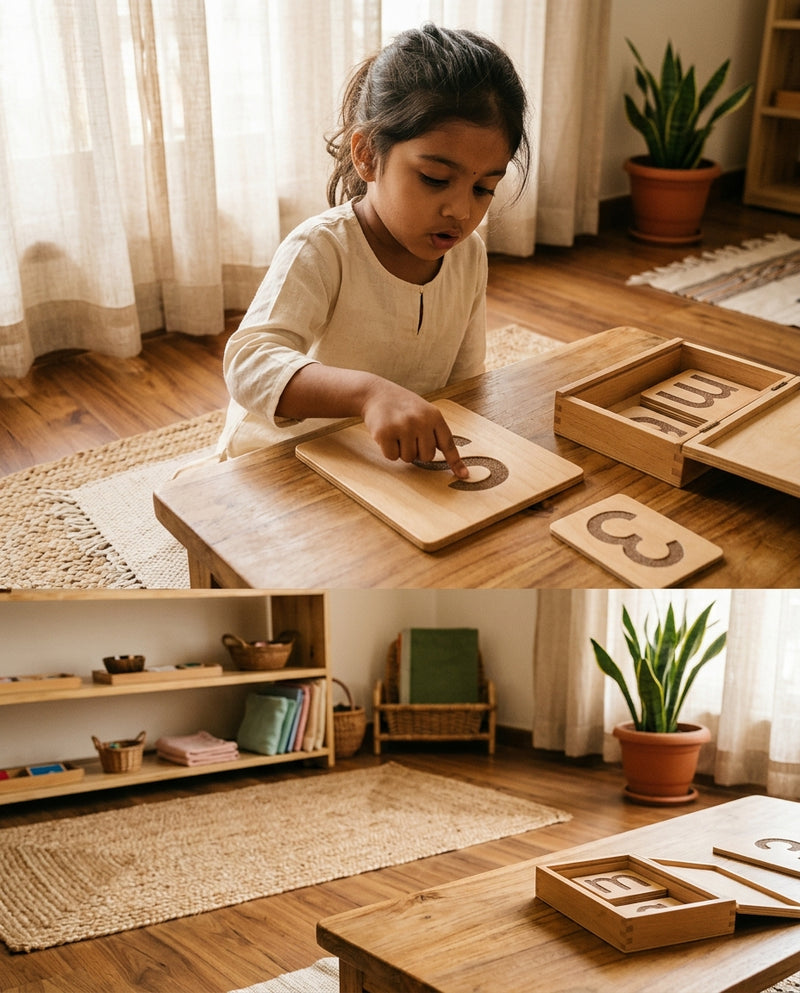
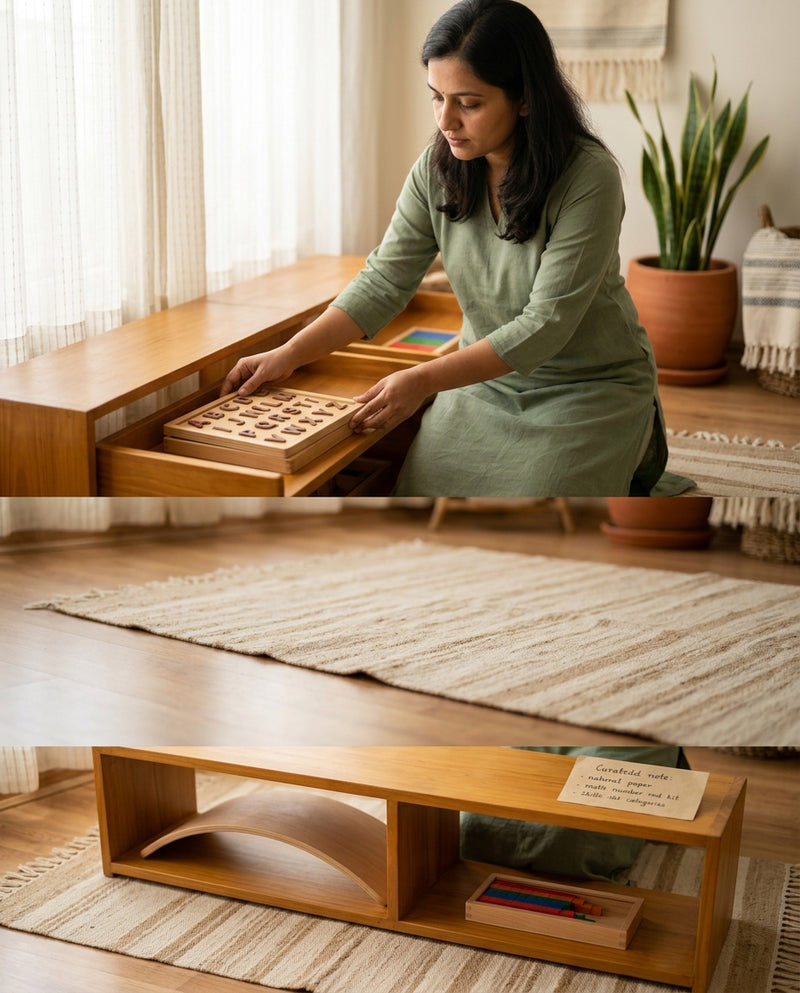
- Phonetic awareness: sandpaper letters connect sound to shape.
- Letter formation: tracing builds the muscle memory needed for handwriting.
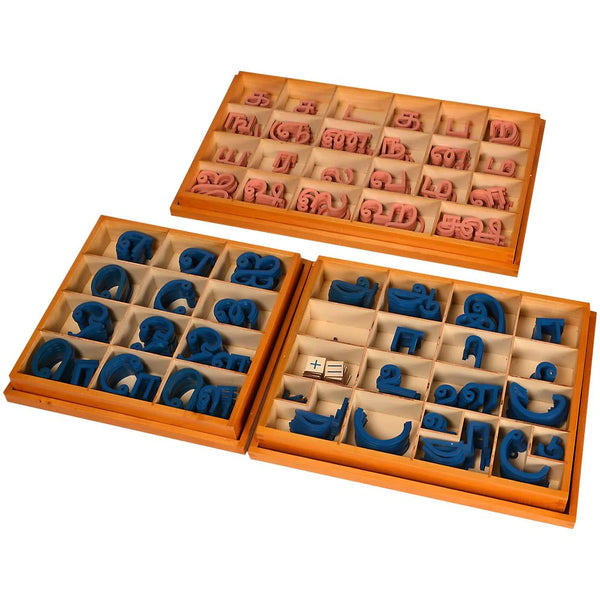
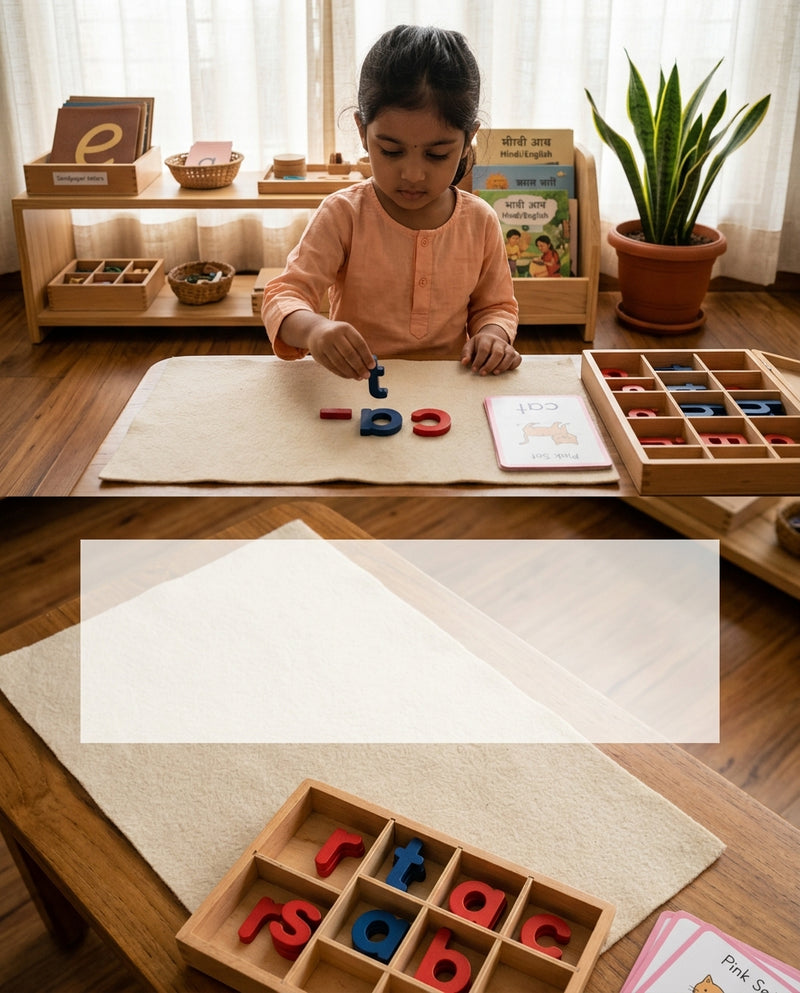
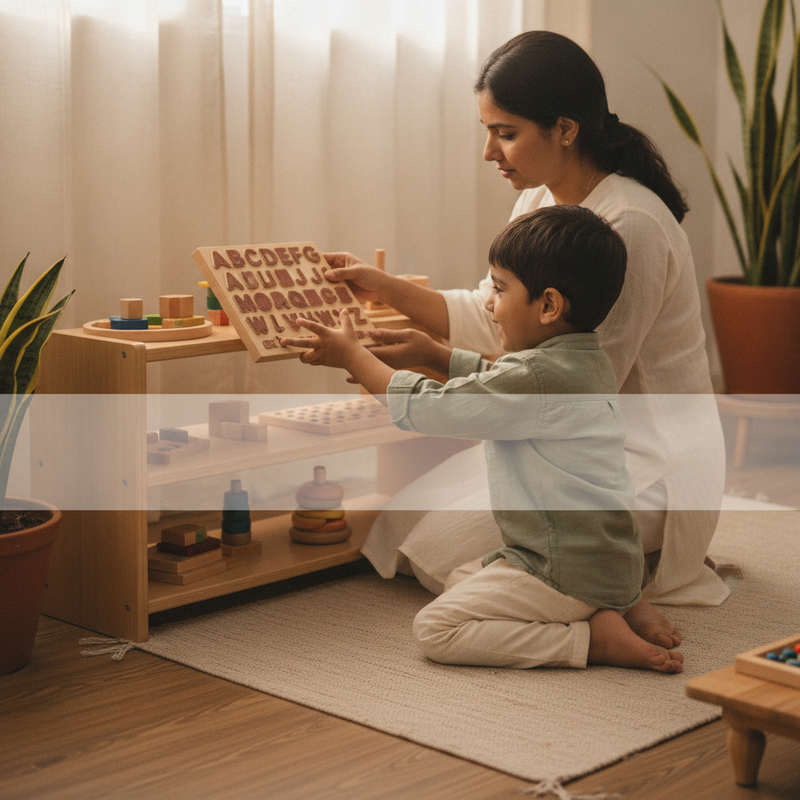
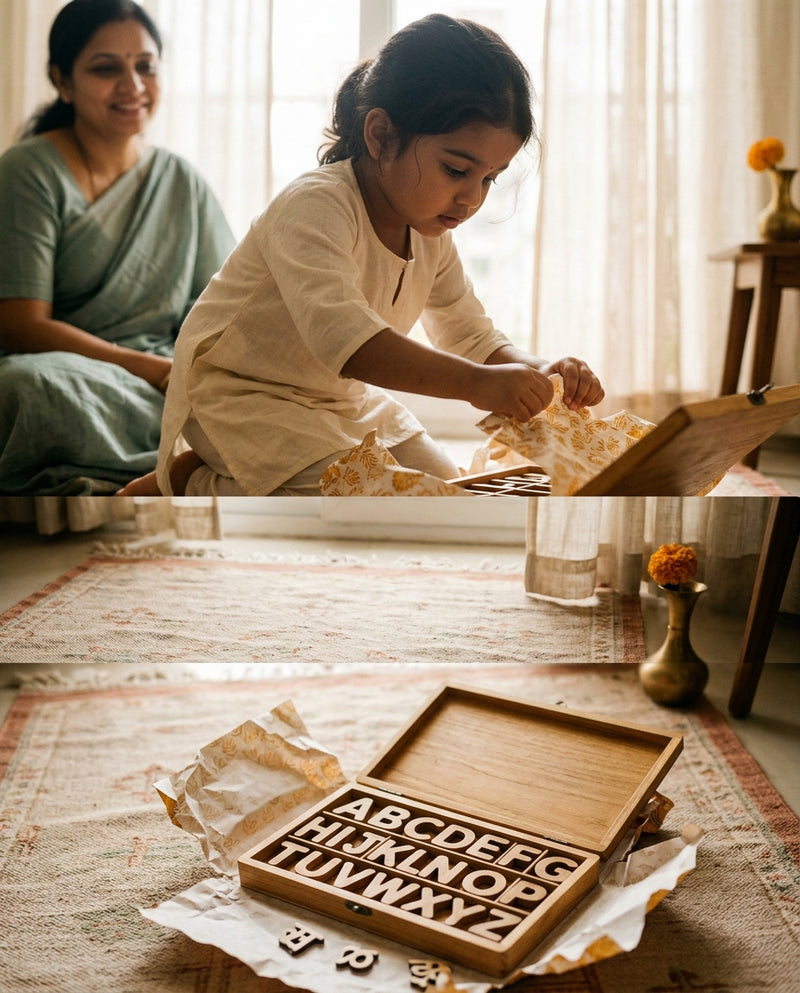
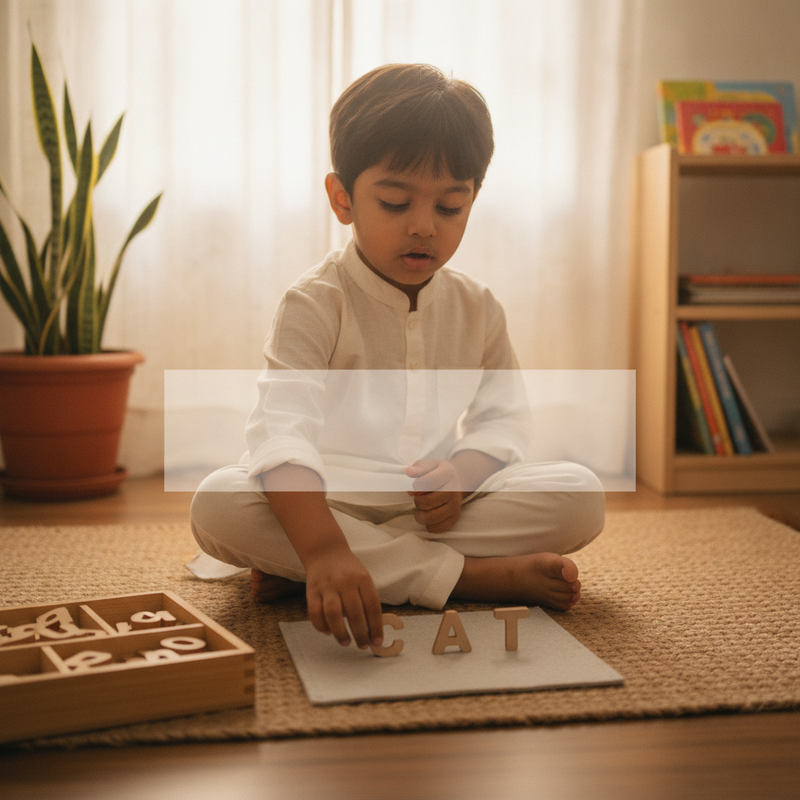
- Word composition: movable alphabet lets children build words before they can write.
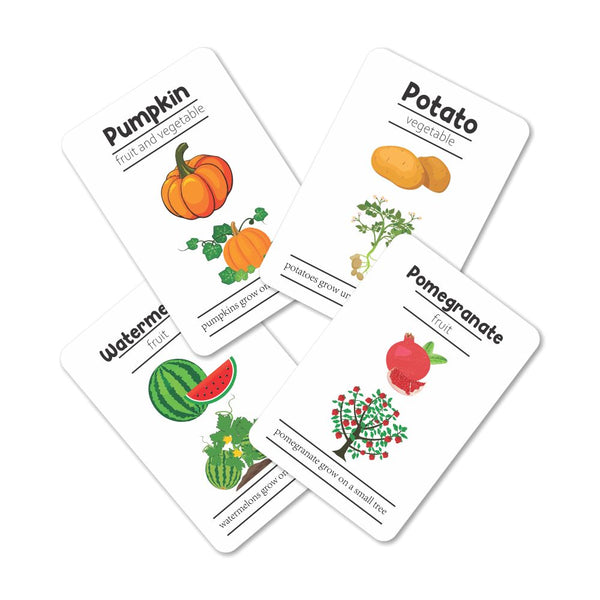
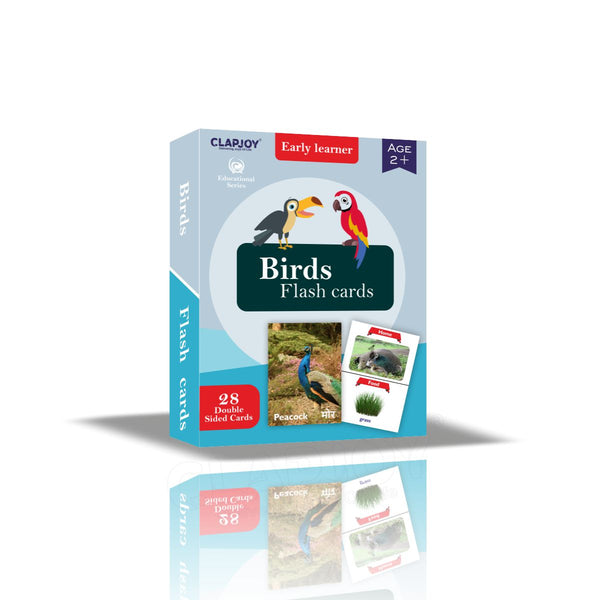
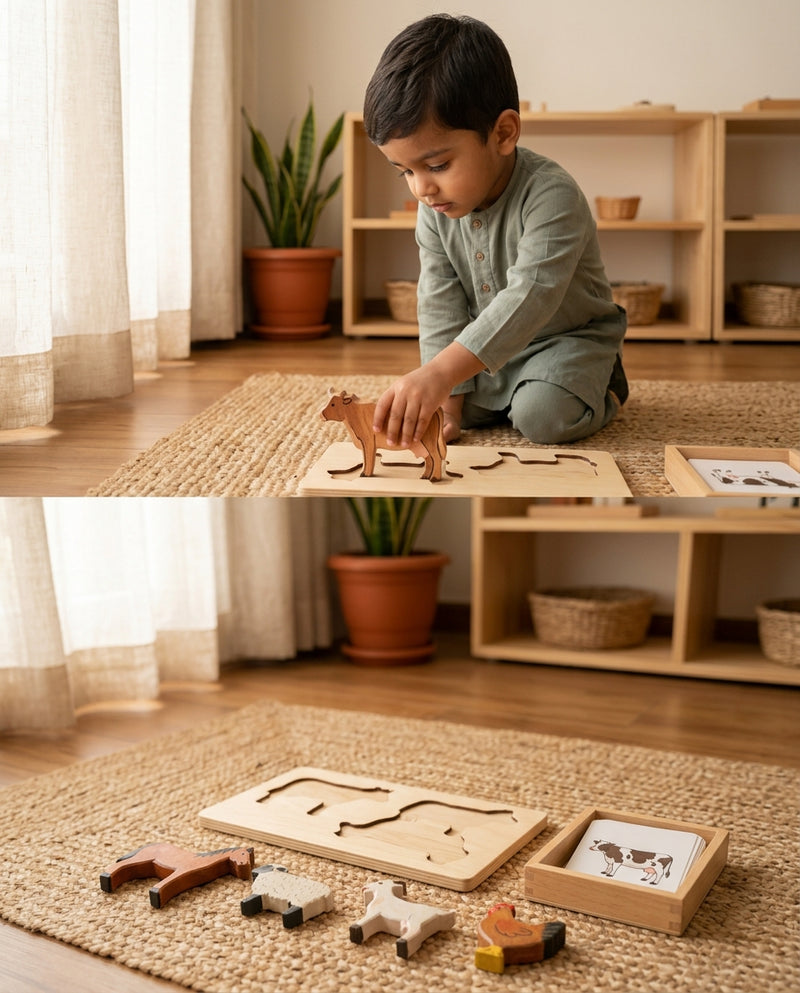
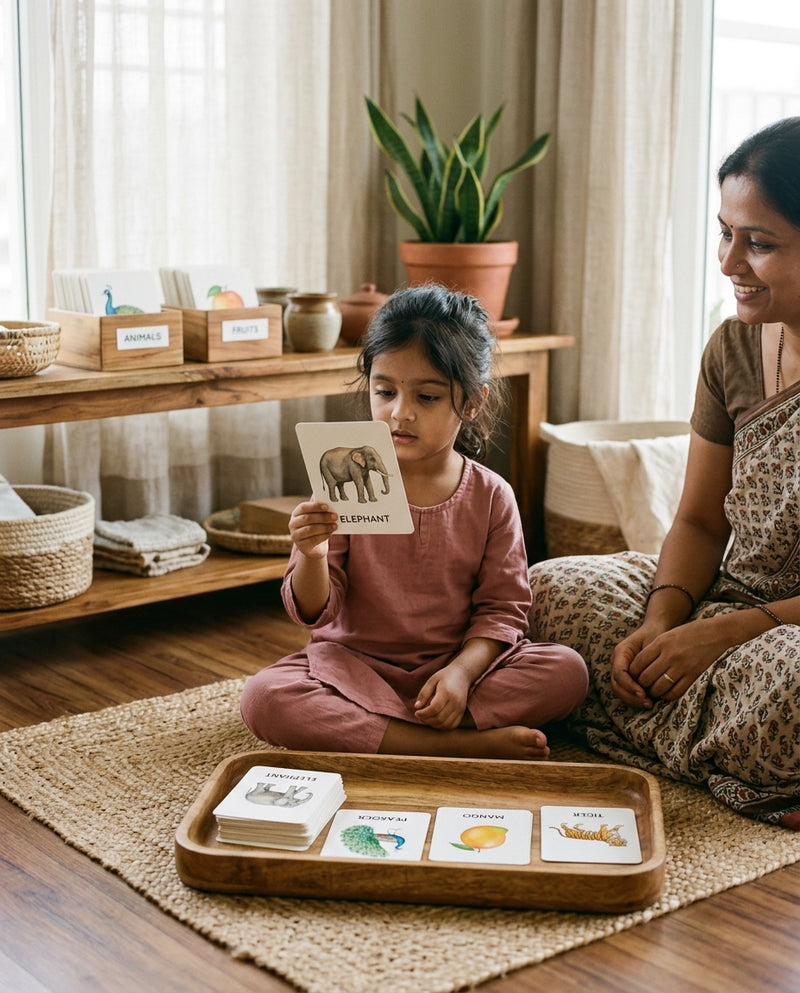
- Vocabulary expansion: classified picture cards, sandpaper labels.
- Multilingual capacity: same framework, multiple scripts, including Hindi and regional Indian languages.
Mathematics
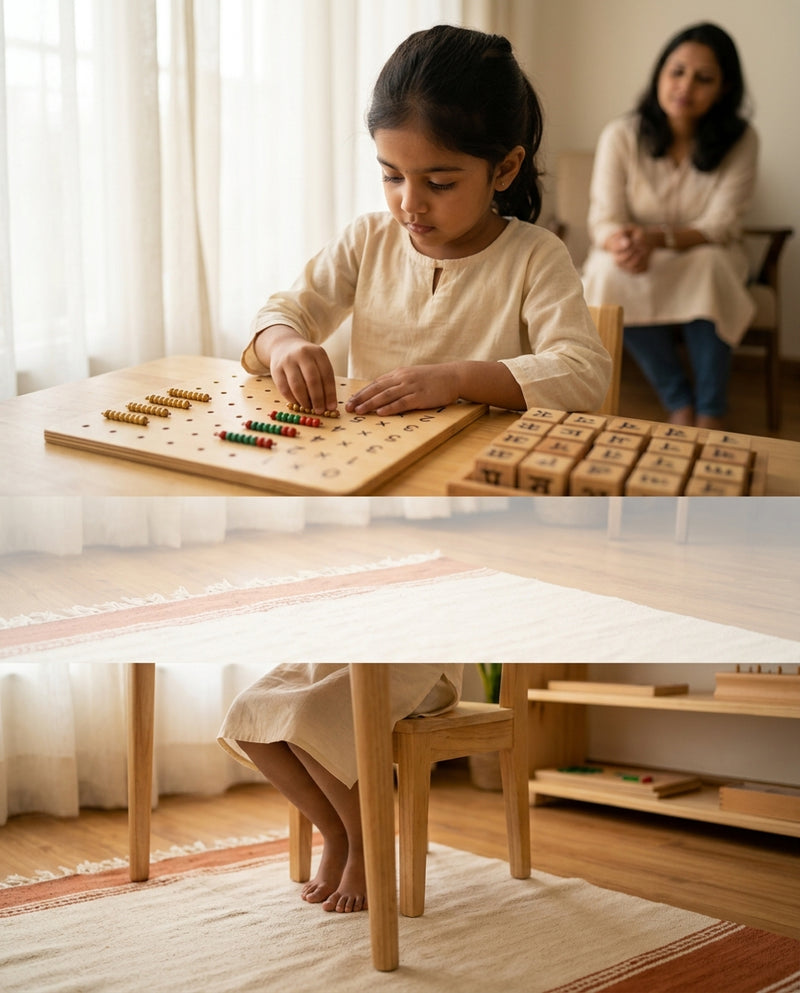
- Quantity: number rods make numbers continuous, not abstract.
- Symbol: sandpaper numbers teach digit shape by touch.
- Association: cards and counters bridge quantity and symbol.
- Decimal system: golden beads teach place value visually.
- Operations: addition, subtraction, multiplication, division strip boards.