Educational Toys: Science of True Child Development
True educational toys are not just colourful distractions; they are scientifically proven catalysts for a child's holistic development, fostering critical cognitive, motor, and socio-emotional skills through purposeful play. Research consistently demonstrates that the most impactful toys engage a child's intrinsic curiosity and provide opportunities for self-directed discovery.
An educational toy is a meticulously designed tool that facilitates a child's learning process by encouraging active exploration, critical thinking, and skill mastery. This matters because such toys lay a robust foundation for future academic success and life skills, empowering children to become independent learners. Indian parents can identify these by observing if a toy truly engages their child in problem-solving and creative application.
The Brain on Play: How Developmental Toys Build Connections
Child development experts agree that play is the primary mechanism through which young brains grow. From birth, a child's brain forms over a million new neural connections every second, a process profoundly influenced by their environment and interactions. Developmental toys science reveals that materials prompting active engagement directly contribute to this intricate neural wiring, strengthening pathways for language, logic, and motor skills.
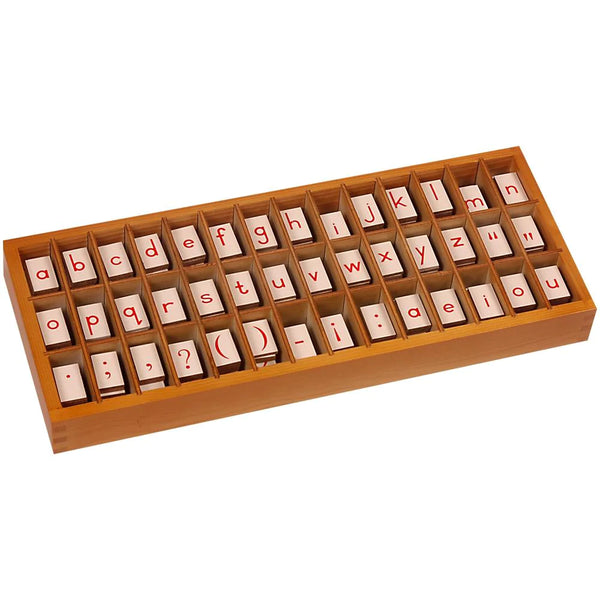
The most profound insight from child development science is that the toy itself isn't 'smart'; it's the child who becomes smarter through active engagement with a well-designed toy. Many flashing, talking gadgets, while entertaining, often demand passive reception. In contrast, a simple set of Montessori educational toys like the Pink Tower or wooden blocks requires the child to actively problem-solve, experiment, and imagine, thereby building stronger neural connections and critical thinking skills.
Beyond Rote Learning: The Pillars of Truly Educational Toys
For parents in India navigating academic pressures, understanding these scientific pillars is crucial for choosing effective learning toys for kids. These characteristics differentiate truly developmental tools from mere entertainment, ensuring your child gains valuable skills beyond memorisation.
Active Engagement, Not Passive Reception
A truly educational toy demands the child's active participation. This means manipulating, stacking, sorting, or building, rather than just watching or listening. For young Anya, a 3-year-old in a joint family in Bengaluru, meticulously arranging wooden geometric solids isn't just play; it's an exercise in shape recognition, spatial reasoning, and fine motor control. Her active hands-on exploration builds far more robust neural pathways than passively observing a screen.
Multi-Sensory Exploration & Feedback
Child development research consistently highlights the importance of multi-sensory experiences. Toys that engage touch, sight, sound, and even smell or taste (for younger children, safely) provide richer input for the developing brain. Consider a toddler running their fingers over a smooth wooden puzzle piece versus a textured sandpaper letter – each provides unique sensory input crucial for brain development. This direct, tangible feedback is vital for forming concrete understandings.
Self-Correction and Problem-Solving
One hallmark of scientifically designed educational toys, particularly within the Montessori philosophy, is the built-in 'control of error.' This allows children to identify and correct their own mistakes without adult intervention. For example, a child trying to fit a cylinder into the wrong hole in a cylinder block immediately sees their error. This process fosters resilience, independent thinking, and a natural joy in discovery, rather than relying on external validation or prompts from electronic devices.
Open-Endedness & Imagination
The most powerful educational toys are often the simplest. They don't dictate how to play but rather invite endless possibilities. A simple set of wooden cubes or a collection of fabric scraps in an Indian home can become a train, a house, a temple, or ingredients for a pretend feast – the child's imagination is the only limit. This resourcefulness and creativity, deeply valued in many Indian households, are precisely what fuels strong cognitive development and adaptability.
Choosing Wisely: How to Select Educational Toys for Your Indian Child
As parents, your role is to provide an environment rich with opportunities for genuine learning. When you're choosing child development toys, especially in a bustling Indian household, consider not just the age recommendation but also how much your child can do with the toy. Does it invite questions? Does it allow for multiple solutions? Does it encourage interaction, perhaps even with grandparents or older siblings?
Look for materials that are durable, made from natural elements like wood, and designed for repeated, varied use. Research from organisations like the Harvard Center on the Developing Child consistently underscores the value of open-ended, child-led play for executive function development. This aligns beautifully with the spirit of Indian families, where simple, shared activities often hold profound developmental benefits.
When selecting your next toy, remember the wisdom of Dr. Maria Montessori: "Play is the work of the child." Your choice of Montessori method learning materials can profoundly impact how your child learns, grows, and thrives. Tonight, observe your child with their favourite toy. Are they passively watching, or are they actively manipulating, questioning, and creating? The latter is where true developmental magic happens.