Structured Early Childhood Education India: Boosting Child Cognition
A recent Indian birth cohort study published in Nature reveals that structured early childhood education India significantly enhances childhood cognition, leading to demonstrably sharper minds. This fascinating research indicates that purposeful, sequential learning experiences during crucial formative years build robust neural pathways, directly impacting a child's working memory, attention span, and problem-solving abilities.
For research-oriented parents navigating the bustling metros and close-knit communities of India, this finding offers a powerful, evidence-based perspective. It suggests that while every moment matters in a child's early years, the way those moments are structured can have a profound, measurable impact on their future cognitive prowess, crucial for academic success and beyond.
What is Structured Early Childhood Education?
Structured early childhood education is a systematic approach to learning that provides children with planned, age-appropriate activities and a prepared environment to develop specific skills. This matters because it fosters essential cognitive functions, executive skills, and a love for learning. Indian parents can integrate such purposeful activities and materials into their child's daily routine at home.
The Groundbreaking Indian Birth Cohort Study on Early Education
The recent findings from an Indian birth cohort study early education published in the prestigious journal Nature offer a compelling insight into child development right here in our nation. Researchers meticulously followed thousands of Indian children from birth, observing their early learning environments and later assessing their cognitive abilities. The results were clear and striking: children with exposure to structured early learning programs displayed significantly higher scores in cognitive assessments compared to their peers who had less structured early experiences.
This study moves beyond anecdotal observations, providing scientific backing from our own context. It highlights that the design of early learning experiences—the intentionality, the sequence, the specific goals—is a powerful predictor of later cognitive strength. It's not just about stimulating a child; it's about providing purposeful, organised stimulation that truly counts.
How Structured Learning Builds a Sharper Mind: The Science of Childhood Cognition
So, what exactly happens in a child's brain during childhood cognition research India? The magic lies in the development of executive functions. These are the advanced mental skills we use to plan, focus attention, remember instructions, and juggle multiple tasks successfully. They are the bedrock of academic achievement and life skills.
Structured learning activities, like those found in Montessori classrooms or even thoughtfully designed home environments, actively engage and strengthen these functions. When a child engages with materials that require them to follow steps, self-correct, or complete a sequence, their brain is literally building and refining the neural pathways responsible for:
- Working Memory: Remembering the next step in a pattern or the pieces needed to complete a puzzle.
- Attention and Focus: Sustaining concentration on a task, even when distractions are present.
- Problem-Solving: Experimenting with different approaches to achieve a goal, like fitting geometric shapes into their corresponding slots.
Child development experts consistently affirm that the first six years are critical for establishing neural architecture for higher-order thinking. Without this foundational structure, children may struggle with more complex academic tasks later on. The science shows it's not merely about 'school readiness,' but about building a more adaptable, resilient, and intelligent mind.
Montessori: A Model for Structured Early Childhood Education in India
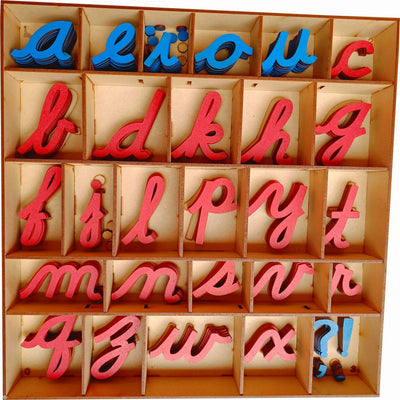
The findings from this Indian research resonate deeply with the principles championed by Maria Montessori over a century ago. Montessori education is, at its heart, a profound example of Montessori structured learning benefits. It provides children with a carefully 'prepared environment' and didactic materials that are self-correcting and sequential.
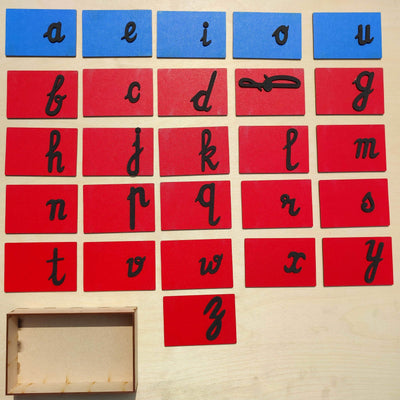
Consider the Montessori Method learning materials. A child working with the Pink Tower isn't just stacking blocks; they are engaging in precise visual discrimination, understanding order, and refining fine motor control. The Sandpaper Letters are not just for touching; they build a tactile memory of letter forms, preparing the child for reading and writing through a multi-sensory, structured process. This approach allows children to build skills incrementally, experiencing success and developing a strong sense of competence.
Integrating Evidence-Based Early Learning Programs at Home
As Indian parents, we often face unique challenges—from smaller living spaces in urban apartments to the balancing act of joint family dynamics and academic pressures. The good news is that applying the principles of early learning programs cognitive impact doesn't require a dedicated schoolroom. It's about intentionality and selecting the right tools.
You can create a 'prepared corner' in your home, even a small one. Consider providing specific activities that encourage sequential thought, such as wooden puzzles that teach shape recognition and problem-solving, or sorting activities using everyday items like pulses (dal) or different coloured buttons. Grandparents, who are often central to our children's lives, can be wonderful partners in these structured activities—counting beads for a puja garland, or carefully arranging fruits for a festival offering, all become opportunities for cognitive growth.
This approach aligns perfectly with evidence-based education India is now embracing. By choosing toys and activities that encourage focus, sequence, and self-correction, you are not just entertaining your child; you are scientifically bolstering their cognitive development for a brighter future.