DIY Crafts for Kids: Fueling Imagination with Funskool's Hello Kitty
When Funskool India recently announced the launch of their exciting Hello Kitty and Friends DIY Craft Range, it sparked a conversation among Indian parents: what exactly makes DIY crafts for kids so powerful for development? Research shows that engaging in hands-on creative activities, especially those children do themselves, significantly boosts cognitive function and imaginative capabilities.
DIY crafts for kids are profoundly powerful for fostering creativity and imagination because they engage children in a hands-on process of problem-solving, self-expression, and material exploration, moving beyond passive consumption. This active engagement builds critical thinking, fine motor skills, and the confidence to innovate, aligning perfectly with Montessori's emphasis on practical life skills and child-led discovery.
What are DIY Crafts for Kids?
DIY crafts for kids are any creative projects where children construct, decorate, or create items using their own hands and ingenuity, often with minimal adult intervention. This matters because it shifts the focus from passively receiving entertainment to actively shaping their world, developing crucial life skills. Indian parents can encourage this by providing open-ended materials and a supportive environment for experimentation.
Beyond Instructions: How DIY Crafts Ignite True Imagination
While the initial appeal of a new Hello Kitty DIY craft range might be to follow instructions, the true magic lies in what happens *after* the kit is complete, or even when a child veers off script. Child development experts agree that imagination flourishes not in adherence, but in exploration and improvisation. When a child, like 4-year-old Aanya from Bengaluru, uses the leftover craft paper and glitter from her Hello Kitty project to design a new outfit for her doll or builds a 'home' for her finished craft, that's where genuine imagination takes flight.
The process of choosing colours, cutting shapes, and assembling pieces involves constant mini-decisions and problem-solving. This fosters divergent thinking, a key component of creativity, as children discover multiple ways to achieve a desired outcome. The American Academy of Pediatrics recommends unstructured, hands-on play as vital for cognitive flexibility, and DIY crafts fit this perfectly by providing a framework within which children can still exercise boundless freedom.
Hello Kitty & Beyond: Inspiring Hands-On Creativity at Home
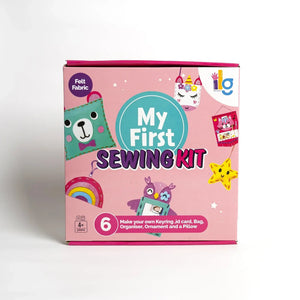
The arrival of Funskool's Hello Kitty DIY craft range offers a fantastic entry point into the world of creative craft ideas for kids. Imagine the delight of a child making their own Hello Kitty-themed greeting cards or decorative items! But the inspiration doesn't have to end there. These kits can spark ideas for further activity kits using simple household materials.
Encourage your child to look at the world around them for inspiration. Can they create a miniature Ganesha idol using clay? Or design their own festival decorations from recycled paper? Hands-on imagination play extends to simple acts like painting pebbles found during an evening walk or creating intricate patterns with rangoli powder. Such activities, whether guided by a Hello Kitty template or born purely from a child's mind, build confidence and a sense of accomplishment.
Montessori Principles in Every Snip and Stick
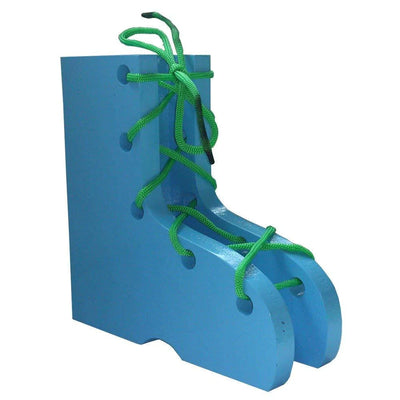
The essence of Montessori education, pioneered by Dr. Maria Montessori, lies in respecting the child's innate drive for self-directed learning and practical mastery. DIY craft activities align beautifully with these principles. When a child meticulously strings beads, carefully cuts along a line, or glues pieces together, they are not just making something pretty; they are developing fine motor control, hand-eye coordination, and sustained concentration – all foundational Montessori skills.
Montessori craft activities focus on the process over the product. The focus isn't on a perfect outcome, but on the child's engagement, effort, and learning through doing. For instance, engaging with puzzles before moving onto a complex paper craft helps develop spatial reasoning. Providing real, child-safe tools, like small scissors or brushes, empowers children aged 3-6 years to feel capable and independent, much like they would with other Montessori learning materials like the Pink Tower or Sandpaper Letters, but in a creative context.
In Indian homes, where academic pressure can often overshadow creative play, introducing DIY crafts provides a crucial balance. As a 2018 study by the National Institute of Mental Health and Neurosciences (NIMHANS) indicated, engaging children in creative activities is vital for holistic development, improving emotional regulation and reducing stress. Grandparents, with their wealth of traditional craft knowledge, can become wonderful mentors, teaching children age-old Indian art forms like Warli painting or simple embroidery, further enriching the creative journey.
- DIY crafts for kids stimulate problem-solving and critical thinking, crucial for cognitive development.
- The process of creating, not just the product, is where true imaginative and creative growth occurs.
- Montessori principles are deeply integrated into DIY activities, enhancing concentration and fine motor skills.
- Research indicates that hands-on crafting reduces screen time and boosts emotional expression in children.
- Open-ended craft materials encourage children to be innovators, rather than just followers of instructions.
- Activities like Funskool's Hello Kitty DIY range can inspire deeper, self-directed creative exploration.
What age is best to start DIY crafts for kids?
Children can start simple DIY crafts as early as 18-24 months with supervision, focusing on safe materials like large beads for stringing or tearing paper. For more intricate tasks involving cutting and gluing, the 3-6 years age band is ideal, allowing them to develop fine motor skills and follow multi-step instructions.
How do DIY crafts foster creativity and imagination?
DIY crafts foster creativity by giving children the freedom to experiment with materials, solve unexpected problems, and express their unique ideas. This hands-on process directly stimulates imaginative play as children envision and bring their creations to life, moving beyond predetermined outcomes and encouraging original thought.
Are specific craft kits like Hello Kitty beneficial for creativity?
Yes, specific craft kits, such as Funskool's Hello Kitty DIY craft range, can be highly beneficial as they provide a structured starting point and introduce new techniques or materials. They can inspire initial interest and serve as a springboard for children to then apply those learned skills to more open-ended, self-directed creative projects.
How do Montessori principles apply to creative craft ideas for kids?
Montessori principles in creative craft ideas for kids emphasize child-led exploration, practical life skills, and the development of concentration through focused work. Activities involve real tools, natural materials, and the freedom to repeat tasks, fostering independence and a deep understanding of the creative process rather than just the final product.
What are some simple, hands-on imagination play ideas for a joint family setting?
In a joint family, simple hands-on imagination play can involve collective storytelling using puppets made from old socks, creating rangoli patterns with natural materials found in the garden, or building elaborate forts with old sarees and cushions. These activities encourage intergenerational bonding and collaborative creative expression, using readily available household items.