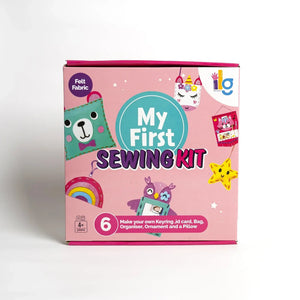
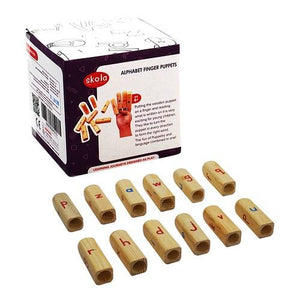
Educational Toys for Limitless Creativity
Open-ended educational toys are undeniably powerful tools for fostering limitless creativity in children, offering a stark contrast to toys with fixed outcomes. Research consistently shows that when children are given materials without a predetermined 'right' way to play, they engage in deeper imaginative exploration, leading to enhanced cognitive and emotional development. In Indian homes, where creativity is valued alongside academic excellence, these toys provide a crucial outlet for children to invent, explore, and express themselves freely.
The core question many Indian parents ask is: how do we truly spark boundless imagination in our children amidst academic pressures and the digital age? The answer lies in providing experiences that encourage intrinsic motivation and child-led discovery. Open-ended play, facilitated by thoughtfully chosen toys, becomes a foundation for a child's innovative spirit, helping them navigate complex challenges with creativity.
What Defines Open-Ended Educational Toys?
Open-ended educational toys are versatile materials that encourage children to use their imagination and creativity without a fixed goal or instruction. This matters because they empower children to be the architects of their own play, fostering independence and innovative thinking. Indian parents can integrate these toys to nurture problem-solving skills and imaginative storytelling from an early age.
Why Open-Ended Toys are Essential for Creative Minds
Child development experts agree that open-ended toys are pivotal in cultivating a child's creative capacity. Unlike single-purpose toys that dictate how a child should play, open-ended materials allow for infinite possibilities, adapting to a child's evolving interests and imagination. This freedom encourages divergent thinking, where a child can explore multiple solutions and ideas for a single problem.
Studies indicate that children engaging in unstructured, open-ended play demonstrate significantly higher levels of creativity and problem-solving skills than those primarily exposed to structured play. This approach empowers children to experiment without fear of failure, building resilience and confidence. From colourful building blocks to versatile activity kits, these materials invite endless possibilities for construction, role-play, and artistic expression, which aligns with recent trends in creative play ranges aimed at enhancing children's emotional expression, as noted by The Times of India.
Such play encourages children to take ownership of their learning, transforming simple objects into anything their mind can conjure. A wooden block can be a car, a phone, a piece of cake, or part of a magnificent fort. This mental flexibility is a cornerstone of creativity, preparing children not just for school, but for a lifetime of innovation.
Fostering Imagination with Montessori Educational Toys
The Montessori philosophy, championed by Dr. Maria Montessori, inherently aligns with the principles of open-ended play, albeit within a prepared environment. While many Montessori materials appear structured, their purpose is to isolate concepts and invite exploration, allowing children to discover principles at their own pace. This child-led approach nurtures independence and inner discipline, key components of true creativity.
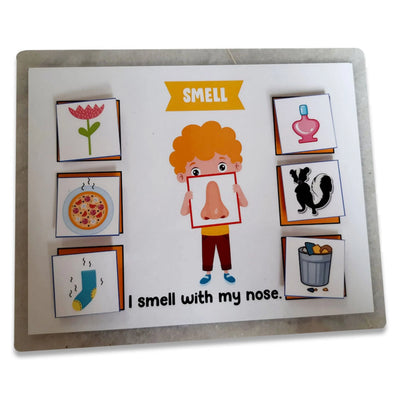
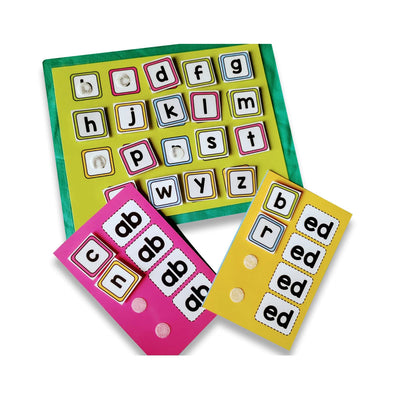
Montessori educational toys are designed to engage a child's senses and intellect, indirectly fostering imagination. Materials like the Pink Tower, with its varying cubes, or geometric solids, can inspire intricate constructions and imaginative scenarios once the child has mastered their initial purpose. Even traditional puzzles, when combined with storytelling, can become open-ended tools, encouraging children to create narratives around the images they form.
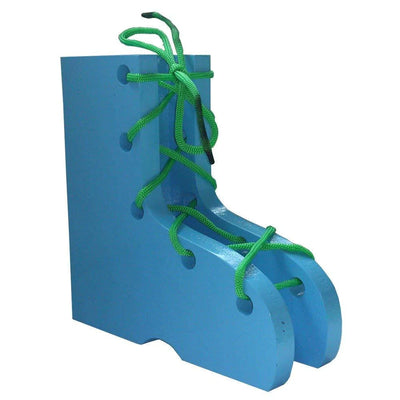
SkilloToys offers a curated range of Montessori learning materials that exemplify this balance, providing tools that are purposeful yet adaptable to a child's imaginative interpretations. These materials encourage children to engage deeply, stimulating their cognitive abilities while providing ample room for creative expression, making them ideal imagination toys for kids across various age groups.
Choosing the Right Open-Ended Educational Toys for Your Child
Selecting the best open-ended toys for creativity involves looking beyond fads and focusing on timeless versatility. When considering how to choose educational toys for creativity, prioritize materials that can be used in multiple ways and grow with your child. Think about natural materials like wood, fabric, and art supplies, which offer diverse sensory experiences and tactile exploration.
Look for durability and safety, ensuring the toys are made from non-toxic materials suitable for little hands. Consider materials that encourage collaboration, especially in a joint family setting where cousins and siblings often play together. Toys that spark conversations and shared creative projects are invaluable, turning playtime into a bonding experience for the entire family, including grandparents.
Avoid toys that do all the "work" for the child, limiting their input. The best creative educational toys are those that act as catalysts for imagination, not replacements for it. Simple items often hold the most potential for rich, imaginative play, proving that sometimes less truly is more when it comes to fostering creativity.
Integrating Creative Play into Daily Indian Life
In the vibrant, sometimes demanding, rhythm of Indian life, making space for creative play is paramount. With school pressures and structured activities, dedicated time for unstructured, open-ended play can often take a backseat. However, weaving creativity into daily routines is simpler than it seems and is crucial for holistic development.
Encourage children to use everyday objects for imaginative play – a dupatta becomes a superhero cape, kitchen utensils turn into a band, and old cardboard boxes transform into rockets or houses. During festivals, instead of just consuming, involve children in the creative process of making decorations, designing rangolis, or crafting unique gifts. These activities naturally promote creative thinking and fine motor skills.
Balancing screen time with physical and imaginative play is also essential. Designate specific 'free play' zones or times where children are encouraged to explore with open-ended materials. Remember, the goal isn't just to entertain, but to empower children to become innovative thinkers and confident problem-solvers, ready to tackle the world with their unique Indian spirit.
- Open-ended educational toys are crucial for developing limitless creativity and problem-solving skills.
- Child development experts confirm that these toys promote divergent thinking and emotional expression.
- The Montessori philosophy strongly supports child-led discovery and the imaginative use of materials.
- When choosing toys, Indian parents should prioritize versatility, durability, and safety over prescribed outcomes.
- Integrating open-ended play into daily life and cultural celebrations enriches a child's holistic development.
- Such play fosters independence, resilience, and adaptability in children across all age groups.
What defines an open-ended educational toy?
An open-ended educational toy is a versatile material that allows children to use their imagination and creativity without a predetermined goal or specific instructions. These toys encourage children to invent their own rules and scenarios, making them adaptable to various play styles and age groups.
How do open-ended toys boost creativity?
Open-ended toys boost creativity by removing limitations and encouraging divergent thinking, where children explore multiple solutions and ideas. They foster imaginative storytelling, problem-solving, and self-expression, allowing children to be the architects of their own play and learning experiences.
Are Montessori toys always open-ended?
While many traditional Montessori materials are designed for specific learning outcomes, the Montessori philosophy itself encourages child-led discovery and exploration, which aligns with open-ended play. Many Montessori-inspired toys, such as building blocks and practical life tools, can be used in numerous imaginative ways, fostering creativity within a structured learning environment.
What age is best for introducing open-ended toys?
Open-ended toys can be introduced from a very young age, even 6-12 months, starting with simple objects like fabric scarves or wooden rings. As children grow, the complexity of materials can increase, but the principle of child-led exploration remains beneficial across all developmental stages, from toddlers to school-aged children.
How can Indian parents encourage more open-ended play at home?
Indian parents can encourage open-ended play by providing diverse materials like blocks, art supplies, and everyday objects, while also creating dedicated 'free play' time. Involving children in creative festival preparations or household tasks with an imaginative twist can also transform routine into an opportunity for creative expression.
What are some examples of open-ended educational toys?
Excellent examples of open-ended educational toys include building blocks, magnetic tiles, art and craft supplies, play dough, loose parts (like pebbles, shells, fabric scraps), and dolls or figurines that encourage imaginative role-play. These items have no single 'right' way to be used, inviting endless possibilities for creative expression.