Educational Toys: What Makes Them Truly Effective?
Educational toys are truly effective when they empower children to be active creators, not passive recipients, fostering intrinsic motivation and open-ended exploration. They ignite imagination and creativity by offering materials that invite diverse interactions, problem-solving, and a sense of discovery, going beyond mere instruction to cultivate genuine engagement and deeper learning. For parents in India, choosing the right playthings means understanding these deeper principles.
An effective educational toy is a tool designed to stimulate a child's cognitive, physical, social, and emotional development through self-directed, hands-on play. This matters because children learn best by doing, making their own discoveries, and building connections. Indian parents can empower their children by seeking toys that encourage independent thought and creative expression, moving past mere academic labels.
Igniting Imagination: The Power of Open-Ended Creative Educational Toys
True creativity doesn't come from following a manual; it springs from freedom and possibility. This is where creative educational toys excel. Research by the American Academy of Pediatrics emphasizes the importance of unstructured, open-ended play for cognitive and social development. When a child plays with simple wooden blocks, for instance, they aren't just stacking; they're building a temple for Diwali, a train to Bengaluru, or a home for their favourite action figures.
These toys have no single 'right' way to play. They encourage divergent thinking, where a child can generate multiple solutions or ideas. Consider a set of simple shapes – they can become anything from a mosaic on the floor to a spaceship flying to the moon. This type of engagement is vital in a screen-filled childhood, as noted by the Deccan Chronicle, reminding us why hands-on play still matters deeply for imagination.
Montessori Educational Toys: Principles for Genuine Learning
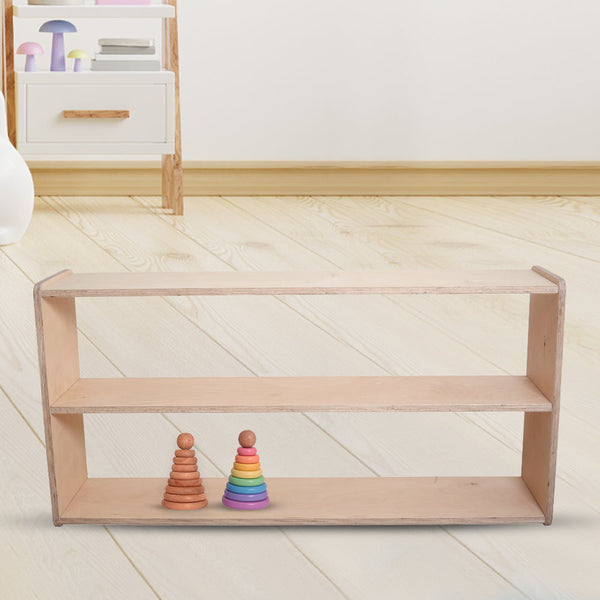
The philosophy of Maria Montessori offers profound insights into what makes educational toy principles truly effective. Montessori materials are not just toys; they are carefully designed learning tools that encourage self-correction, independent discovery, and sensory exploration. For example, the Pink Tower isn't merely blocks; it teaches concepts of size, sequence, and order through direct experience.
Child development experts agree that learning is most profound when it's hands-on and self-directed. Montessori toys guide children towards abstract concepts through concrete experiences. This approach is particularly effective for fostering intrinsic motivation – the child learns because they want to, not because they are told to. Our collection of Montessori method learning materials embodies these powerful principles.
Beyond Labels: Identifying Truly Effective Educational Toys
Many toys carry the 'educational' label, but discerning parents know that the true test lies in the child's interaction. An effective educational toy invites engagement, curiosity, and problem-solving. It's not about how many buttons it has or how loudly it speaks; it's about how much the child has to think, create, and adapt.
Think about a child assembling a puzzle. They are not just fitting pieces; they are developing spatial reasoning, fine motor skills, and persistence. The satisfaction comes from the internal 'aha!' moment, not from external validation. This independent discovery is a cornerstone of genuine learning and builds confidence in children, whether they are in a bustling Mumbai apartment or a quiet village home.
Why Simplicity Sparks Genius: Encouraging Independent Play
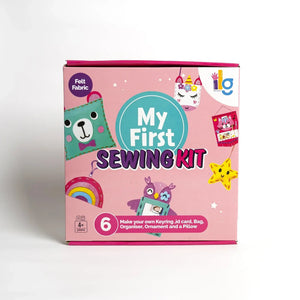
Here's a non-obvious insight: often, the 'boring' or simpler toys are the most powerful catalysts for creativity. A child with a sophisticated electronic gadget might be entertained, but a child with a basic activity kit, some clay, or a few scarves must conjure the magic themselves. They invent the narratives, design the structures, and imagine the characters.
This necessity to create from scratch is what builds robust imaginative faculties. When three-year-old Aarya in a Bangalore joint family uses a few simple cloths to build a tent under the dining table, she's not just playing; she's engaging in complex spatial reasoning, storytelling, and cooperative play with her older cousins. This hands-on creativity is precisely what helps children open up emotionally, as discussed in The Times of India, by providing an outlet for expression without words.
Choosing Toys for Imagination: Practical Advice for Indian Parents
When selecting toys for imagination, consider these guiding questions:
- Does this toy have multiple uses? (e.g., blocks can be cars, houses, food)
- Does it allow my child to be the director of their play?
- Does it engage multiple senses – touch, sight, sound?
- Can it grow with my child, offering new challenges as they develop?
- Does it connect to the real world or cultural experiences? (e.g., cooking sets, tools)
For parents navigating school pressures and screen-time dilemmas, choosing toys that foster true creative play can feel like a small rebellion, but it's a vital one. It's about giving children the space to wonder, experiment, and make mistakes without fear, just as our grandparents encouraged open-ended play with found objects and simple stories. This approach nurtures problem-solvers, innovators, and emotionally resilient individuals.
Ultimately, the most effective educational toys aren't those that promise to make your child 'smarter' instantly. They are the ones that quietly empower your child to think, to dream, and to build their own world, one imaginative play session at a time. It's about cultivating that inherent spark, allowing them to lead their own journey of discovery, just like SkilloToys believes every child in India deserves.